
 KOR
KOR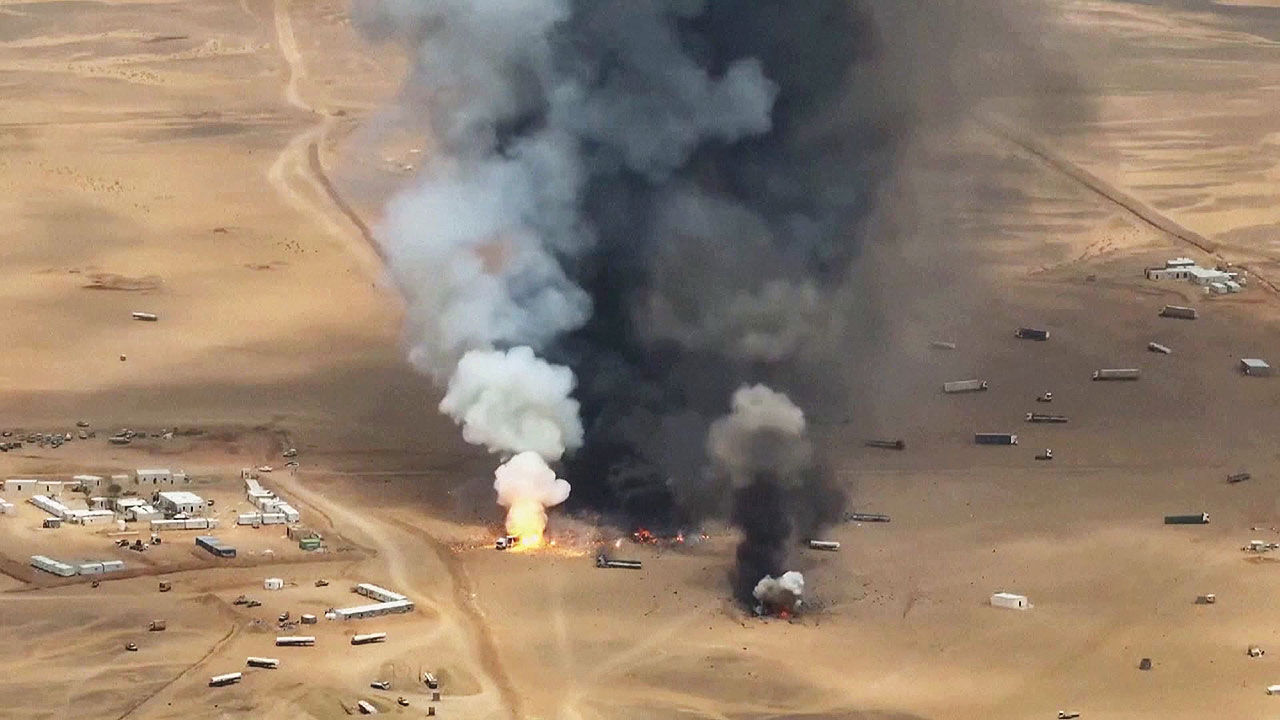
▲ Saudi-Houthi Clashes (File Photo)
Saudi Arabia has warned Iran through Pakistan to keep the Houthi rebels in Yemen under control, Reuters reported on the 9th, local time.
As Houthi attacks against Saudi Arabia have intensified, Riyadh reportedly sent a warning message through a secondary channel to Iran, which holds significant influence over the rebel group, in an effort to prevent a wider escalation.
A high-ranking Middle Eastern official confirmed to Reuters that Pakistan delivered this message to Iran over the preceding 24 hours, urging Tehran to exercise its influence to halt the Houthi attacks on Saudi Arabia.
Sources noted that Pakistan made it clear to Iran that failure to rein in the Houthis risks escalating a proxy conflict into a broader regional security crisis.
In response, a senior Iranian official stated that while Pakistan delivered the message on the 8th, Iran replied that "Iran does not control the Houthis."
However, citing two sources close to the matter, Reuters reported that last week Iran instructed the Houthi rebels to launch attacks against Saudi Arabia, promised additional financial and military support, and dispatched Islamic Revolutionary Guard Corps commanders to Yemen.
Although Pakistan acted as an intermediary, its warning to Iran is notable given that Islamabad maintains defense pacts with both Saudi Arabia and Turkey.
Regarding the Houthi attacks on Saudi Arabia, Pakistani officials have emphasized that their military role under the defense agreement will be limited to the defense of Saudi territory.
However, Pakistani Defense Minister Khawaja Asif recently stated on domestic television that "an aggression against one country will be considered an aggression against all three" (Saudi Arabia, Turkey, and Pakistan), warning that a joint security agreement among the three nations could be invoked.
Pakistani sources said high-ranking military officials from the three countries met in Riyadh to discuss countermeasures against the Houthi rebels, agreeing during the meeting that all responses would take place within Saudi territory without deploying ground forces into Yemen.
Reuters reported that Saudi officials expect their military response to focus exclusively on the Houthi rebels rather than Iran, which would ultimately frustrate Tehran's objective of ending the U.S. blockade through Houthi attacks.
While it is true that the Houthi rebels are closely tied to Iran as part of the Iranian-led "Axis of Resistance," Tehran maintains that it does not provide them with funding or weapons.
Esmaeil Baghaei, spokesperson for Iran's Ministry of Foreign Affairs, posted on X on the 9th, refuting claims by stating, "Ansarullah (the Houthis) is an independent actor in Yemen that makes its own decisions. They do not take orders from anyone, nor do they act as proxies for anyone."
Following the outbreak of the Gaza war in October 2023, the Houthi rebels sporadically attacked Israel-linked ships passing through the Red Sea under the pretext of supporting Hamas, but they did not engage in combat with Saudi Arabia.
After the breakdown of the U.S.-Iran truce in June of this year, airstrikes and exchanges of fire resumed between Saudi Arabia and the Houthi rebels, effectively ending the ceasefire and intensifying clashes between the two sides entering this month.
The conflict reignited on July 3 when Houthi rebels attempted to land an Iranian aircraft.
When the Houthis allowed the Iranian plane to land at Sana'a Airport without prior approval from Saudi Arabia, which controls Yemeni airspace, the Saudi military attempted to block it. In the process, the Houthi rebels activated their air defense systems and clashed with Saudi forces.
Subsequently, Yemeni forces backed by the Saudi military bombed the runway at Sana'a Airport on July 13, prompting the Houthi rebels to launch retaliatory airstrikes on Saudi Arabia's Abha Airport, which escalated the conflict into full-scale fighting that has intensified over recent weeks.
Following attacks on the 9th, the Houthi rebels used ballistic missiles and drones on the 10th to target military bases and oil facilities in southern Saudi Arabia, including Abha, Khamis Mushait, and Jizan.
※ Please note: This article was translated by AI and may contain errors.




 Video News
 Video News

 Video News