
 KOR
KOR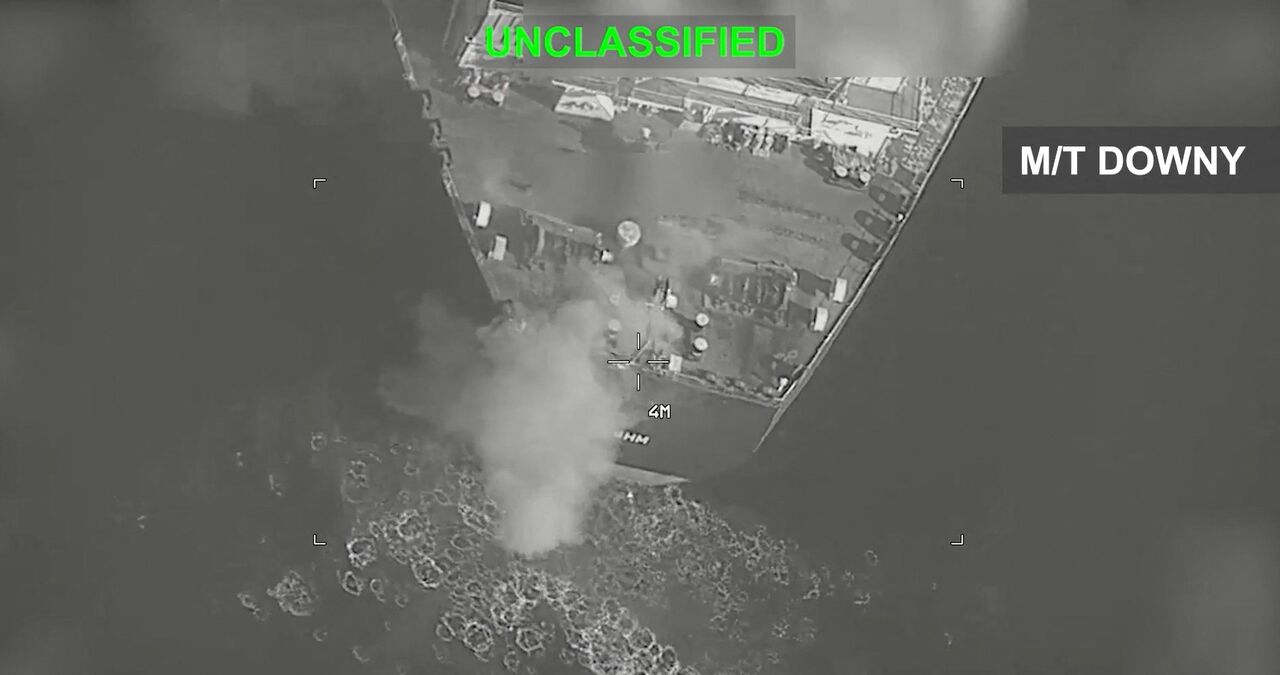
▲ U.S. bombing of an Iranian oil tanker
Iran has launched retaliatory military operations in response to a U.S. bombing of its oil tanker.
The Islamic Revolutionary Guard Corps (IRGC) announced in a statement on the 9th (local time) that it had attacked a U.S. military base in Al-Azraq, Jordan, with ballistic missiles.
According to Reuters, the Jordanian military confirmed through state media that 20 ballistic missiles were fired from Iran into its territory.
The Jordanian military stated that two missiles that were not intercepted landed far from residential areas and that no casualties from the Iranian airstrike have been reported.
Iran claimed that in retaliation for the bombing of its oil tankers and other vessels, it also struck two U.S. Navy warships in the region.
In a separate statement, the IRGC claimed it successfully struck U.S. destroyers DDG-119 and DDG-53—equipped with cruise missiles and the advanced Aegis combat system—with missiles.
Later, the IRGC stated through a statement released via the Tasnim news agency, "We targeted and inflicted heavy damage on two U.S. vessels and eight oil tankers."
It also said, "We also targeted 10 vessels that attempted to pass through the Strait of Hormuz blockade and danger zones under the instigation and protection of the aggressor U.S. terrorist military."
Previously, Iran had threatened to attack oil tankers near the coasts of Kuwait and Bahrain to hold them responsible for the U.S. attack on its oil tanker.
Kuwait and Bahrain are Gulf countries along the Persian Gulf coast that host major U.S. military bases in the Middle East.
Bahrain houses the headquarters of the U.S. Navy's Fifth Fleet, and Kuwait serves as a forward operating base for the U.S. Air Force, acting as strongholds in the war with Iran.
The United Kingdom Maritime Trade Operations (UKMTO), operated by the British Navy, reported that an incident involving a merchant vessel occurred in the Strait of Hormuz.
Specific details of the incident have not yet been released.
Iran has claimed control over the Strait of Hormuz and has repeatedly targeted and attacked ships that do not navigate according to conditions set by the country.
This series of military operations by Iran comes as retaliatory measures immediately following the U.S. military's bombing of an Iranian oil tanker.
In a statement on the 8th (early morning of the 9th, Iranian time), the U.S. military announced that it had destroyed five Iranian oil tankers in response to attacks by the Iranian Revolutionary Guard Corps on U.S. warships.
U.S. Central Command, which oversees the Middle East, explained that this action was retaliation for Iran launching two ballistic missile attacks on U.S. warships over the past two days.
U.S. President Donald Trump recently shifted his strategy away from all-out military operations toward exacerbating Iran's economic hardships through maritime blockades and strengthened sanctions.
In the process of choking off Iran's economic lifeline of crude oil exports, the Trump administration has been responding in an eye-for-an-eye manner whenever Iran takes military action.
Amid a broken negotiation framework, tensions surrounding the Strait of Hormuz show no signs of easing due to this continuing cycle of retaliation.
(Photo: Getty Images)
※ Please note: This article was translated by AI and may contain errors.





 Video News