
 KOR
KOR⚡ Quick Summary
Volcanic ash travels over 150 km: As the Anak Krakatau volcano in Indonesia's Sunda Strait erupted, volcanic ash spread across the capital area of Jakarta. Eight airports, including Soekarno-Hatta International Airport, were closed.
More than 1,500 flights affected: According to Indonesian authorities, over 1,500 flights across eight airports were canceled or disrupted, leaving approximately 170,000 passengers stranded.
Cloud seeding deployed: Following airport closures, shifts to remote learning, and public health responses, authorities also launched weather modification operations, including cloud seeding. Currently, there is assessed to be no imminent tsunami risk.
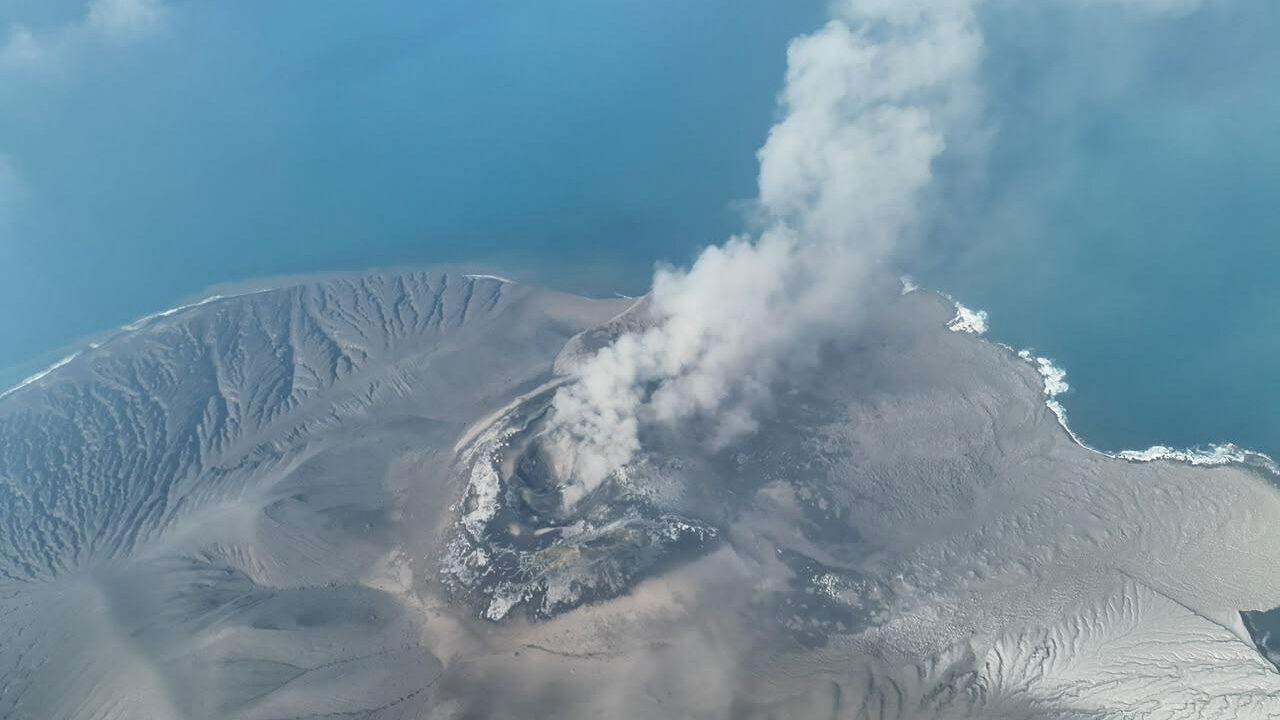
1. Ash Flies 150 km… Metropolitan Airports Paralyzed
Soekarno-Hatta International Airport, the gateway to the Indonesian capital of Jakarta, suspended operations due to the eruption of Anak Krakatau, located more than 150 km away. As volcanic ash spread across the skies over Java and Sumatra, a total of eight airports shut down, affecting approximately 170,000 passengers.
In the early hours of September 6 local time, Anak Krakatau in the Sunda Strait erupted violently once again. According to Indonesian meteorological authorities, the ash plume soared more than 6 km high toward Java, reaching altitudes of up to 15 km in some areas. The eruption continued thereafter.
The problem was that the volcanic ash traveled more than 150 km to Jakarta and its surrounding areas. As ash was detected even at Soekarno-Hatta, Indonesia's largest airport, authorities suspended flight operations. What was initially intended as a temporary closure was extended multiple times as the ash continued to spread, resulting in flight suspensions across eight airports that lasted into the morning of September 7.
2. Invisible Yet Dangerous: Why Volcanic Ash Grounds Airplanes
Volcanic ash is not mere dust. It consists of microscopic rock and glassy particles that can cause severe issues if sucked into an aircraft engine. Inside the engine's high temperatures, some of these particles melt and adhere to turbine blades and other components, disrupting airflow, reducing engine thrust, or in severe cases, causing engine failure. It also poses risks by eroding cockpit windshields, impairing visibility, and interfering with various flight sensors.
Indonesian Minister of Transportation Dudy Purwagandhi stated that operations would not proceed as long as volcanic ash remains widespread and continues to be detected during inspections. A total of eight airports were closed, including Soekarno-Hatta, Halim Perdanakusuma, Radin Inten II, Pondok Cabe, Budiarto, Husein Sastranegara, Taufiq Kiemas, and Atung Bungsu.
3. Over 1,500 Flights Affected… Aviation Chaos for 170,000 Passengers
The scale of the disruption expanded rapidly. According to final tallies by Indonesian authorities, more than 1,500 flights across eight airports were canceled or disrupted, stranding approximately 170,000 passengers. At Soekarno-Hatta Airport alone, Indonesia's primary international hub, over 960 flights were affected.
International flights took a direct hit alongside domestic routes. Major airlines, including Singapore Airlines and Scoot, consecutively canceled flights to Jakarta, causing disruptions on international routes connecting Singapore, Doha, Sydney, Kuala Lumpur, and other cities. Indonesia's flag carrier, Garuda Indonesia, also temporarily suspended operations at Soekarno-Hatta Airport. With airports closed, several incoming flights to Jakarta were diverted to other destinations.
Authorities advised the use of alternative airports, including Kertajati, Semarang, Surabaya, and Yogyakarta. The Ministry of Transportation also urged airlines to take swift action so affected passengers could promptly receive refunds or reschedule their flights.
4. School Closures and Cloud Seeding: All-Out Response
The impact of the volcanic ash went beyond flights. Authorities in Jakarta and Lampung transitioned school classes to remote learning starting September 7, determining that volcanic ash could harm children's respiratory systems and eyes.
Health authorities also activated emergency response systems. They prepared nebulizers and oxygen concentrators for respiratory conditions, along with medical supplies for eye and skin irritation, while advising residents to remain indoors whenever possible. Recommendations were also issued to wear masks and protective eyewear when going outside.
The National Disaster Management Authority took further steps by launching weather modification operations, including cloud seeding. The plan is to induce artificial rain to wash out airborne ash if sufficient cloud cover develops. Should suitable rain clouds be unavailable, authorities also prepared water mist spraying measures to reduce ash particles in the air. Aircraft dedicated to weather modification were deployed to Pondok Cabe Airport in Jakarta.
In several areas where the ash spread, fishermen halted operations, and reports of eye and respiratory irritation among residents continued to emerge. The city of Jakarta also ended its weekly Sunday "Car Free Day" event at 9 a.m., an hour earlier than usual.
5. Tsunami in 2018… What About This Time?
Anak Krakatau means "Child of Krakatoa" in Indonesian. It is a volcano that emerged from the sea in the 20th century around the remains of the Krakatoa volcano, which collapsed during its massive 1883 eruption. The catastrophic 1883 eruption and subsequent tsunami killed more than 35,000 people. In December 2018, part of Anak Krakatau collapsed into the sea, triggering a devastating tsunami that struck the coasts along the Sunda Strait, claiming more than 400 lives.
Because of this history, attention turned to the possibility of another tsunami following the latest eruption. Indonesian disaster authorities stated that they currently assess no imminent risk of a tsunami. However, they continue to monitor the situation closely, as conditions could change depending on volcanic activity and changes in the volcano's structure.
Indonesia is situated along the Pacific "Ring of Fire," where multiple tectonic plates meet, making earthquakes and volcanic activity frequent. This time, rather than direct lava damage, volcanic ash traveling over 150 km brought the capital region's airspace and daily routines to a standstill. Until airport operations can fully return to normal, officials will need to monitor not only volcanic activity but also wind directions and ash concentration levels.
Deep Dive Q&A
Q1. Why is volcanic ash dangerous enough to close airports 150 km away?
A1. Unlike ordinary dust, volcanic ash is composed of microscopic rock and glassy particles. If it enters aircraft engines, parts of it can melt under high temperatures and adhere to turbine components, obstructing airflow. This can degrade engine performance or, in extreme cases, lead to engine failure. It can also damage cockpit windshields and various sensors. For these reasons, when volcanic ash is detected along flight paths or around airports, aviation authorities and airlines restrict or halt operations based on ash concentration, location, and movement direction.
Q2. Could this eruption lead to a major tsunami like in 2018?
A2. Currently, Indonesian disaster authorities see no imminent risk of a tsunami. However, Anak Krakatau has a precedent of triggering a tsunami that killed more than 400 people in 2018 when part of the volcanic edifice collapsed into the ocean. Therefore, authorities are continuously monitoring topographical changes in the volcanic structure alongside volcanic activity.
Q3. What precautions should local residents and travelers take?
A3. Because airport operations can change continuously, the priority is to check flight statuses through official airline and airport channels before heading to the airport. If a flight is canceled, travelers should consult the airline regarding refund or rescheduling options. In areas experiencing falling ash, it is best to stay indoors whenever possible and protect respiratory tracts and eyes from direct exposure if venturing outside.
※ Please note: This article was translated by AI and may contain errors.



 Video News


 Video News
 Video News