
 KOR
KOR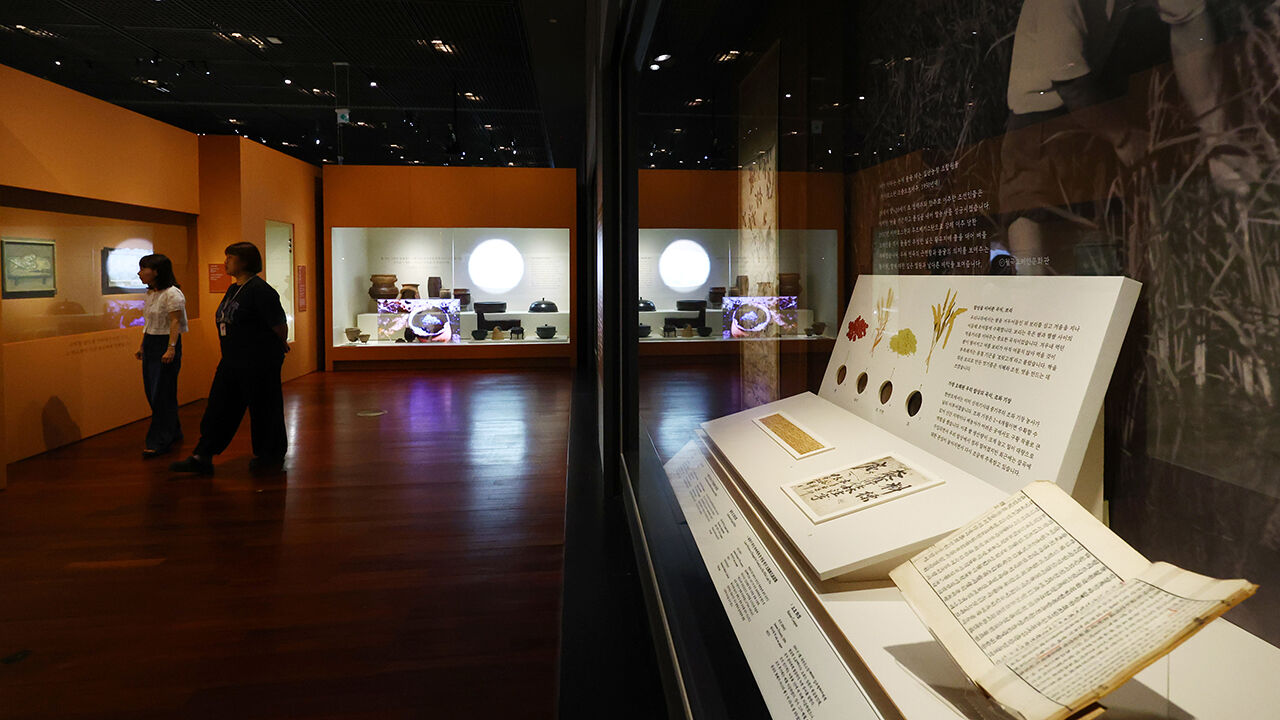
▲ Attendees look around the exhibition during a press preview for the special exhibition "Our Dining Table" at the National Museum of Korea in Yongsan-gu, Seoul, on the 30th.
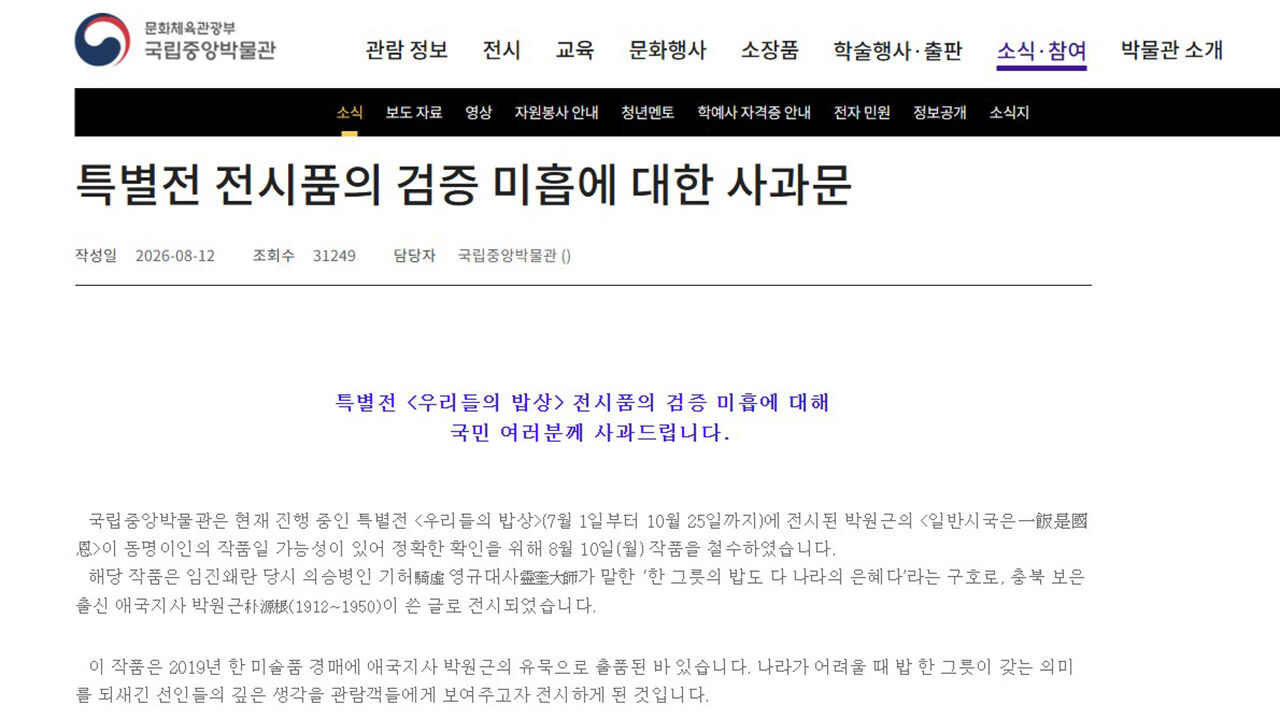
An investigation has revealed that a piece of calligraphy introduced by the National Museum of Korea as the work of independence activist Park Won-keun (1912–1950) was actually created by a person with the same name known as a pro-Japanese collaborator.
Critics point out that the museum has suffered a blow to its reputation, as it took over a month after the exhibition opened for the museum to recognize the issue through an external tip-off, revealing flaws in its verification process.
The National Museum of Korea announced today (Sept. 7) that it has concluded that the calligraphic work titled "Ilbansigeun" (一飯是國恩), featured in the special exhibition "Our Dining Table," is the work of Park Jung-yang (1874–1959), a collaborator with the pro-Japanese anti-nationalist group.
Calligraphic works refer to handwriting or paintings left behind during one's lifetime.
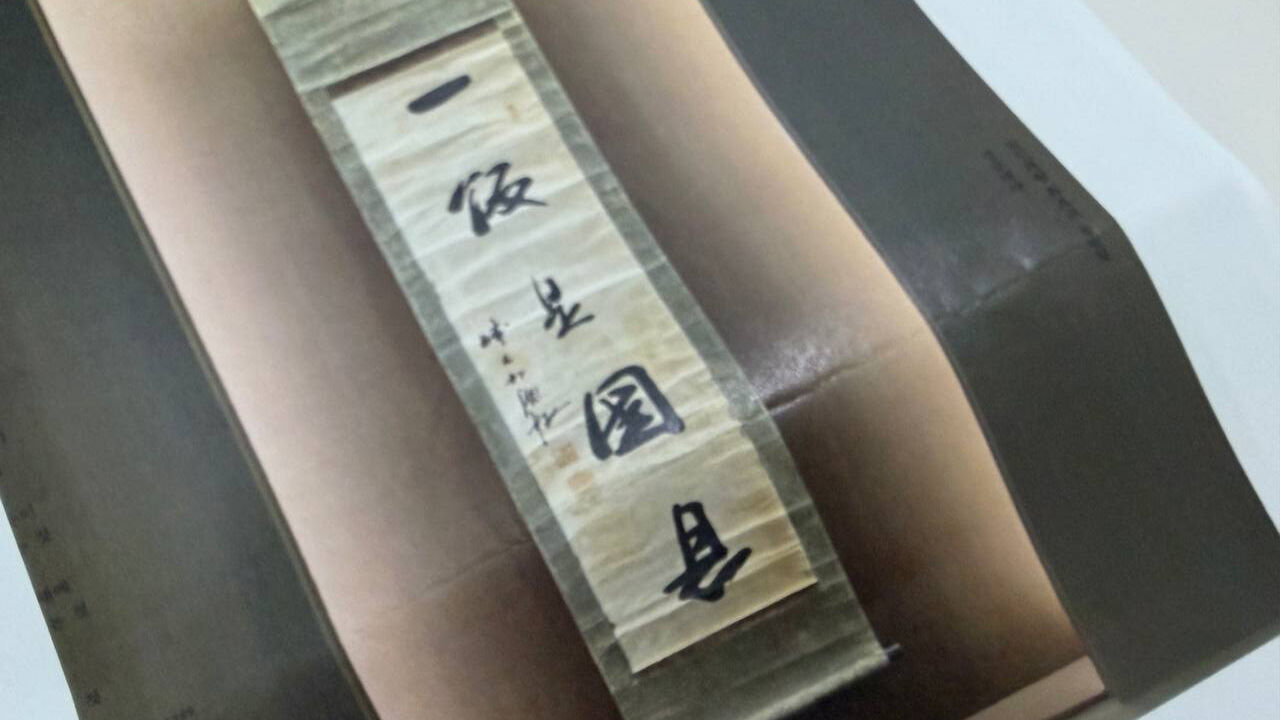
The "Ilbansigeun" calligraphy contains the phrase "Even a single bowl of rice is a grace of the country," which was spoken by Monk Yeonggyu (?—1592), known for raising the first monk army during the Japanese invasion of Korea in 1592.
On one side of the scroll-format calligraphy, the name "Hanin Park Won-keun" is written.
The museum introduced the piece as the handwriting of activist Park Won-keun, who was born in Boeun, North Chungcheong Province, and it drew public attention after a photo was released showing his family members kneeling and weeping in the exhibition hall upon learning the truth belatedly.
However, the controversy erupted about a month after the opening on August 10 when a tip was raised that the name "Park Won-keun" was a name Park Jung-yang used in the past, leading to its removal from the exhibition.
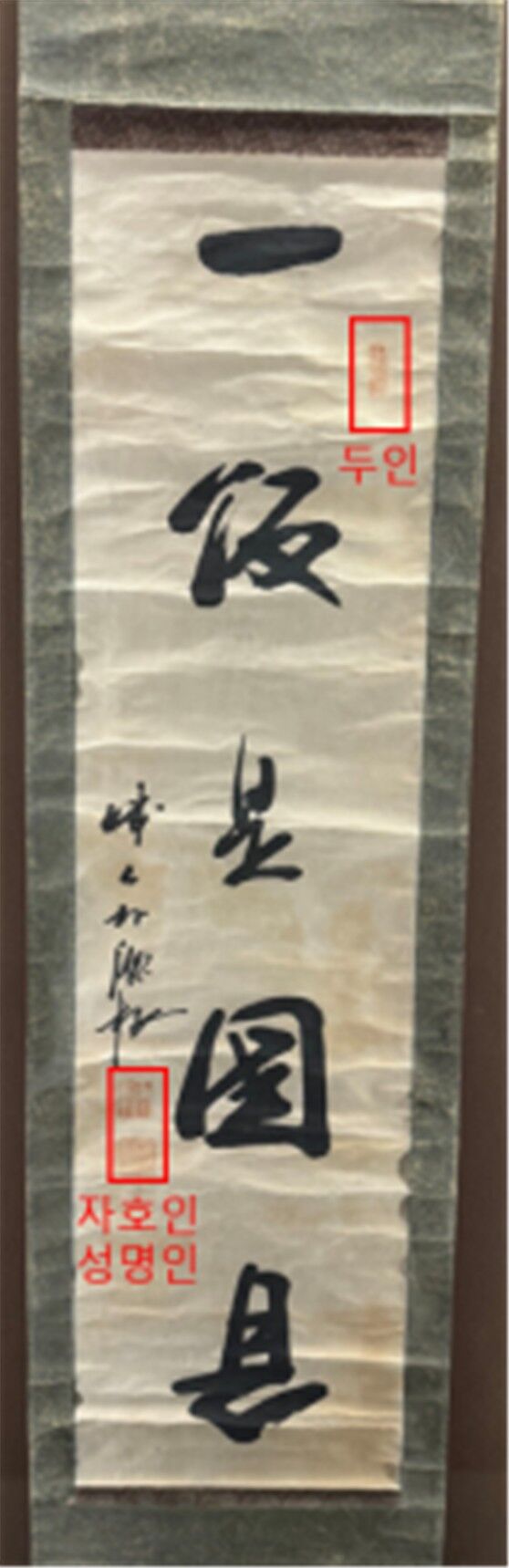
The calligraphy in question is a private collection piece that was reportedly put up for auction in the past.
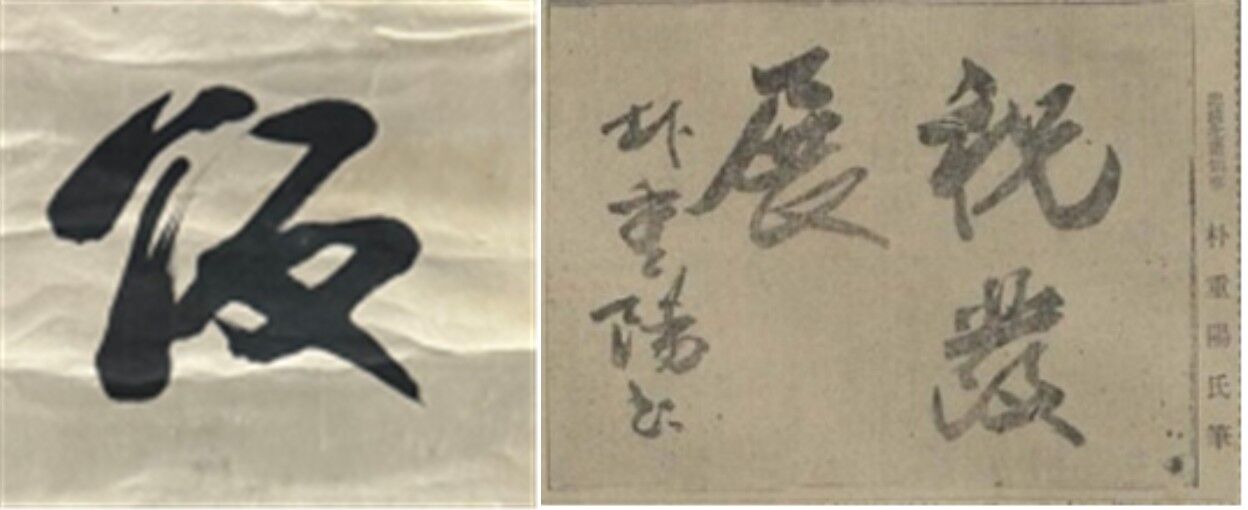
The museum commissioned seven experts in calligraphy, modern and contemporary history, old documents, and conservation science as advisory members to verify the calligraphy, and determined it to be a piece left by Park Jung-yang during his studies in Japan.
The museum stated, "By comparing the 'Ilbansigeun' calligraphy with Park Jung-yang's handwriting, we found similar characteristics in the stroke processing method, making it reasonable to view it as Park Jung-yang's handwriting."
An investigation also showed that the seal left on the work is likely related to Park Jung-yang.
For example, the head seal (duin) stamped at the top was found to match the seal inscription known to have been carved for Park Jung-yang in late 1932 by calligrapher Kim Tae-seok (1874–1951).
The museum explained that the expression "Hanin" (Korean person) used in the calligraphy was a term used by students or visitors who went to study in Japan during the Korean Empire period to state their nationality in front of foreigners, namely Japanese people.
A museum official said, "It is confirmed that Park Jung-yang studied abroad in Japan from 1896 to 1903 during the Korean Empire period," adding, "This matches the timing and circumstances in which the expression 'Hanin' was used."
Several other works bearing a similar handwriting style and seals to the "Ilbansigeun" calligraphy were also identified.
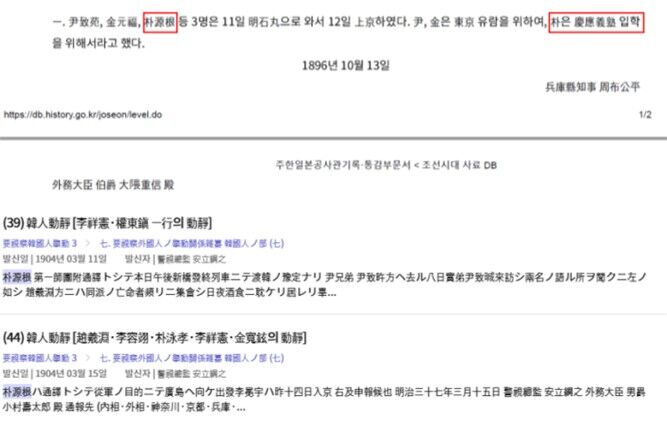
Among the calligraphic works published on the websites of overseas auction houses, including in Japan, there were pieces under the name "Park Won-keun," and some were reportedly written for Japanese individuals.
Experts also inferred the existence of the handwriting from records related to Park Jung-yang.
The museum explained, "There are records that (Park Jung-yang) traveled around various regions and covered his expenses by selling calligraphy works during his studies in Japan when he operated under the name Park Won-keun."
The controversial exhibition piece and the calligraphy works circulated overseas are believed to be related to this.
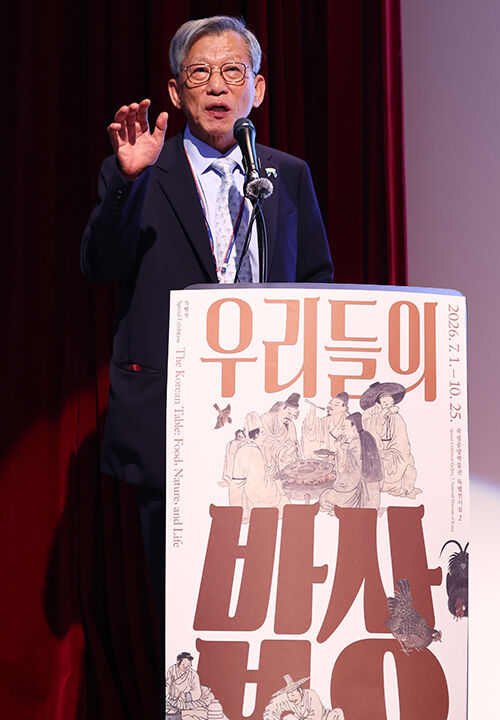
Although this exhibition was prepared to comprehensively cover the原型 and history of Korean dietary culture, namely K-food, criticism has become unavoidable that the verification process for the exhibition items was inadequate.
It is known that there are currently no calligraphy majors within the National Museum of Korea.
The museum stated, "We plan to explain the background and results of the investigation to the bereaved family of activist Park Won-keun and offer repeated apologies," adding, "We will strengthen preliminary verification to prevent similar cases from recurring."
The museum also plans to expand expert consultations in the field of modern and contemporary history moving forward.
Director Yoo Hong-jun apologized again, saying, "Accurately verifying facts regarding historical figures is the most fundamental duty the museum must uphold before the public, and we fell short in this regard."
Director Yoo stated, "I once again express my deepest regret to the bereaved family and the public, and we will further strengthen the exhibition item verification process to ensure that such an incident is not repeated."
(Photo: Provided by National Museum of Korea and Gosinmun Archive, captured from the National Museum of Korea website, Yonhap News)
※ Please note: This article was translated by AI and may contain errors.



 Video News


 Video News
 Video News