
 KOR
KOR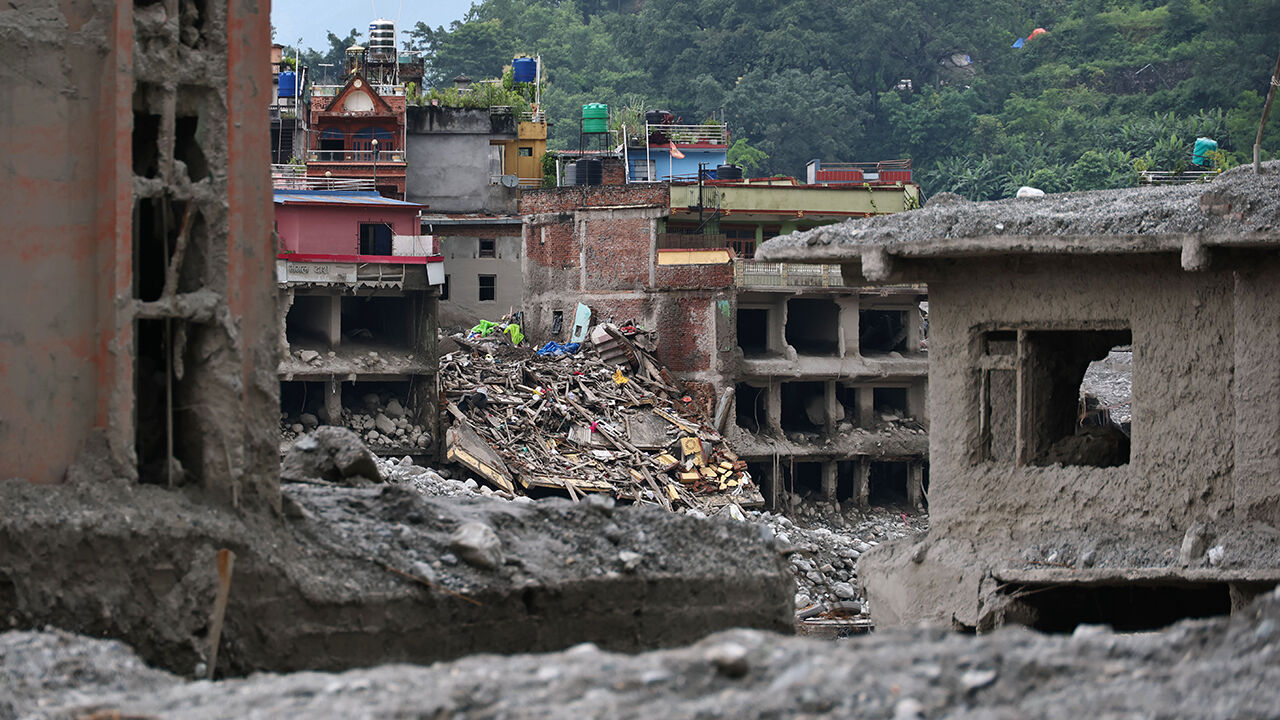
▲ The aftermath of massive flooding in Nepal
Nepal's devastating floods have washed away numerous homes and buildings, as well as land along rivers and valleys, leaving them buried under thick mud and water.
While the Nepalese government and residents are now attempting to rebuild collapsed houses and structures, the disappearance of the land itself has left them in a position where they must find new, safe locations to prepare for potential future floods.
According to AFP, citing local reports on the 5th (local time), Pavitra Lamsal, 45, who has lived for over 40 years in Nuwakot, a severely flood-hit area in south-central Nepal's Bagmati Province, lost both of her houses and her paddy fields in the floods.
Waiting in line at a food distribution center in Nuwakot, Lamsal said, "River water is now flowing right where our house used to be," adding, "Not a single patch of land is left."
She lamented that all of their money was swept away by the river, leaving her family of nine uncertain about where they will live from now on.
Shanti Sunar, 45, who survived the floods with her husband but lost her home and small shop, told Reuters, "I go to the site almost every day. I can recognize where our house used to be, but there is no trace left now."
Sunar said, "We cannot rebuild our house there because it is not safe," adding, "We hope the government will relocate us to a safer place."
According to Nepal's National Disaster Risk Reduction and Management Authority (NDRRMA), the massive floods have affected about 1.6 million people, or around 5 percent of Nepal's total population, with approximately 20,000 homes rendered uninhabitable, including about 7,500 houses completely washed away.
Consequently, these houses need to be rebuilt, but large portions of the affected areas remain completely submerged or covered in sediment such as mud and silt reaching depths of several meters.
Furthermore, Bloomberg reported that authorities are unsure where to begin reconstruction as climate change accelerates the melting of Himalayan glaciers, heightening concerns of recurrent floods in the future.
Adding to the reconstruction authorities' dilemma, the plots of land belonging to schools and various non-residential buildings have also vanished in the disaster.
Rajendra Dawadi, 47, principal of Tribhuvan Trishuli Secondary School in Nuwakot—which gained global attention for swiftly evacuating about 900 students and staff members when the floods hit—stated that this disaster is "more severe" than the April 2015 earthquake in Nepal, which claimed the lives of about 9,000 people.
Dawadi explained to AFP, "The school was completely destroyed during the earthquake, but we rebuilt it. At least the land remained back then, but this time, we lost not only the buildings but the land itself."
He emphasized, "This place is no longer safe," adding that a new site is needed to reconstruct the school.
Gobind Raj Pokharel, former CEO of Nepal's National Reconstruction Authority (NRA) who led recovery efforts after the 2015 earthquake, also told Bloomberg, "When the earthquake hit, houses collapsed, but the land remained so we could rebuild. But this time, where are we supposed to rebuild?"
In response, Dharma Raj Upreti, an official at the disaster management authority, stated, "It makes no sense to rebuild houses in the same place. Doing so would only expose people to the exact same risks."
He added that authorities are struggling to identify safer areas for construction.
(Photo: Yonhap News)
※ Please note: This article was translated by AI and may contain errors.



 Video News

 Video News
 Video News
 Video News