
 KOR
KOR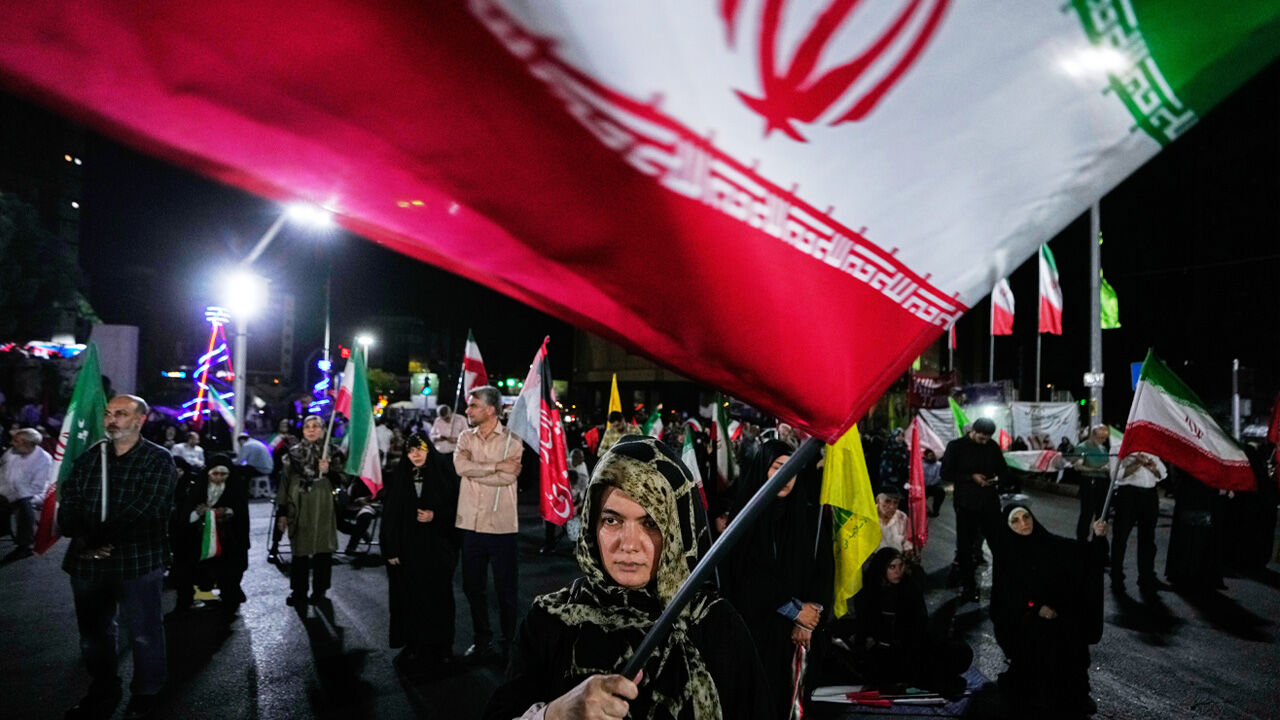
▲ A pro-government rally held in Tehran
While Iran has been holding out against the United States for over half a year using the blockade of the Strait of Hormuz as leverage, recent trends appear to be moving unfavorably for Iran, the Wall Street Journal (WSJ) reported on the 4th, local time.
The report suggests that although Iran has been pulling strings on international oil prices and pressuring the global economy by sealing off the critical logistics hub, the effectiveness of this move is gradually diminishing.
The WSJ argued, "It has become clear that the calculation of the Iranian regime, which blockaded the Strait of Hormuz six months ago by trapping 20% of the world's crude oil supply, was a miscalculation," adding, "The blockade failed to trigger a global economic crisis, nor did it force President Donald Trump to end the war under conditions desired by Iran."
While the United States also failed to subjugate Iran through airstrikes and subsequently imposed a powerful naval blockade and economic sanctions, it similarly failed to spark a popular uprising within Iran or prompt the reopening of the Strait of Hormuz, contrary to expectations.
The WSJ's analysis is that while neither side has achieved its desired outcome, it is certain that the leverage provided by the Hormuz blockade is steadily weakening.
This is because, although crude oil transport through the strait was nearly paralyzed in the early stages of the blockade, bypass routes have emerged over time, and while oil prices have risen, the global economy is adapting to them to a certain degree.
Samir Madani, founder of maritime intelligence firm TankerTrackers.com, pointed out, "Iran's blockade of the Strait of Hormuz has more holes than the U.S. naval blockade," and "Iran has been completely unable to plug these holes."
According to the firm, an average of about 5 million barrels of crude oil per day passed out of the Strait of Hormuz over the past four weeks.
It is estimated that an additional 2.5 million barrels per day were shipped out through ports outside the strait, such as Fujairah in the United Arab Emirates.
This amounts to about 40% of pre-war crude oil export levels.
Conversely, due to the U.S. Navy's naval blockade, Iran's crude oil exports via shipping were virtually halted in July, significantly worsening its domestic economic situation.
The WSJ noted that while the U.S. economy has also suffered due to the war with Iran, and it remains uncertain how long Washington can maintain the naval blockade and endure the exposure of Middle Eastern allies to Iranian attacks, time is not solely on Iran's side either.
A high-ranking Gulf official said, "Time is on neither side's corner," but added, "Because Iran is under tremendous economic pressure, the clock is ticking much faster for the Iranian side."
The U.S. naval blockade was enforced for about two months starting April 13.
Subsequently, the blockade was lifted for about a month following a memorandum of understanding on ending the war on June 18, but it was later resumed.
When the naval blockade first began, the Iranian government expected to hold out for about five months.
The WSJ projected that as the Strait of Hormuz card weakens and a moment of choice approaches, Iran is more likely to resort to military measures than to capitulate.
Vali Nasr, a professor of Middle East studies at Johns Hopkins University, told the WSJ, "Iran's calculation is that even if it has to return to the negotiating table and make concessions, applying more military pressure will allow it to concede less," arguing that "it will escalate the situation on a much larger scale to find a way out of the crisis."
Ellie Geranmayeh, an analyst at the European Council on Foreign Relations (ECFR), also said, "As the clock starts ticking, Iran's perspective is 'Why slow down the pressure forcing Trump to make concessions? Let's make him feel the pain at the ballot box [in the November midterm elections].'"
(Photo: AP, Yonhap News)
※ Please note: This article was translated by AI and may contain errors.




 Video News


 Video News