
 KOR
KOR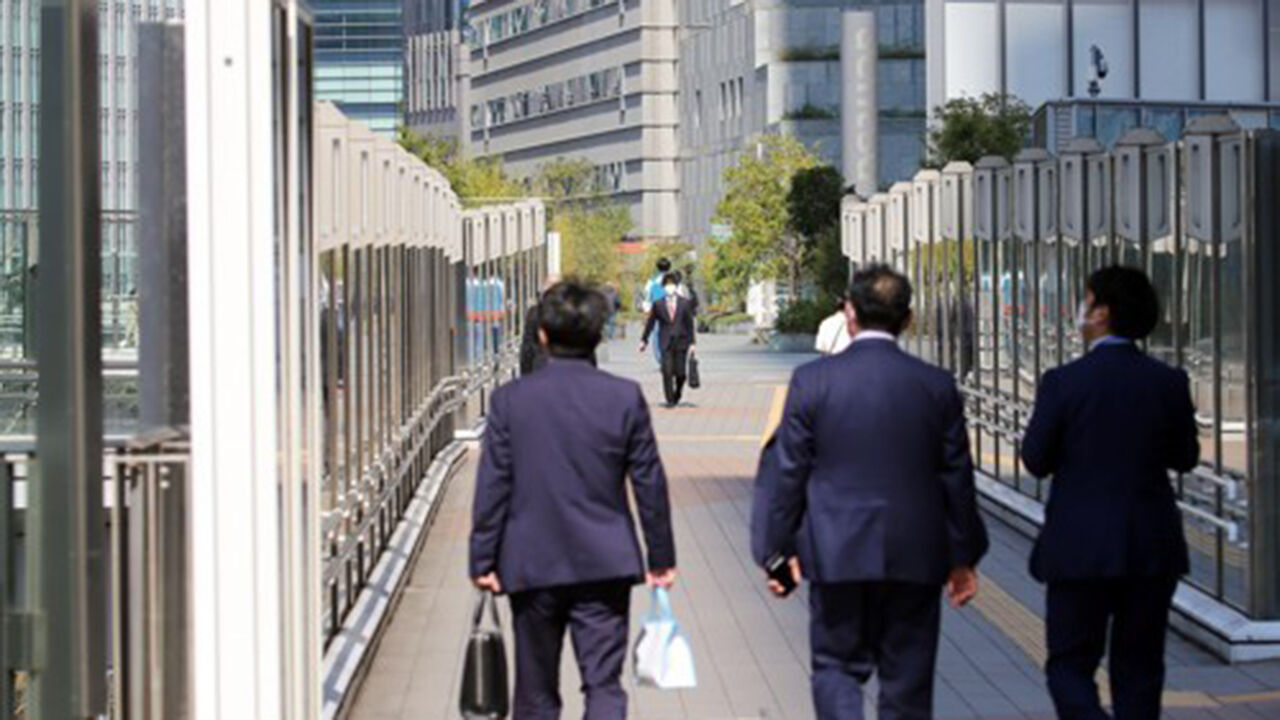
▲ Office workers in Tokyo, Japan
Japan's hourly minimum wage for this year has been finalized at 1,177 yen (approx. 10,178 won), an increase of 56 yen.
According to Japanese media reports, the Ministry of Health, Labour and Welfare announced yesterday (September 3) that the weighted average of the hourly minimum wages for fiscal year 2026 submitted by minimum wage deliberation councils across all prefectures came out to 1,177 yen, up 56 yen (5.0%) from the previous year.
Japan's minimum wage is determined differently by region.
After the Central Minimum Wage Council presents a target value, the prefectural councils set the minimum wage again to fit local conditions.
While the central council initially proposed a target of 1,176 yen, a 55-yen increase, the nationwide average minimum wage was decided 1 yen higher than that.
By region, Tokyo recorded the highest at 1,280 yen, followed by Kanagawa at 1,279 yen and Osaka at 1,231 yen.
Miyazaki (1,085 yen), Okinawa and Kochi (1,086 yen), and Nagasaki (1,087 yen) were relatively low.
The revised minimum wage will be applied sequentially by region starting as early as next month.
Although the growth rate is lower than last year's 6.3% increase when it was raised by 66 yen, it marks the second-highest level on record.
The year-over-year increase rate had continued to rise since 2020, but it has slowed down this year for the first time in six years.
Affected by the weak yen and a somewhat slower pace of minimum wage hikes, Japan's minimum wage has fallen below that of South Korea.
South Korea's minimum wage is 10,320 won for this year and 10,700 won for next year.
While the Japanese government previously aimed to raise the hourly minimum wage to 1,500 yen within the 2020s, the Sanae Takaichi cabinet has delayed the timeline, stating it will achieve the 1,500-yen level by the early 2030s at the latest.
(Photo: Yonhap News)
※ Please note: This article was translated by AI and may contain errors.



 Video News

 Video News
 Video News
