
 KOR
KOR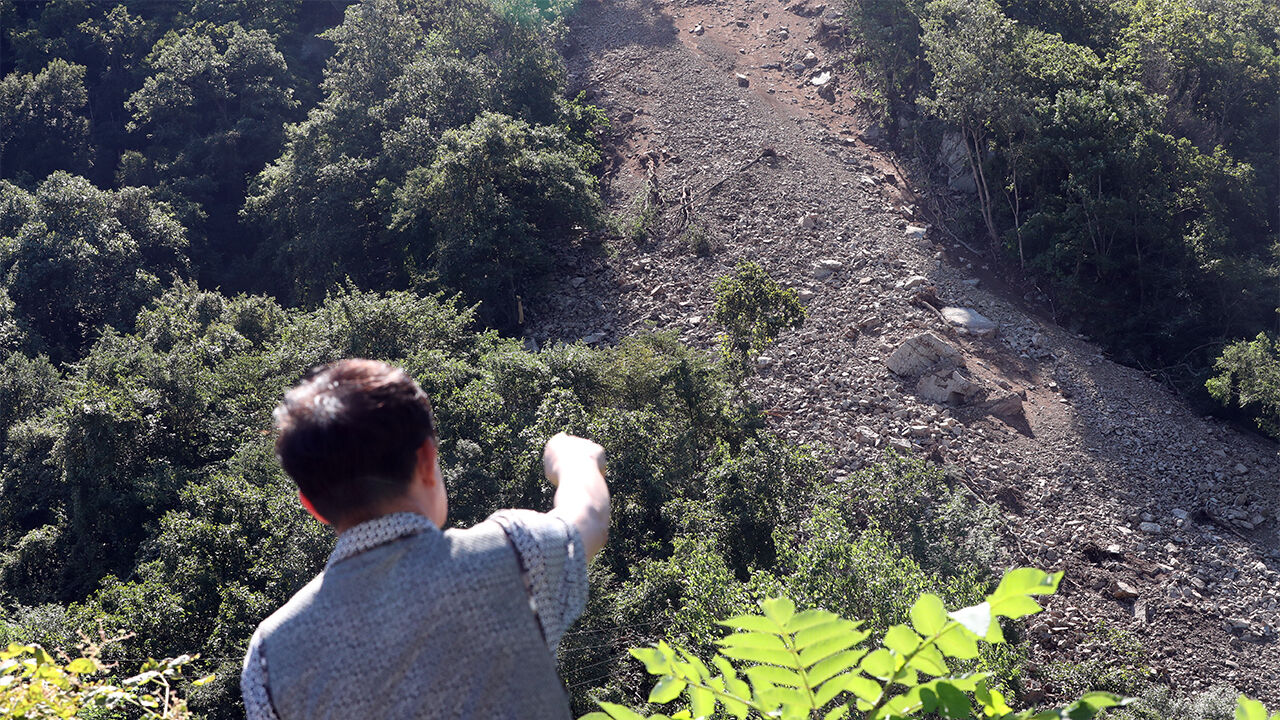
▲ Rocks and soil slide down a collapsed slope following a landslide in Mogok-ri, Seo-myeon, Hongcheon-gun, Gangwon Province, on the morning of the 4th.
"If a boulder the size of a house had crashed into my house, I might not even be here right now..."
At the site of the landslide that occurred in Hongcheon, Gangwon Province, today (the 4th), the sound of small and large rocks tumbling down the hillside with rattling noises could still be heard intermittently.
Earth and rocks of various sizes were completely exposed on the slope, which had collapsed all the way from near the summit down to the base, where residential houses and farmlands precariously held their ground just below.
Even when the landslide appeared to have settled, stray pebbles continued to roll down the slope, causing anxiety among the watching residents.
Kim, a 75-year-old resident living in a house directly below the mountain, shared the situation at the time, saying, "I was cooking breakfast in the kitchen when suddenly there was a loud noise like a helicopter flying right next to the house." She added, "Then my husband shouted, 'Get out, get out quickly,' and when I came out, rocks were falling like lightning."
"If falling rocks from the landslide had crushed the house, I wouldn't have survived like this," Kim said, stroking her chest in relief. "It is a tremendous relief that there was no damage."
Another resident, 65-year-old Lee, said, "While returning from picking hot pepper plants near the landslide site at dawn, I suddenly heard a massive roar." He added, "Living in Hongcheon County for over 60 years, this is the first time I've ever experienced such a massive landslide."
"It seems that lightning struck Mogok-ri late last month and rain fell recently, and the ground weakened under those influences, causing the landslide," he speculated.
Residents concurred that small rocks had occasionally rolled down from the mountain starting three days before the landslide occurred, and that unlike usual, falling rocks continued all day yesterday.
Kim recalled, "Small rocks from the mountain behind the house started making a severe rattling sound a few days ago." She added, "Normally it stops after a short while, but yesterday the sound of falling rocks lasted all day until night, so I thought it was strange."
Park, 64, recalled, "Small rocks had been falling from the mountain occasionally since three days ago, but I thought nothing of it because small amounts usually fall when wild animals move around."
He added, "I've lived in the house below the landslide site for 16 years, and a similar landslide occurred around the same location back in around 2021. At that time, the county installed wire nets, which thankfully minimized the damage this time."
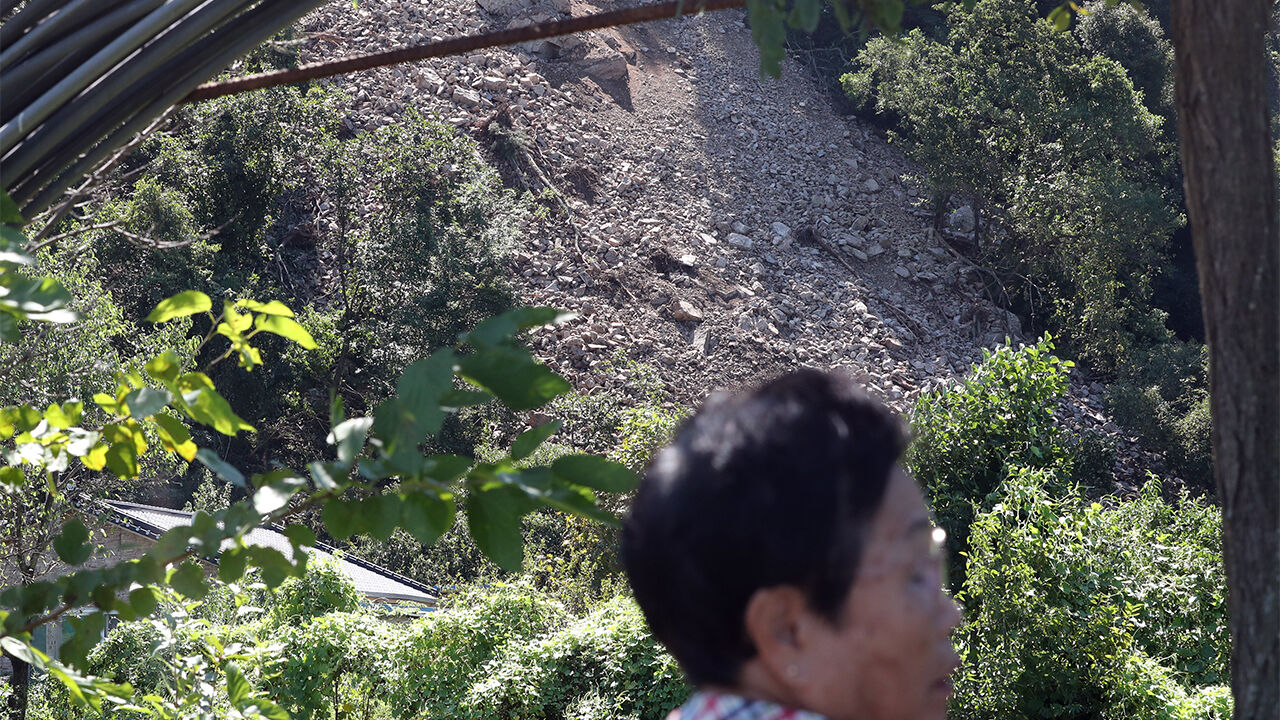
This landslide occurred at 7:49 a.m. today in Mogok-ri, Seo-myeon, Hongcheon-gun, Gangwon Province.
Upon receiving reports that "the sound of rocks falling from the mountain continues," fire authorities, police, and Hongcheon County deployed 10 pieces of equipment and 22 personnel to control the site and take safety measures.
No casualties have been reported so far.
While there was no damage to residential houses, one warehouse used for storing agricultural machinery was buried.
Access to the site remains difficult due to continuing rockfalls, and Hongcheon County and other authorities have evacuated 16 nearby residents to a village hall and senior center in preparation for the possibility of additional landslides.
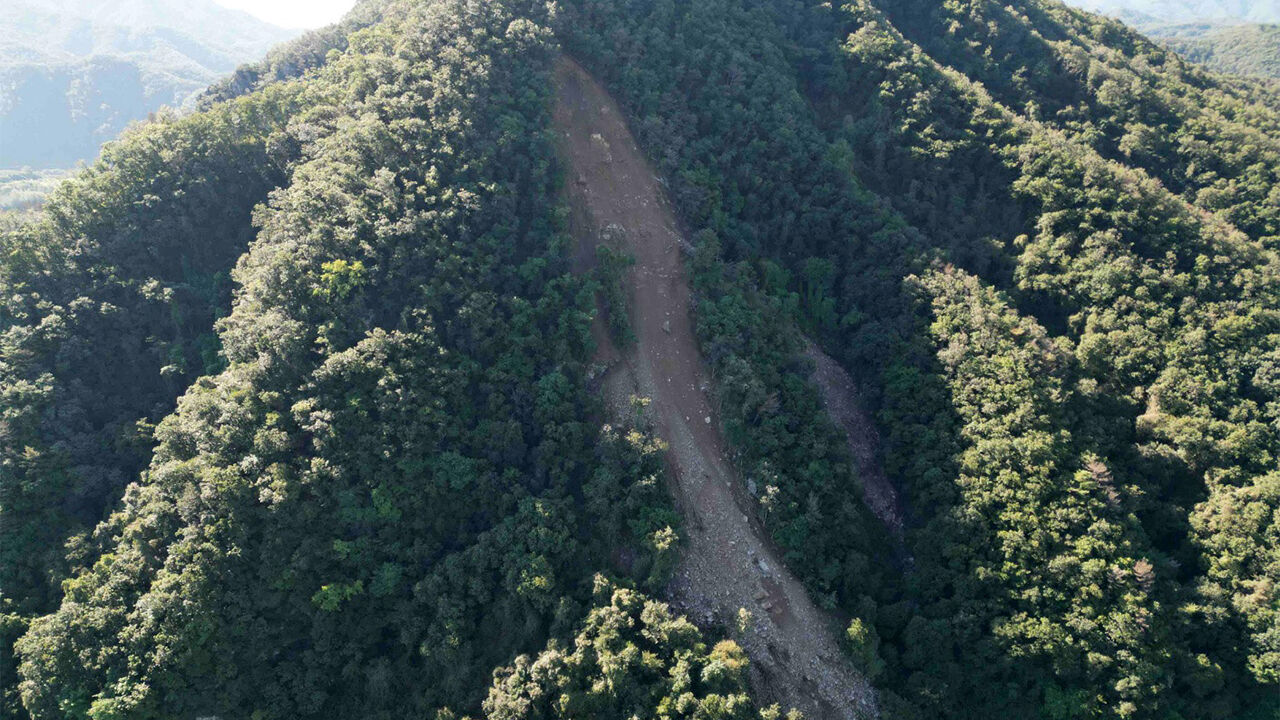
It was confirmed that no separate construction work or solar power facilities had been installed near the site where the landslide occurred.
According to the Gangwon Regional Meteorological Administration, 45.8 mm of rain fell over the three days from August 31 to September 2.
The county has requested technical consultation from the Korea Forest Disaster Prevention and Safety Technology Association to identify the exact causes of the landslide—such as the possibility of the ground being weakened by recent rainfall—as well as the extent of the damage and recovery directions.
The county plans to continuously monitor for further soil outflows and initiate emergency recovery operations as soon as the soil movement stops.
(Photo: Yonhap News)
※ Please note: This article was translated by AI and may contain errors.





 Video News

 Video News