
 KOR
KOR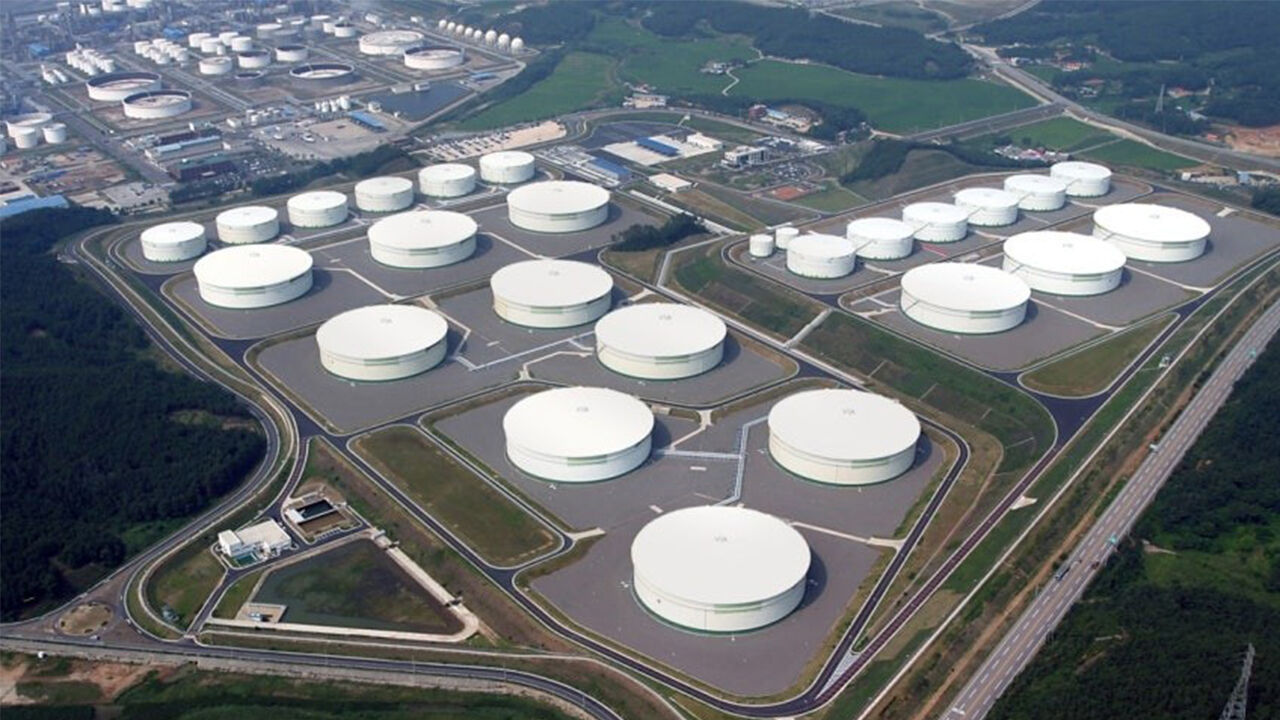
▲ Panoramic view of the Korea National Oil Corporation Seosan stockpile base
The government is pushing to merge the Korea National Oil Corporation (KNOC) and the Korea Gas Corporation (KOGAS) to respond to energy supply chain crises.
Pulling out a merger card that was scrapped by previous administrations, the biggest obstacle is considered to be resolving the massive debt of KNOC, which amounts to 20 trillion won.
According to the "Public Institution Function Reform Promotion Plan" announced by the government today (September 3), KNOC and KOGAS will be combined into the Korea Energy Resources Corporation (tentative name).
The vision is to realize economies of scale by integrating the two companies and boost international negotiating power.
According to the Ministry of Trade, Industry and Energy, very few developed countries operate separate state-run oil and gas enterprises.
In particular, since oil and gas are often discovered together during drilling processes, the integration is expected to reduce duplicate investments and strengthen exploration expertise.
However, the Korea Mine Rehabilitation and Mineral Resources Corporation, which had also been discussed alongside them, was excluded from this integration target.
Judging that oil, gas, and mining have completely different extraction and exploration methods with low synergy, it was decided to review and pursue a separate normalization plan for the Mine Rehabilitation and Mineral Resources Corporation.
The merger plan for KNOC and KOGAS was first brought up in 2016 during the Park Geun-hye administration.
At the time, the Ministry of Trade, Industry and Energy even hired a foreign consulting firm to pursue the merger, but it fell through.
During the Moon Jae-in administration, a second task force (TF) was formed to push for the merger once again, but it also ended in failure.
Meanwhile, as the Russia-Ukraine war broke out and the outbreak of war in the Middle East this year further heightened the necessity of energy security, the government judged that it was difficult to delay the integration of the two public enterprises any longer.
The biggest obstacle is KNOC's massive debt, which reaches 20 trillion won.
As of the end of last year, KNOC is in a state of complete capital erosion, with liabilities exceeding assets by more than 2.5 trillion won.
If KOGAS, whose financial structure has been improving since 2024, takes over this debt as it is, there is a high possibility that even KOGAS's financial structure will be impaired.
Accordingly, the government is reviewing various measures, such as creating a separate liquidation subsidiary to handle KNOC's debt.
(Photo provided by Korea National Oil Corporation, Yonhap News)
※ Please note: This article was translated by AI and may contain errors.




 Video News
 Video News
 Video News
 Video News