
 KOR
KOR
▲ Launch ceremony for the Gyeonggi Provincial Office of Education's Teachers' Rights Protection Officers (Photo provided by the Gyeonggi Provincial Office of Education, Yonhap News)
A group of 300 experts dedicated to providing one-on-one, all-in-one support for teachers who have suffered infringements on their teaching rights has been launched by the Gyeonggi Provincial Office of Education, about two months after Superintendent Ahn Min-seok took office.
The syndromic popularity of the Netflix series "Teach You a Lesson", which starkly exposes the realities of teachers' rights violations and presents satisfying solutions through its main character "Na Hwa-jin," has heightened public consensus on the need to protect teachers' rights. Combined with Superintendent Ahn's strong resolve to resolve the issue, this led to high participation from experts across various fields in a short period.
While other provincial and metropolitan education offices have previously introduced similar policies, such as teachers' rights protection officers, this is the first time such a large-scale group composed of diverse professions has been formed.
Psychiatrists, lawyers, former police officers, and current teachers serving as protection officers have vowed to pour their careers and experiences built in their respective fields into protecting "victim teachers."
In particular, they raised their voices, stating, "It is a reality that teachers simply cannot handle on their own," and "Education for students can only survive if teachers survive."
Ji Gu-deok, head of Hanseo Joongang Hospital in Uijeongbu and deputy head of the Gyeonggi Provincial Office of Education's Teachers' Rights Protection Unit, said in a phone interview with the press on September 3, "In the past, we mostly treated students, but nowadays, more teachers than expected receive treatment at psychiatric departments."
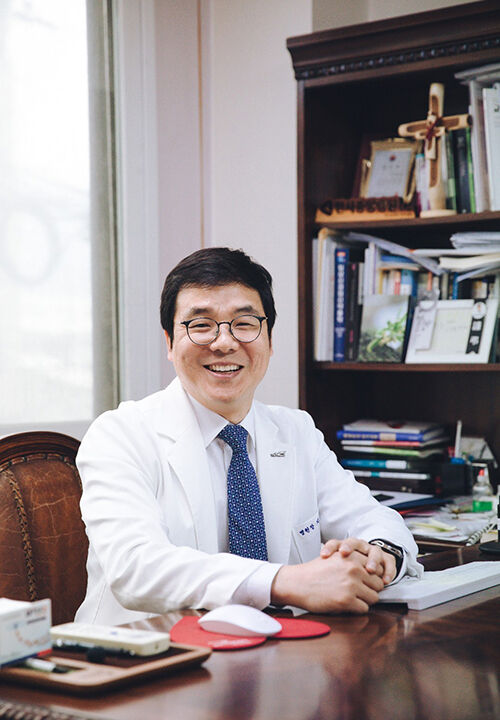
Director Ji added, "Teachers often come to us in a state of crisis after being exhausted from dealing with students and parents, and feeling completely isolated due to a lack of understanding from those around them, such as school administrators."
Director Ji, a neuropsychiatrist, is an expert who has handled school crisis cases for years.
After taking over the hospital in 2013, he has taken the lead in expanding the Ministry of Education and Gyeonggi Provincial Office of Education's hospital-style Wee Center program nationwide since 2018.
The hospital-style Wee Center is a program that directly connects high-risk emotional students in urgent need of psychological treatment with hospitals, supporting inpatient treatment when necessary.
Saying he stepped up for the Wee Center program out of his fondness for students, Director Ji noted that while dealing with crisis cases, he naturally encountered teachers in need of help and came to physically feel the necessity of protecting teachers' rights.
He said, "When I do counseling or lectures, teachers express an immense amount of frustration, unfairness, and resentment. Because their responsibilities are heavy but the system fails to back them up, they are deeply exhausted," adding, "I will sincerely help the teachers in crisis who have crossed paths with me."
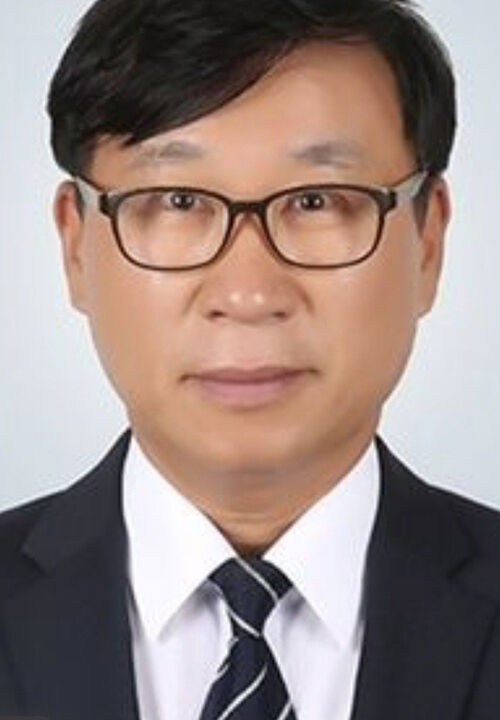
Bae Geun-seok (67), a professor of guard and police administration at Shin Ansan University who served as a police officer for 35 years, is a dispute resolution expert.
Ahead of his retirement in 2020, he opened his eyes to the work of caring for victims' hearts while receiving the National Police Agency's first-round training on "restorative police activities for victims." Since then, he has expanded his scope as a field expert by completing the education office's dispute resolution expert training and lecturing at the National Police Agency and Human Resources Development Institute.
Professor Bae said, "Teachers more often endure conflicts with students or parents rather than reporting them one by one out in the open. Even when they raise issues, the current system requires teachers to entirely endure everything from reporting, criminal and civil procedures, to the conclusion of the case on their own. Based on my capabilities, I will become an assistant who provides legal advice and helps with psychological recovery."
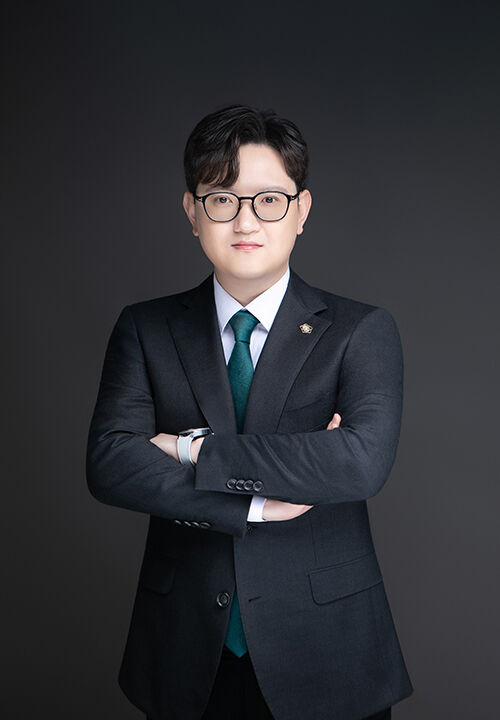
Kim Ki-hoon (39), a criminal law specialist with 10 years of experience, said he reached his decision to help teachers suffering from rights violations after taking on their legal representation.
He said, "I was quite shocked while defending a teacher who was worried about her students and education even in the situation of a crime victim," adding, "I also encountered cases where, even when teachers' rights were infringed, workplaces did not protect them but instead tried to downplay the matter by telling them to 'bear with it,' and I thought I wanted to be of help to these people."
Lawyer Kim emphasized, "What is truly pitiful is that school work tends to be piled onto young and passionate teachers, and problems arise in the process of carrying out those tasks," adding, "My ultimate goal is not only to provide legal support services but also to ensure that teachers do not feel the isolation of being alone."
The current lineup of protection officers also drew attention by including a former investigator from the National Human Rights Commission of Korea.
Shin Sang-hoon (58), who worked in the human rights commission's rights infringement remedy team for about three years starting in 2004, has experience exclusively investigating cases such as the "Army Training Center human waste incident" and the "Yeoncheon GP grenade and shooting rampage incident."
Shin, who also has a military police background, stated, "I want to pour the conflict mediation and human rights protection capabilities I have accumulated in the military and the human rights commission into protecting teachers' rights," and added, "Infringements on teachers' rights are not just individual problems; they can lead to the collapse of the educational community. I will contribute to establishing a practical safety net for teachers' rights protection."

The passion of educators, who account for about 30 percent of the protection officers, is also fervent.
Yoon Seon-no, a teacher at Pyeongtaek Cheongok Elementary School who single-handedly supported his wife—a teacher who suffered a rights violation three years ago—pointed out that existing systems cannot practically help victim teachers.
Teacher Yoon criticized, "For example, the existing method is just giving a list of hospitals where victim teachers can receive counseling, which ultimately requires teachers to find hospitals one by one. At schools, vice principals play a role, but because there are many school tasks outside of teachers' rights violation issues, it is structured in a way that makes it difficult to receive help from school administrators."
He emphasized the importance of the protection officers' role, which involves rapidly intervening from the initial response and taking charge of all procedures, while also expressing that teachers, students, and parents should not be divided but rather coexist as "One Team."
Yoon stated, "Teachers' rights are ultimately students' rights to education," and added, "People compare the protection officers to the drama 'Teach You a Lesson', but school members should not be portrayed in a confrontational relationship like in the drama. I think dispelling these misunderstandings is also a role we must fulfill."
(Photo provided by the Gyeonggi Provincial Office of Education, provided by the interviewee, Yonhap News)
※ Please note: This article was translated by AI and may contain errors.




 Video News
 Video News
 Video News
 Video News