
 KOR
KOR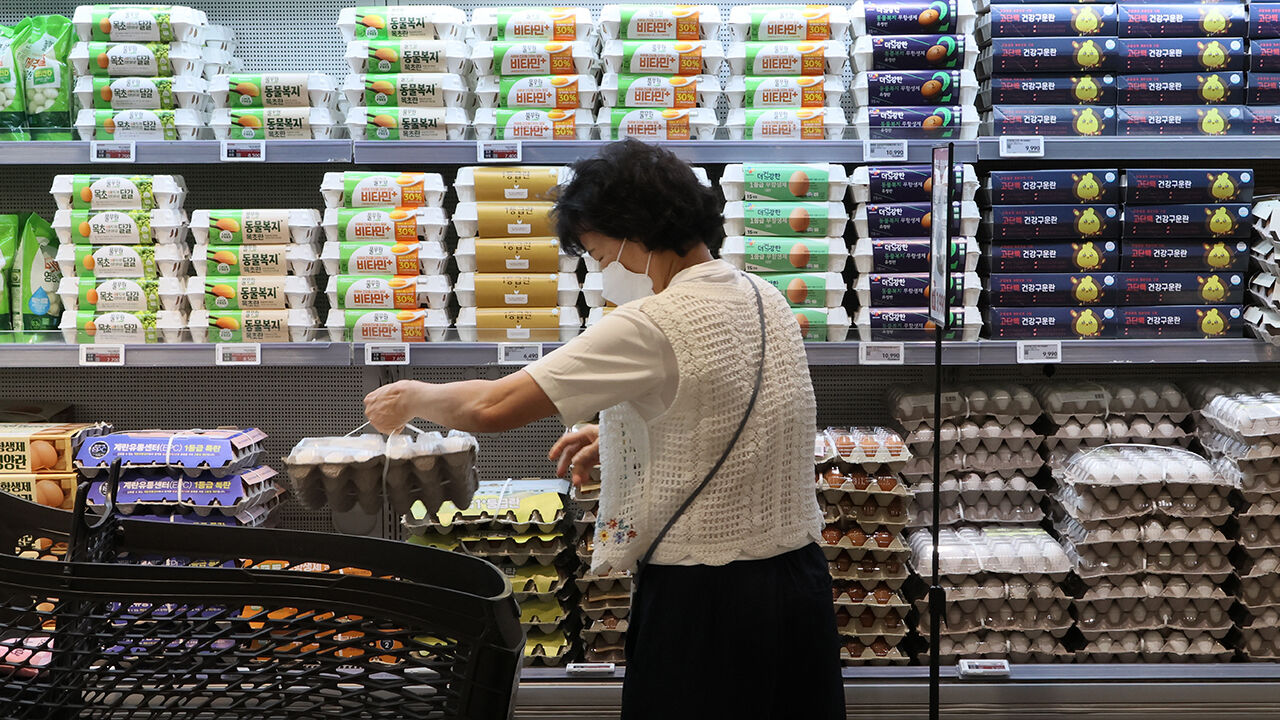
▲ A large supermarket in Seoul
Data showed that the burden of food expenses, including groceries and dining out, grew more significantly for low-income households than for middle- and high-income earners in the second quarter of this year.
Experts point out that as the burden of essential consumer spending such as food grows, the spending capacity of low-income households is likely to have diminished.
According to the Korean Statistical Information Service (KOSIS) on the 30th, total household spending on food averaged 891,000 won per month in the second quarter of this year, an increase of 3.3% from a year earlier.
Broken down by category, spending on groceries and non-alcoholic beverages stood at 434,000 won, while dining out and meal expenses came to 457,000 won.
By income bracket, food spending for the second income quintile, representing the bottom 20% to 40%, surged 6.9% from a year earlier to a monthly average of 657,000 won, marking the steepest increase among all income quintiles.
The second quintile's monthly average spending was surveyed at 344,000 won for groceries and non-alcoholic beverages, and 312,000 won for meals.
The growth rate of food expenses for the second quintile was more than double the overall average.
Following the second quintile was the first quintile with a 6.1% increase.
The first quintile spent an average of 473,000 won per month on food.
Monthly average expenditures for groceries and non-alcoholic beverages stood at 289,000 won, while meal expenses were 184,000 won.
The fourth quintile (1,108,000 won), which saw the third-highest growth rate, recorded a 3.1% increase—about half the rate of the second-ranked first quintile.
The third quintile (841,000 won) followed with a 2.0% increase, while the fifth quintile (1,378,000 won) recorded the lowest growth rate at 1.8% थाने.
The proportion of food expenses relative to total household spending was highest for the first quintile at 30.3%.
This is a 0.2 percentage point rise from a year earlier.
Next was the second quintile at 27.2%.
The second quintile's ratio expanded by a full 1.0 percentage point.
For the fifth quintile, which recorded the lowest share, the ratio stopped at 17.8%.
Even that figure contracted by 0.4 percentage points compared to a year earlier.
The growing food cost burden on low-income households is attributed to rising food prices which cannot be significantly reduced in volume due to their essential nature.
In the second quarter, notable price increases were observed in frequently consumed ingredients and seasonings such as rice (13.2%), potatoes (11.1%), green onions (10.0%), soy sauce (9.3%), and eggs (9.0%).
In particular, rice prices have maintained double-digit growth for four consecutive quarters, while eggs—a cheap and accessible source of protein—suffered supply shocks due to avian influenza outbreaks last winter, driving steep price increases throughout the year.
Prices of affordable dining-out menus such as triangular gimbap (4.0%), tteokbokki (4.0%), jajangmyeon (3.9%), and hangover soup (3.8%) also showed increases well above the overall consumer price inflation rate (3.0%) for the second quarter, apparently compounding the burden on low-income families.
(Photo: Yonhap News)
※ Please note: This article was translated by AI and may contain errors.



 Video News


 Video News