
 KOR
KOR
A Massive Flood Striking Without a Single Cloud or Drop of Rain
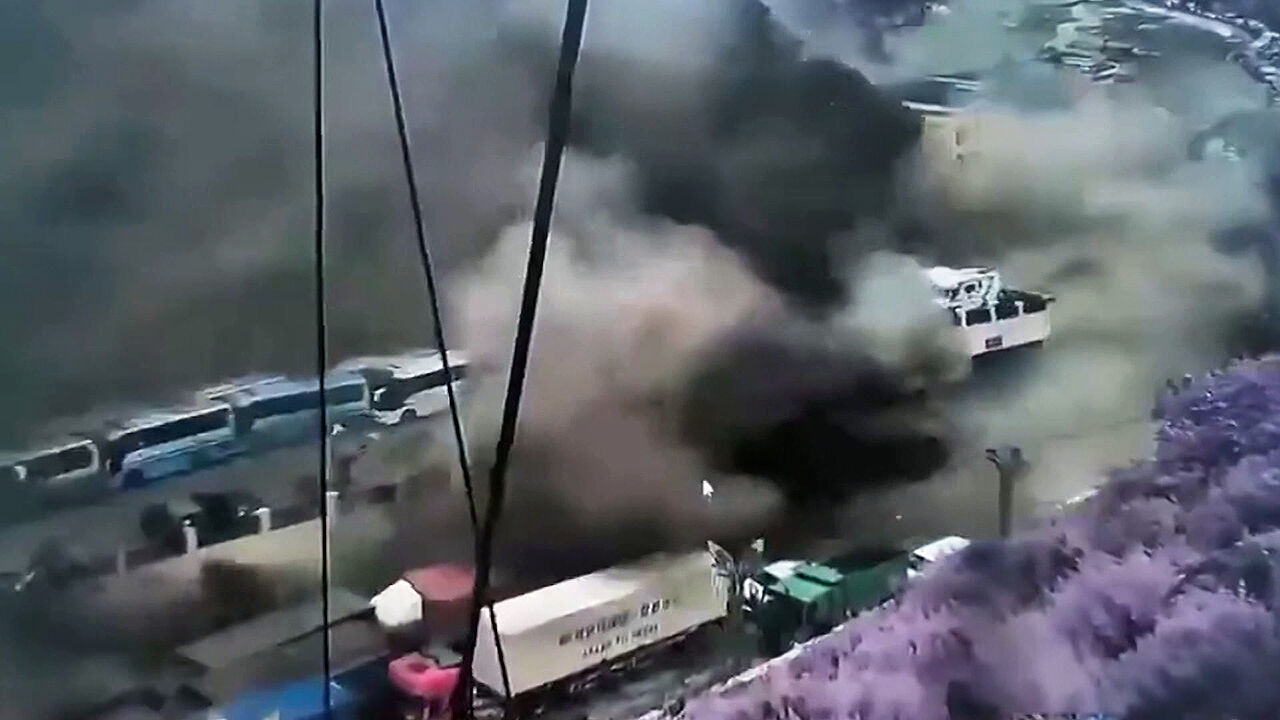
The footage of the incident being made public is beyond shocking. Watching the overwhelming torrent swallow people and vehicles as well as entire bridges and buildings whole almost makes one wonder if the footage was manipulated. Above all, it was downright eerie to see massive volumes of water and debris crashing down under a clear blue sky without a single cloud, with sunshine pouring down instead of rain. Where on earth did all that water come from when not a single drop of rain had fallen?
Cause of the Disaster: Glacial Lake Outburst Flood
However, when temperatures in high-altitude mountain regions rise due to global warming, it is not just the visible glaciers that melt. The underground permafrost layer and the ice core inside the moraine dam also thaw. Once the ice in the permafrost turns to water and drains away, the cement holding the gravel and soil together disappears. As microscopic voids form in the ground, its shear strength drops sharply. When the permafrost supporting the steep rock walls surrounding a glacial lake melts, the entire solid bedrock layer becomes prone to detaching from the ground. Furthermore, as glaciers melt faster due to rising temperatures, the water level of the lake rises continuously. The water pressure that the already weakened dam must withstand grows increasingly larger, eventually reaching its breaking point.
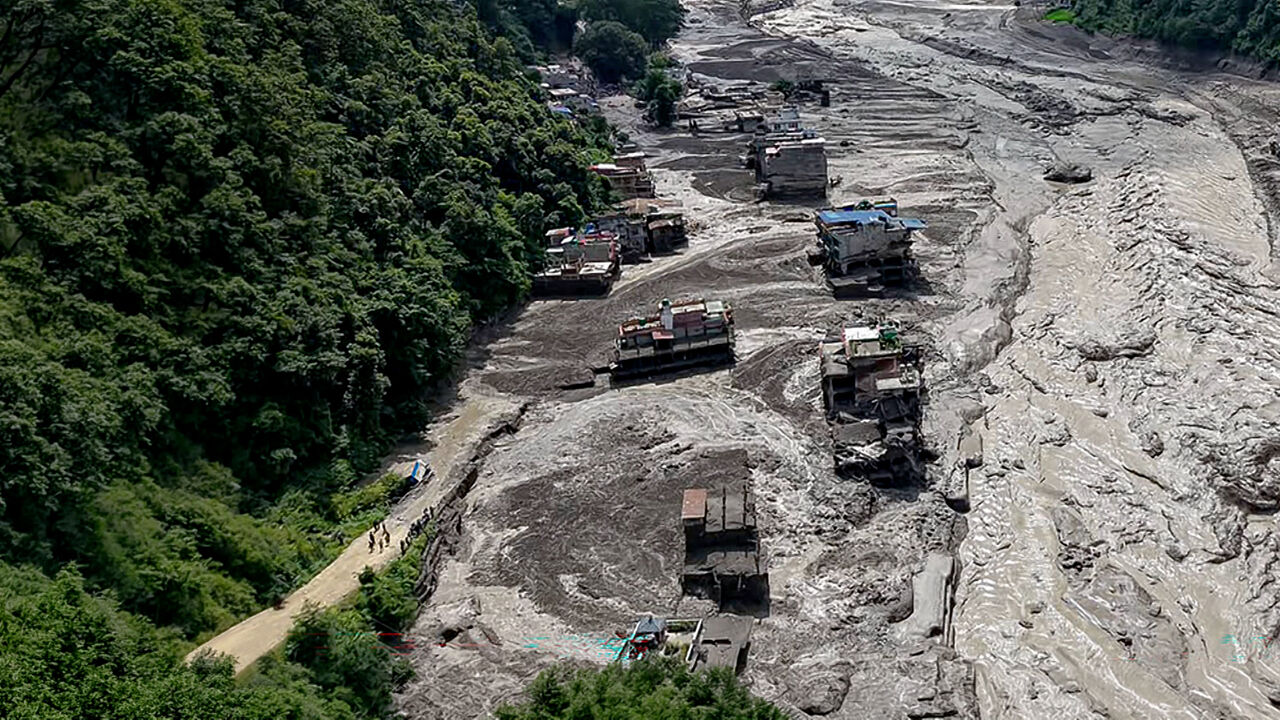
Ultimately, catastrophe struck. At the time the massive flood occurred, a magnitude 5.4 earthquake was detected. For this reason, an earthquake was initially presumed to have triggered the glacial lake collapse. However, the U.S. Geological Survey analyzed the seismic waves as 'artificial seismic waves' generated when tens of millions of tons of sediment and glacial ice collapsed all at once, rather than an earthquake caused by tectonic activity. This means external forces such as an earthquake were not the root cause. Rising temperatures caused the permafrost inside the rock wall to melt, losing its ground-holding capacity. In an instant, millions of tons of glacial ice and rock masses collapsed and plunged into the lake. Analysts explain that this massive impact was recorded as seismic waves equivalent to a magnitude 5.4 earthquake. The falling sediment and rocks struck the surface of the lake violently, generating massive waves. These waves exerted immense force on the weakened moraine dam. The moraine dam, whose internal ice had already melted and degraded into sand and gravel, could not withstand the impact of the waves and the water pressure. It collapsed in just a matter of minutes. As the dam burst, hundreds of millions of liters of trapped water mixed with surrounding soil, boulders, and shattered ice to form a massive debris flow that swept down the narrow V-shaped valley downstream.
The Growing and Intensifying Threat of Glacial Lake Outburst Floods
In fact, in a 2023 paper published in Nature Communications, a research team led by Caroline Taylor of Newcastle University in the UK warned that 15 million people worldwide are directly exposed to the risk of glacial lake outburst floods. They revealed that more than half of the endangered population is concentrated in high-altitude Asian regions, including India, Pakistan, China, and Nepal. They also pointed out that countries such as Peru in the South American Andes face extremely high risks comparable to the Himalayas. The findings of a global glacial lake change study published in 2020 are equally chilling. Between 1990 and 2018, the number of glacial lakes worldwide reportedly increased by 53%. The total water volume also increased by about 48%, reaching approximately 156.5 km². Glacial lakes created as glaciers retreat have not merely grown in water volume. As they spread into high-altitude areas with steep slopes and high landslide risks, their structure is shifting so that their destructive force becomes far greater if they collapse. On top of that, hydroelectric power plants, roads, tourist facilities, and residential areas are rapidly multiplying along downstream valleys in high mountain zones. Even if a collapse of the same scale occurs, the magnitude of human and economic damage has grown beyond comparison to the past.
Humanity Tightening the Noose Around Its Own Neck
The threat of massive methane explosions is also growing. Methane gas trapped deep underground powerfully explodes through the ground surface as the overhead pressure weakens due to permafrost thawing. Indeed, massive sinkhole-like craters reaching tens of meters in depth have formed in areas such as the Yamal Peninsula in Siberia, posing direct threats to nearby gas fields and infrastructure. Furthermore, permafrost worldwide holds approximately 1.5 trillion tons of carbon—roughly double the amount in the atmosphere. Consequently, when it thaws, methane and carbon dioxide are released in massive quantities, creating a vicious cycle that accelerates global warming even further.
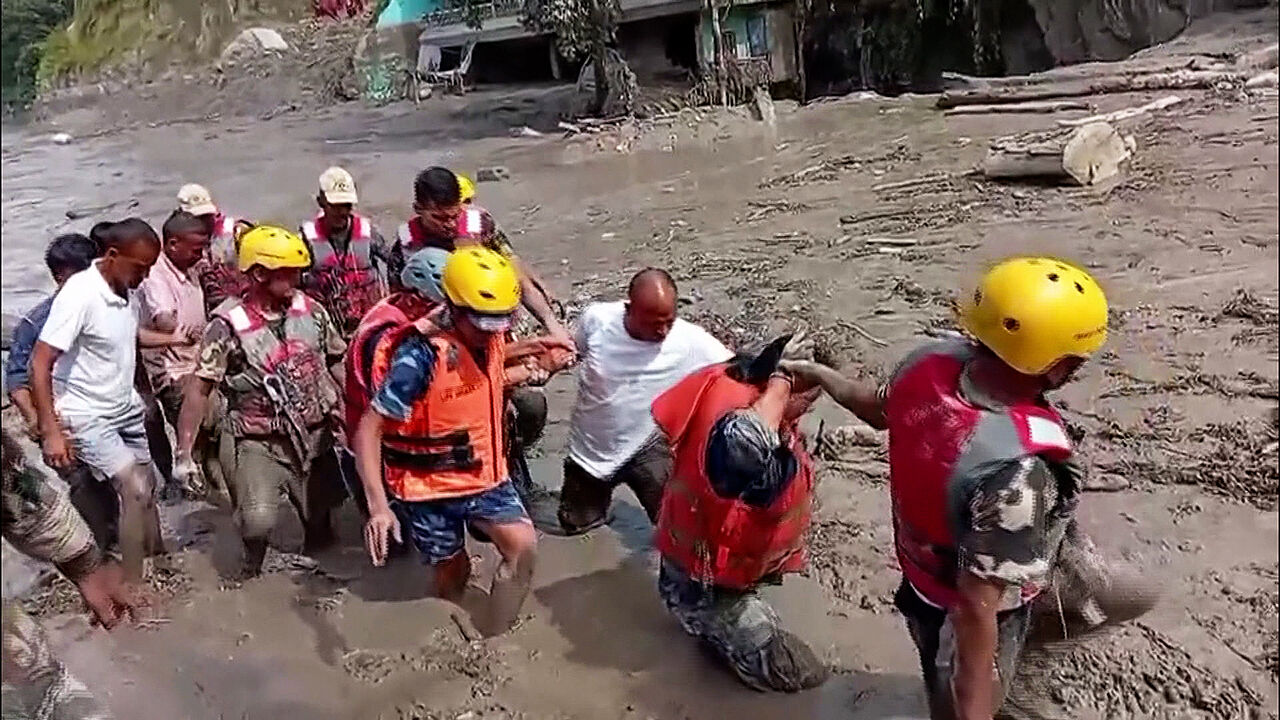
Ten years ago, I reported on the devastation of the massive earthquake in Nepal. While the damage was catastrophic, it was an act of nature beyond human control, leaving me feeling humble before the power of nature. However, this glacial lake outburst flood is all the more horrifying and devastating because it is a disaster that humanity has cultivated and brought upon itself.
※ Please note: This article was translated by AI and may contain errors.



 Video News
 Video News
 Video News

