
 KOR
KOR
As the leader of the ruling party, Kim laid out three action plans in his acceptance speech yesterday on how he will lead this golden age: "politics of livelihood and making ends meet, big and broad additive politics, and competent politics"—the "ABC Plan" standing for "Affordability, Broad, and Competence" in English.
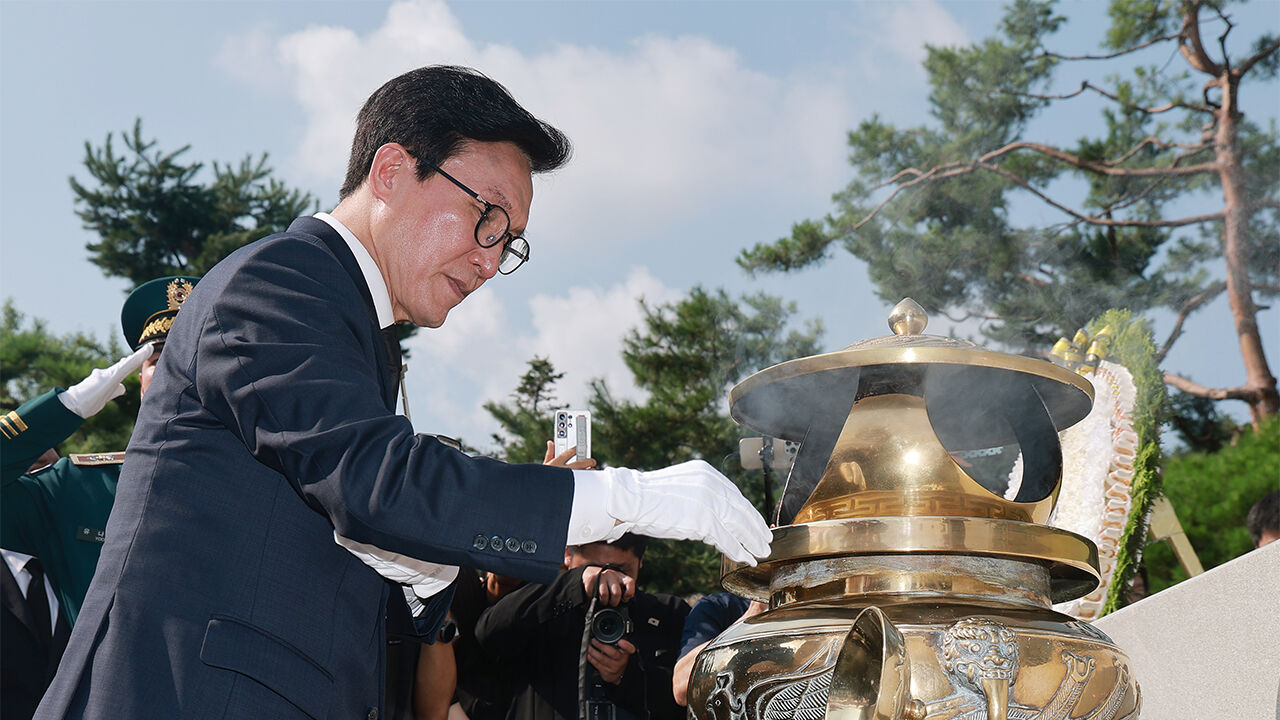
Five Key Challenges... First Test of Mediation Skills on Real Estate Tax Reform
At this meeting, the issue of reforming the special deduction for long-term holding for non-resident single-home owners—about which Kim expressed concern toward the end of the national convention—is likely to be brought up. On social media on August 14, Kim stated, "Abolishing the holding deduction for non-resident single-home owners in capital gains tax has an aspect of effectively raising taxes on non-resident single-home owners with properties valued at over 1.2 billion won." He added, "Concerns have been raised that it could cause side effects, such as forcing tenants to vacate," effectively calling for a reconsideration.
In recent opinion polls, the president's approval rating has shown a downward trend, particularly in the Seoul metropolitan area and among people in their 20s and 30s, with respondents citing the current administration's real estate policies as the reason. For Kim, who has pledged to support the success of the Lee Jae-myung administration, this will be a test to demonstrate his policy mediation skills. If the government's proposal aims to curb speculative long-term holding benefits, the party must present specific criteria to distinguish speculative non-residence from unavoidable non-residence, and more broadly, propose solutions to prevent growing instability in the rental market. Representative Song Young-gil, a pro-Lee figure and rival in the convention, also pointed out, "The presidential approval rating is falling because of mishandling real estate," adding, "Comprehensive real estate tax and capital gains tax on one home per household only amount to 1 trillion won, so why risk everything over 1 trillion won?"
Given that public sentiment on real estate has historically been an Achilles' heel for the Democratic Party in elections, observers note this is directly linked to the confidence vote criteria Kim himself put forward. At a joint speech session for the Gangwon regional primary on August 9, Kim stated, "Next year's Gangneung parliamentary by-election and the Seoul mayoral election are practically set. If elected party leader, I will win the Seoul mayoral election, achieve the best possible result in the Gangneung by-election, and ask party members for a vote of confidence based on those results."
134 Follow-up Bills for Criminal Procedure Act Revision... How to Protect Victims?
Before running in the national convention, Kim oversaw the Task Force on Prosecution Reform for more than eight months as prime minister. At the time, Prime Minister Kim did not introduce a separate government bill and maintained a stance of respecting National Assembly discussions, which led to a debate with candidate Jung Chung-rae during the party convention over "who was more at fault." Regarding the failure to submit a government proposal, Park Chan-un, former head of the advisory committee for the Task Force on Prosecution Reform, criticized it as "the disappearance of accountable politics."
Dropping Indictments in Cases Involving the President... Political Fallout Surges if Ruling Party Intervenes
During the national convention campaign, Kim said in a media interview regarding the withdrawal of indictments, "If prosecutorial fabrication of an indictment is evident, it is a matter of principle that it should be dropped at that very moment." A close aide to Kim also explained, "The intention is that if a fabricated indictment is confirmed, continuing a trial based on such fabrication makes no sense." If state agencies conducted fabricated investigations and indictments, correcting them according to the procedures established by the Constitution and law is naturally necessary.
However, with multiple cases involving the incumbent president subject to investigation by an internal Justice Ministry committee, further intervention by the ruling party will drastically increase political fallout. Opposition voices are substantial not only from rival parties but also from within the broader ruling coalition. Previously, a group primarily composed of pro-Lee lawmakers formed the "Caucus to Pursue Indictment Dismissals and Parliamentary Investigation for President Lee Jae-myung's Cases," but author Rhyu Si-min—who categorized Democratic Party supporters into ABC (value-driven traditional supporters, interest-driven new Lee supporters, and their intersection)—fiercely criticized it as "sheer madness."
Four-Year Consecutive or Multiple Terms? Constitutional Amendment Remains Divisive Even Within Ruling Bloc
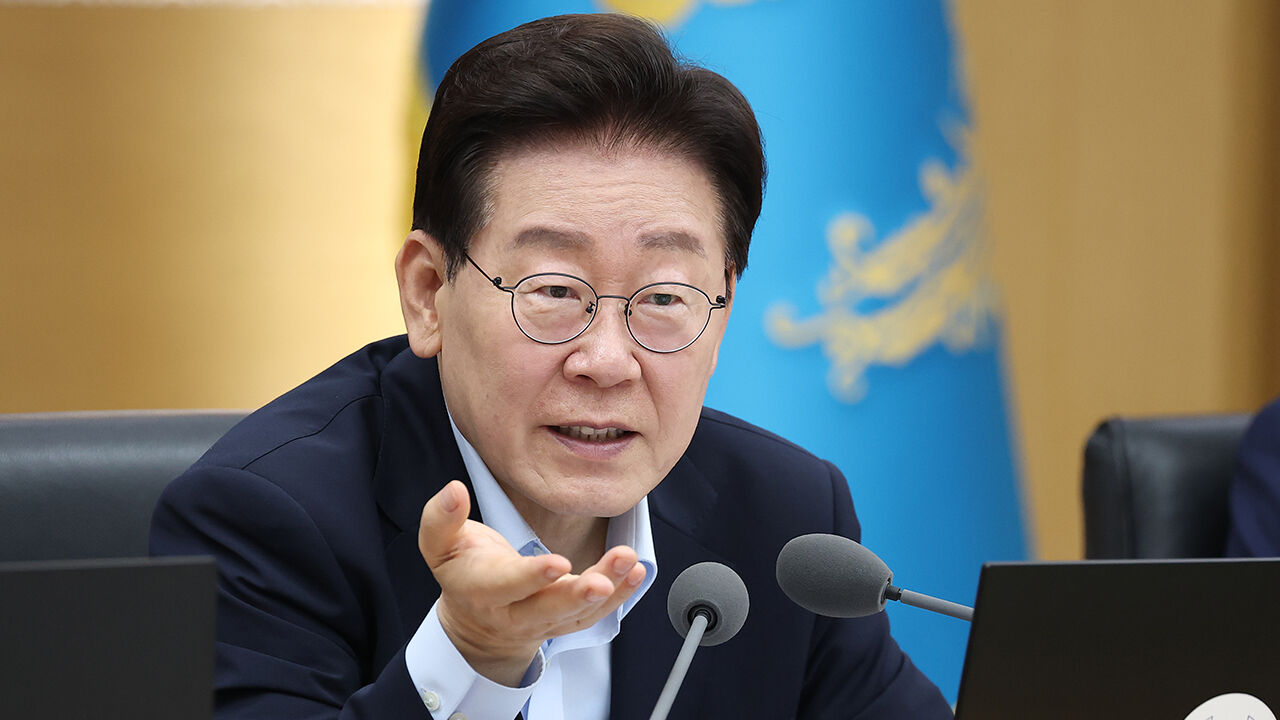
If the Criminal Procedure Act amendment is an issue of institutional design, the controversy over dropping indictments is a matter of political trust arising when the system intersects with cases involving the incumbent president. With constitutional amendment debates involving power structure reform added to this mix, Kim faces the task of clearly demarcating the boundary between the rule of law and political interests.
Final Task Is Internal Party Conflict... Can He Achieve Unity Beyond 'Derogatory Slurs' and 'Digging Up the Past'?
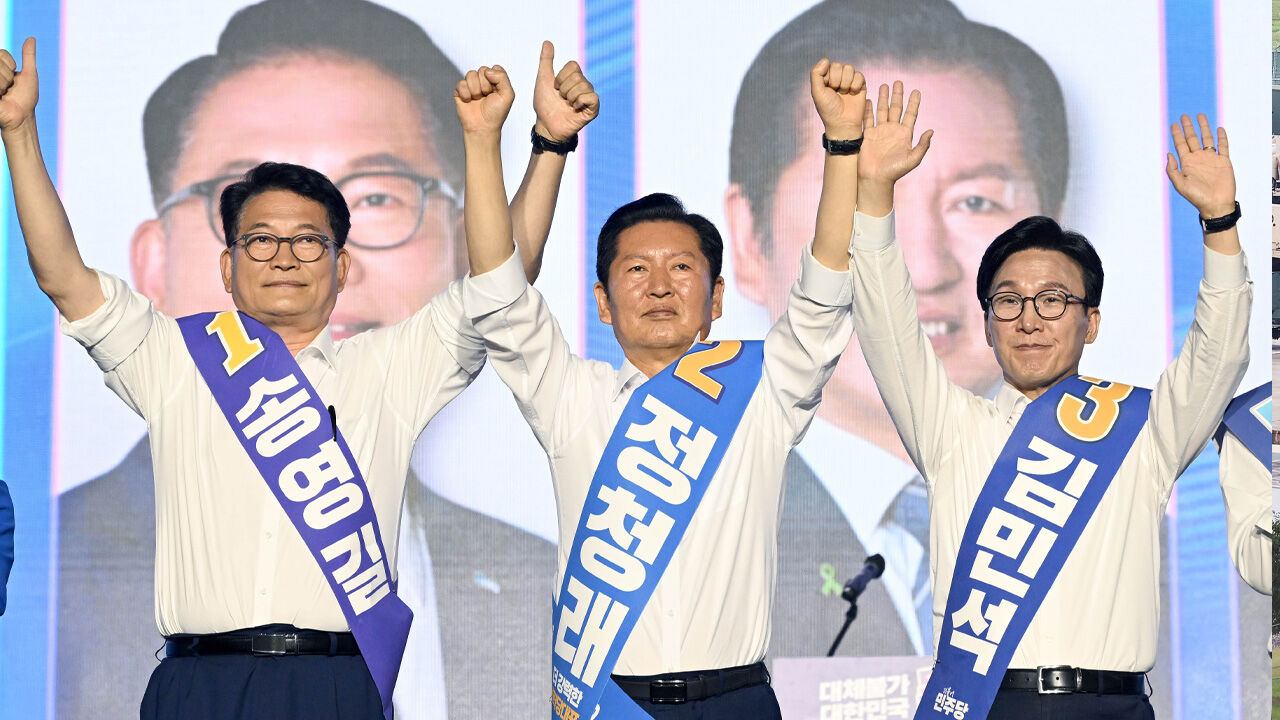
The convention results also demonstrate that greater energy will be required for unity. After failing to secure a majority in the first round, Kim Min-seok obtained 54.08% under the ranked-choice voting system following support from candidate Song Young-gil. Although the convention took place amid overwhelming support from the pro-Lee faction and dues-paying members in the Honam region, his vote share was lower than the 61.74% won by former party leader Jung Chung-rae a year ago. Furthermore, in the composition of the party leadership, three out of the five elected supreme council members are pro-Jung. The defeat of candidate Kim Yong—whom President Lee had referred to as his alter ego and for whom Kim also appealed for last-minute support—is likely all the more painful. Following his defeat, Representative Jung Chung-rae stated on a live broadcast, "Jung Chung-rae lost, but Jung Chung-rae's supporters won. While Jung Chung-rae ultimately lost in numbers, what Jung Chung-rae advocated did not lose." Drawing on the party base and public opinion that yielded his 45.92%, his remarks can also be seen as an indication that the factional struggle over the party's direction will continue.
Kim's "romantic dream" has become a reality, but the real homework begins now. On real estate and the stock market, he must deliver adjustments that the market can accept; on the Criminal Procedure Act and the issue of dropping indictments, he must secure procedural trust. On constitutional revision, he must steadily build from agreeable agendas, and on internal party conflict, he must advance unity and reform in tandem. Now is the time for him to prove it all through "C" for competence.
※ Please note: This article was translated by AI and may contain errors.





![[현장영상] 경찰에 붙잡혔는데 촉법 또 털었다…망치로 키오스크 쾅쾅 내리치더니](http://img.sbs.co.kr/newimg/news/20260818/202213493_300.jpg) Video News
Video News

