
 KOR
KOR
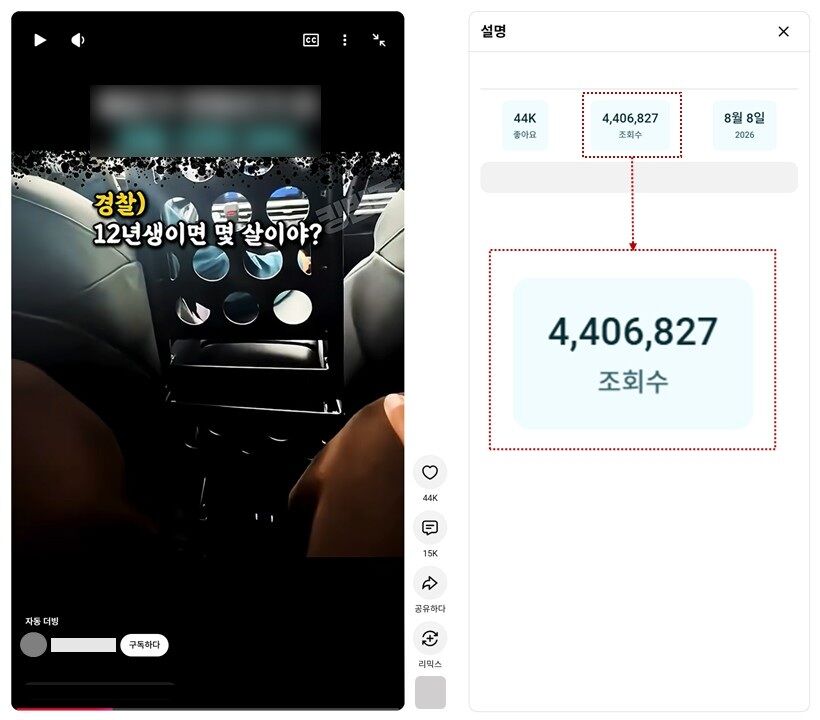
The footage appears to have been filmed directly by the student using a smartphone inside a police vehicle. Identifying himself as born in 2012, the student uses informal language and uninhibited profanity toward the police.
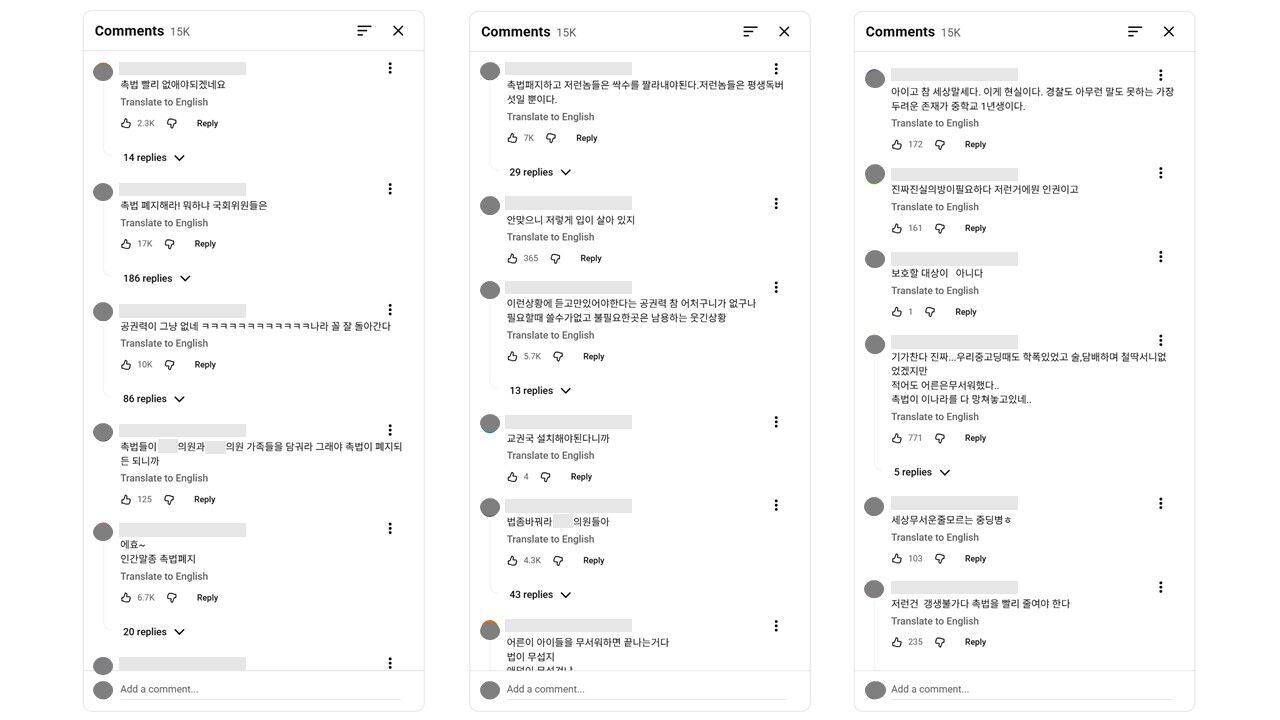
Public outrage was immense, drawing over 12,000 comments. The vast majority were critical, with remarks such as "the juvenile offender system should be abolished" and "a hard lesson is needed."
The SBS Fact Check team first looked into the authenticity of the video. Through searches, we identified a TikTok account presumed to be the original source of the footage, but the video had already been deleted.
However, based on other videos from the same account, we pinpointed the area where the student primarily operated and inquired with the local police station having jurisdiction over that area about the authenticity of the video. The police station replied that it was difficult to verify. We also checked whether the Korean National Police Agency had any records, but received the same response.
We wanted to report on the background of the incident and subsequent handling, but the process was not easy.
In fact, that is understandable. If the student in the video was truly a juvenile offender under criminal age protection, even if they swore at the police as shown in the video, they are not subject to criminal punishment. As is well known, juvenile offenders—who are criminal minors aged 10 and older and under 14—do not face criminal punishment even if they commit acts that violate the law. Naturally, investigations into the offense would likely not have been conducted, and there is a high probability that no specific records exist, at least regarding that charge.
Of course, it would have been different for an adult. While it is rare for simple profanity directed at police officers in an enclosed space without public exposure, such as the back of a patrol car with no third parties present, to be punishable, if someone harbors a grudge against a police officer and states an intent to harm even the officer's family members, it could meet the requirements for the crime of intimidation. In the video, the student says, "Should I go after your parents too?"
While a detailed legal review is necessary, there is a similar legal precedent. In December 2019, a civil petitioner caused a disturbance at an administrative welfare center, telling responding police officers, "I remember your face" and "I will kill you," and repeated similar remarks inside the patrol car. The court ruled as follows and sentenced the individual to guilty:
Intimidation in the crime of obstruction of official duties refers to the act of notifying an evil or harm with the intent of arousing fear in the other party... This sufficiently corresponds to 'intimidation' as referred to in the crime of obstruction of official duties based on the criteria seen above, and it cannot be considered a level so minor that the other party would disregard it entirely.
- Suwon District Court, Sentence on August 14, 2020, 2019Godan8471 Ruling
Next, we examined how the video spread. The SBS Fact Check team was able to identify another issue in the dissemination process.
This video was actually not new. It was footage that had already circulated back in May. It had already become a controversy through media reports.
The timeline is as follows. Around May, the student had already uploaded the video to their TikTok account, and a broadcasting company aired it, sparking widespread outrage. Media outlets also cited the content and wrote quite a few articles about it.
This process was easily verifiable through searches.
The social implications contained in this pattern of video spread and consumption do not seem minor.
Someone—with unclear intentions—re-uploaded a video whose consumption had already concluded three months ago, making it look as though a new juvenile offender incident had occurred, and it spread rapidly once again. That led right back to 'public outrage.' There were no new 'facts,' meaning the exact same anger was simply 'reproduced.'
Right now, our society faces a critical policy task: lowering the age limit for juvenile offenders. It is a complex and weighty issue with many factors to consider, such as the rehabilitation potential of juvenile offenders and the practical effectiveness of punishment. Rational debate is needed more than ever. However, this kind of 'video recycling' only fuels a revolving door of anger and can obstruct healthy discussions. It carries a high risk of flattening social discourse into one-dimensional, 'punitive' public sentiment.
Beyond simple expressions of anger, calm discussions are needed to find effective alternatives. Recently, the government also announced plans to conduct a public opinion poll regarding the lowering of the juvenile offender age, as mature debate must serve as the foundation to gather effective public consensus.
(Writer: Kim Hyo-jin, Intern: Park Geun-ho)
※ Please note: This article was translated by AI and may contain errors.




![Morning Club Parties with Coffee Instead of Alcohol? [News Story]](http://img.sbs.co.kr/newimg/news/20260815/202212700_300.jpg) Video News
Video News
 Video News
 Video News
 Video News