
 KOR
KOR
▲ Samyeongdaesa Experience and Education Center
Donghwasa Temple, located on Palgongsan Mountain in Daegu, is a famous temple that politicians always visit along with Seomun Market during election seasons. As the head temple of the 9th District of the Jogye Order, it governs 146 branch temples, exerting significant influence in both the Buddhist order and the region. Former President Yoon Suk Yeol visited the temple during his first regional tour as president-elect, and it was also where his father's 49th-day Buddhist memorial service was held. Recently, Donghwasa has been in turmoil. At the center of the controversy is Venerable Uihyeon, a senior monk known as the "Great Monk," and the project he spearheaded to build the "Samyeongdaesa Experience and Education Center" (hereinafter referred to as the Samyeongdaesa Experience Center).
More Subsidies Before Groundbreaking...
However, even before breaking ground, the subsidy was increased by 7 billion won. The following year, another 5 billion won was added, turning it into a massive 22 billion won project. Even within the Ministry of Culture, Sports and Tourism, internal voices noted, "It is unusual for the subsidy amount to be this large and to more than double."
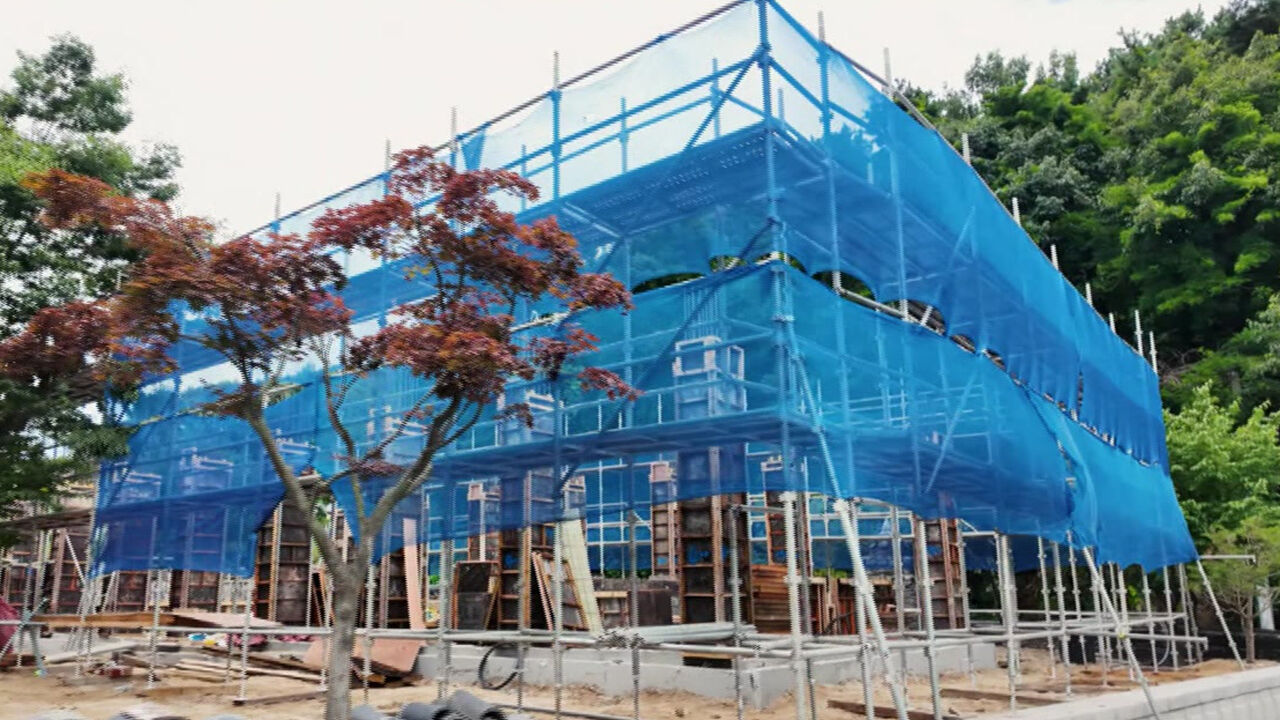
What on earth happened? Officials from Donghwasa Temple and construction company representatives involved in the project concurred, "This happened because the building design was altered under the instructions of the 'Great Monk'." The Great Monk, who was enthusiastic about building the center, ordered design changes every time he returned from visiting famous museums across the country. When construction funds ran short, he actively stepped forward to secure additional budget. Consequently, after the budget was increased, the building was raised from a one-story structure with one underground level to a two-story structure above ground. The interior and exterior wall finishes were changed from paint to granite, and the front yard was paved with stone instead of grass, among other design modifications.
Construction Official A
"After we designed it as a one-story structure above ground, (the Great Monk) didn't like it. He said, 'It looks too shabby.' He seemed to have a strong mindset that, so to speak, 'Something worthy of my status should be built.' He thought, 'How could something built by Uihyeon look like a shanty house?' So after looking at what had been done elsewhere, he said, 'It must be at least bigger than those.' (Omitted) 'How can we use improper materials like this when building the Samyeongdaesa Experience Center?' He made us attach stone to areas where concrete finishing would have sufficed. Out of a desire to build it well, he kept altering the design."
Construction Official B
"Laying grass costs only 10,000 won per square meter, but laying stone costs 100,000 won per square meter. (The Great Monk) said, 'How could we lay grass when building a century-spanning sacred site for Samyeongdaesa? We must lay stone. I will secure the budget somehow, so wait a bit.'"
'Metaverse, VR, AR'... Grand Plans on Paper
However, the money spent this way was originally additional budget received after Donghwasa Temple claimed it would "utilize virtual reality (VR) videos and conduct related exhibitions to allow vivid experiences of Samyeongdaesa." The necessity had been recognized through the channels of the district office, city hall, Culture Ministry, Ministry of Planning and Budget, and the National Assembly. According to the project plan submitted by Donghwasa at the time, it aimed to 'create productions utilizing the metaverse, virtual convergence technology, AR, and immersive content to help understand the meaning of patriotism and historical value, and enjoy the value of Buddhist culture.'
The subsidy allocated for 'VR and exhibition work' expanded from an initial 1.2 billion won to 7.85 billion won (1st increase), and then to 10.65 billion won (2nd increase). This accounts for half of the final project cost. Most of the funds received for this were diverted to construction costs. To check whether experiences and exhibitions were possible as planned, we looked inside the building.
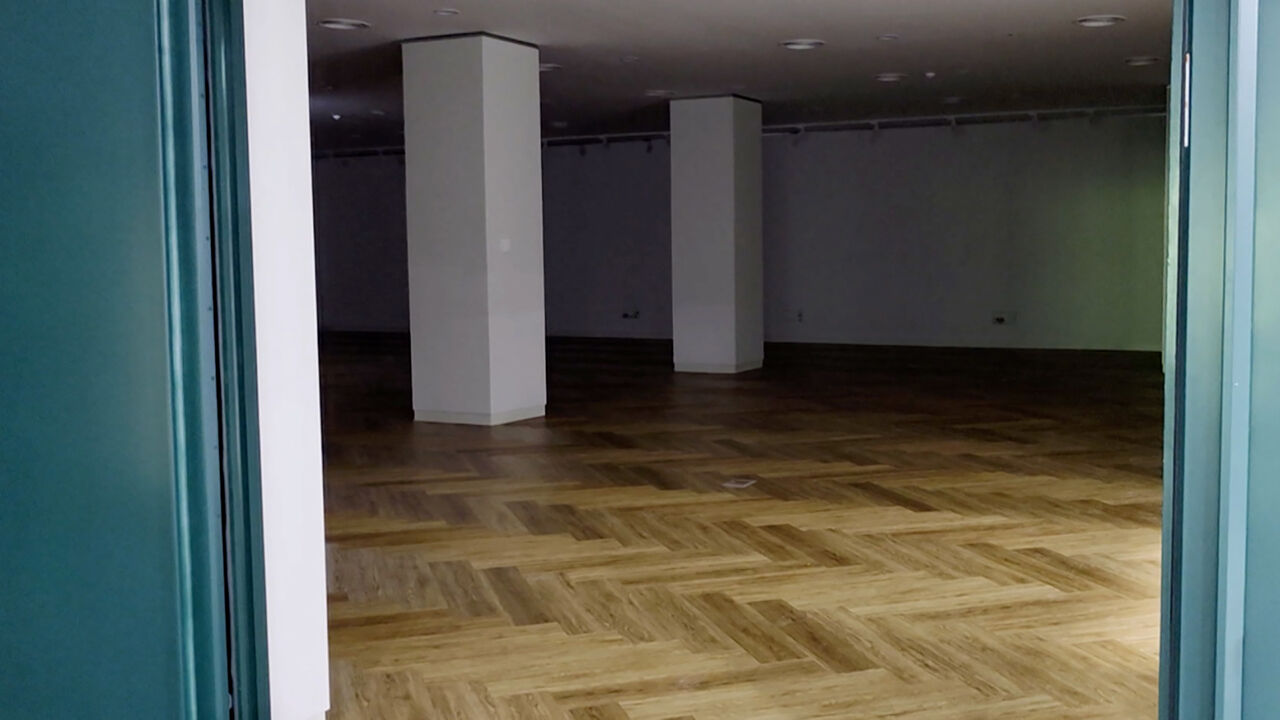
In the 'Immersive Media Room' on the basement floor, about ten projectors hung from the ceiling, and sofas were scattered across the floor. Since the room operates by projecting onto white walls and floor without a separate screen, wall work was reportedly done to make the images appear more vivid. However, experiences like 'VR' or 'AR' promised at the start of the project could not be had. This is because there is no related equipment, let alone content. Currently, the only content available is a single video from the National Museum of Korea on the theme of 'samsara' (reincarnation). According to a construction official, because it was not an in-house produced video, editing the video to fit the room's dimensions alone cost around 20 million won.
In addition, two exhibition rooms and the ground floor space remained completely empty. On the second floor, two six-person desks and four empty bookshelves were all that was there. Although construction is finished, it is in a state where it cannot immediately open its doors to visitors. When officials were asked how much was spent on 'VR and exhibition work,' they responded as follows:
Construction Official C
"A budget of 2.62 billion won was set for the interior finishing work (for the whole building). Out of that 2.62 billion won, media equipment accounted for about 300 million won."
Construction Official A
"The reason the (budget for) exhibition work was increased tenfold was that (the Great Monk) lacked money for building construction, so he said, 'Use all the money meant for exhibition work to build the structure,' which is how the second floor came to be built. (Omitted) All the money that should have gone to interior design was spent on building the second floor. So there was no interior construction money left. After saying it had to be completed, he went and pleaded somehow and managed to get 2 billion won. As a result, the interior design is somewhat lacking. Initially, several billion won was set aside, but because all of it was used to enlarge the exterior..."
Former Donghwasa Official
"It's impossible for construction costs to come out to 5.1 billion won (the amount in the project plan). The reason we requested an additional budget of 5 billion won at the end was that we paved the entire ground outside with flagstones thicker than 5 centimeters, and we covered all the exterior walls with stone flagstones. As far as I know, the cost of that stone alone exceeds 5 billion won."
Spending Billions in Taxpayer Money, but 'No Problem as Long as Procedures Are Followed'?
We asked the Jogye Order. When asked if the Samyeongdaesa Experience Center was built in accordance with the project's purpose, they replied, "'VR and exhibition'-related content was one of the exhibition methods considered in the early stages of the project, and part of the project content was modified to maximize the practical effect for visitors." They also stated, "The project budget was increased through lawful approval, and budget allocations were adjusted within that scope," adding, "We are working toward an early opening." Regarding the inscriptions on the wall, they added, "They do not align with the original purpose of the project and will be removed later."
The Ministry of Culture, Sports and Tourism and local governments repeatedly emphasized that 'lawful procedures were followed,' while being busy passing the buck. Daegu Metropolitan City and Dong-gu District stated, "The project plan was modified through lawful procedures taking into account site conditions and project efficiency," adding, "The project was executed within the modified scope, which aligns with the purpose and intent of the budget support." They implied that changing the project plan was Donghwasa's prerogative, and that local governments only need to verify if there were procedural issues. A Culture Ministry official said, "Since the project period runs until the end of this year, the temple can simply provide content using its own funds," adding, "It is too early to conclude that this is a failed project."
We cannot help but ask whether the government and local authorities themselves are taking the National Assembly's budget review process lightly, treating plans as merely 'drafts.' As projects involving taxpayer money, their necessity must be strictly examined from the start. We must repeatedly ask whether plans are achievable and whether budget execution will be effective. The National Assembly's discussion process must also be transparent. Although the subsidy for the Samyeongdaesa Experience Center was more than doubled mid-project, no related discussion can be found in the National Assembly transcripts.
To Avoid Misunderstandings That the Government Is Supporting Religious Groups
Article 20, Paragraph 2 of the Constitution stipulates that 'religion and politics shall be separated.' In accordance with the principle of separation of church and state, the Ministry of Culture, Sports and Tourism supports the 'construction of religious cultural facilities' like the Samyeongdaesa Experience Center, placing emphasis on culture that the general public can enjoy, rather than supporting a specific religion.
The news team requested information disclosure on subsidy support details for religious cultural facility construction from 2013, when the Ministry began making data public, to recent times. Out of a total of 84 cases, support for Buddhist facilities accounted for 51 cases, followed by Catholic (16 cases), and Protestant and Confucian facilities (7 cases each). Tax money spent during this period alone reached approximately 760.6 billion won. In 2026, 40.7 billion won is being provided. As a significant amount of tax money is involved, careful analysis of user demand and expected effects is necessary.
An evaluation of the capacity of religious organizations seeking to build such facilities must also take place. In its 'Analysis of the 2025 Fiscal Year Settlement' report published in July 2026, the National Assembly Budget Office pointed out, "Cases are recurring where projects are halted because preliminary administrative procedures like building permits are delayed after receiving the budget, or because self-financing costs cannot be secured." This suggests the possibility that projects lacking basic qualifications were selected from the start.
Song Jin-ho / Guest Research Fellow at the Country Budget Research Institute
"One must question whether religious cultural facilities are being built because there is genuine demand. Is religious culture really so active nationwide that everyone is competing to build them? Looking at the results of National Assembly deliberations after the Culture Ministry sets its main budget, the budget is always increased, and the number of facilities increases as well. So I suspect these projects are being used for promotional purposes by constituency lawmakers to hang banners saying they 'secured the budget.' When the National Assembly pointedly asked, 'Why aren't you actually building them?', local entities respond that 'there is no land in the region' or 'no resources to utilize,' and simply return 100% of the budget. Initially, project plans should be thoroughly reviewed, but they are only reviewed to the extent administratively permissible before releasing funds. This cycle of funds going unused repeats, leading to enormous waste. From the government's perspective, finances that could have been used for other worthwhile projects over a year go unused and are simply returned."
Following SBS's report, the Jogye Order released a statement saying, "It is very regrettable that the long-standing efforts of Korean Buddhism and temples seem to be belittled and distorted." At the same time, it added, "We will thoroughly inspect the temples where issues have been raised and promptly devise measures for improvement." As stated by the Jogye Order, religious cultural projects aim at religious and cultural welfare (such as mental and physical healing for citizens) that national or local governments find difficult to directly execute. Since these are facilities built for public welfare using taxpayers' money, subsidy execution must be stricter. Inspections not only of facility construction but also of operational processes must be strengthened to avoid misunderstandings that the government is 'supporting religious groups in violation of the principle of separation of church and state.'
*Related Article: 'Empty' Despite Pouring Tax Money... The 22 Billion Won Twist Behind "Great Monk's Orders" [XR] [SBS 8 News]
※ Please note: This article was translated by AI and may contain errors.




![[현장영상] 9명 '정원 초과'로 탄 엘리베이터…바닥으로 꺼져버린 아찔한 '3초'](http://img.sbs.co.kr/newimg/news/20260812/202211700_300.jpg) Video News
Video News


