
 KOR
KOR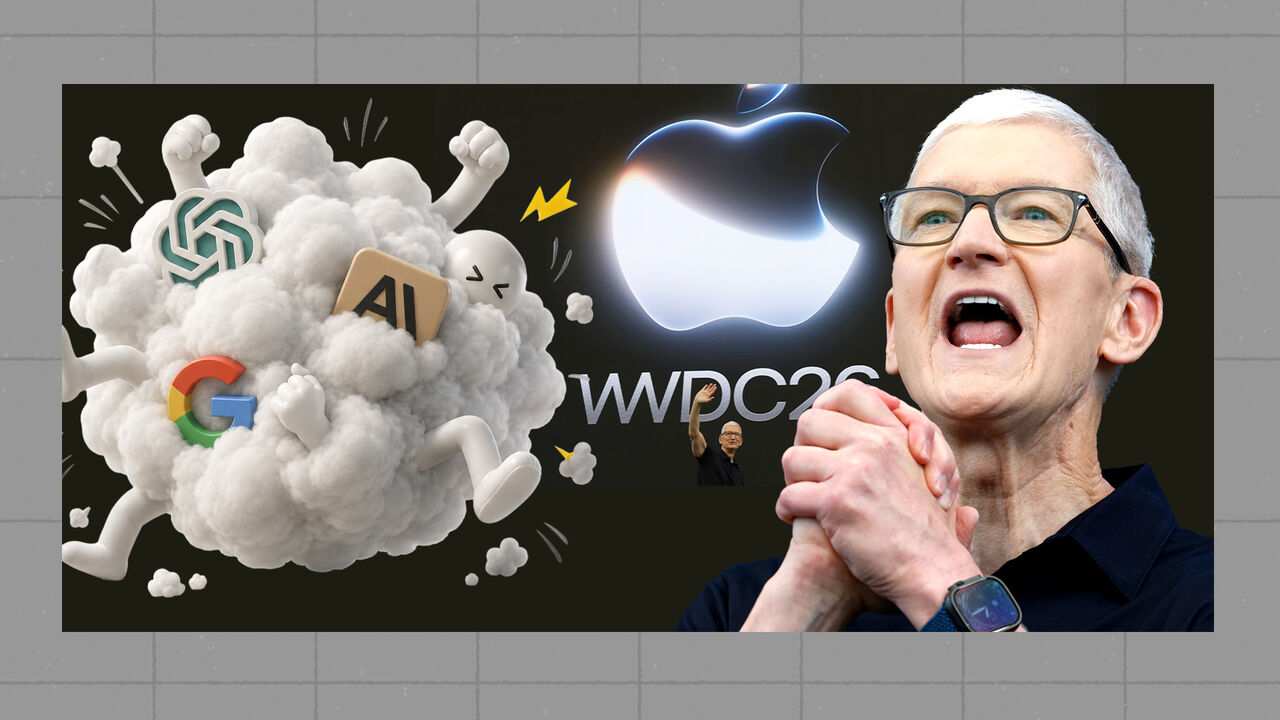
⚡ Key Takeaways
Instead of focusing on excessive AI infrastructure investments, Apple is maintaining strong cash reserves, avoiding the overinvestment risks facing other Big Tech companies.
Apple is also focusing on lightweight on-device AI model technologies that run directly on hardware devices like the iPhone, rather than competing in massive server data centers.
Based on the massive market share of the iPhone, Apple is adopting a strategy of collaborating with partners like Google when necessary, rather than developing its own proprietary AI frontier models.
In the U.S. stock market recently, Apple has clearly taken center stage. While other Big Tech stocks were all tumbling into the red, Apple consistently stayed in the green, even reclaiming its position as the world's most valuable company by market capitalization. When you think about it, Apple hasn't even clearly put forward its own distinct AI strategy, so why is it doing so well? Today, we take a look at Apple's story. We will examine through various data and charts why Apple's stock price is rising like this and how Apple is preparing for the AI era.
Apple a Troublemaker? Headlines Filled with Conflicts with Big Tech
In fact, looking at recent news related to Apple, most of it consists of conflict stories rather than talk of Apple's technological prowess or new products.


Thus, Apple has been lobbying high-level officials without hesitation, including President Donald Trump and Commerce Secretary Howard Lutnick. The argument is that Apple needs to introduce Chinese memory chips as well. Apple contends that if memory semiconductor shortages persist, prices for iPhones and other electronic devices will inevitably rise. Its logic is that using Chinese memory chips is necessary to help disperse memory demand and curb product price hikes. When Apple took this stance, Micron strongly pushed back. Micron warned that if Chinese memory companies expand their influence backed by Apple, it could collapse the current U.S. semiconductor ecosystem.
This situation itself is quite unfamiliar. In the past, it would have been unthinkable for a "mere" component supplier providing parts to Apple to push back against Apple's statements. It is because the memory shortage raised Micron's stature that it could speak up like this.
Even earlier, when Tim Cook blamed surging memory costs for Apple's price increases, Micron reacted fiercely. Without naming names, Micron rebutted that a certain customer had slashed prices during the previous semiconductor downturn, preventing Micron from investing properly, which in turn caused the current supply shortage.
Micron did not stop there and launched a counter-lobbying campaign against permitting Chinese memory. First, Micron's planned investment alone to expand U.S. memory production capacity stands at $250 billion. On top of that, it announced an additional $250 million investment in support of Trump Accounts, one of President Trump's key policy initiatives.
However, the situation surrounding CXMT—the relatively inexpensive memory provider Apple had been eyeing—is changing. In recent supply negotiations with Apple, CXMT reportedly quoted higher prices than Samsung Electronics and SK Hynix. This was effectively a declaration that CXMT is not just a cheap alternative, but a supplier with pricing power. The reason CXMT can negotiate with such confidence is that it has recently been absorbing capital like a black hole. Listed on the Shanghai Stock Exchange on July 27, CXMT instantly rose to become China's largest company by market capitalization.

Apple's conflicts do not end with Micron. Recently, it has been locked in a legal dispute with OpenAI. In fact, until recently, the two were solid partners. Two years ago at WWDC 2024, Apple announced a collaboration with OpenAI, aiming for a win-win combination of Apple's hardware advantages and OpenAI's AI strengths.

Among those who moved to OpenAI was Apple's legendary designer Jony Ive. Of course, he did not join directly; rather, OpenAI acquired io, the startup founded by Jony Ive. Starting around that time, when OpenAI attempted to make a full-fledged entry into the hardware market, Apple put on the brakes. Apple filed a trade secret infringement lawsuit against OpenAI.
The individuals Apple specifically singled out were Tang Tan, former vice president of product design for the iPhone and Apple Watch, and Chang Liu, who worked as an engineer at Apple for eight years. Apple raised allegations that they leaked information on Apple's major partners and confidential documents. OpenAI, on the other hand, countered by stating, "We have zero interest in other companies' trade secrets." Having crossed a point of no return with OpenAI, Apple ultimately replaced the core model for its revamped Siri last month, switching from OpenAI to Google.
Lagging in the AI Race... Why Is Apple's Stock Soaring?
Hit by price increases in its core hardware business due to memory shortages, and failing to gain traction in software, Apple faces growing speculation from some quarters that the composition of the "M7"—the group representing top U.S. Big Tech companies—needs an adjustment.

Recently, however, "MANGOS"—a term bringing together true AI players—has been gaining traction. MANGOS includes Meta, Anthropic, Nvidia, Google, OpenAI, and SpaceX. Moreover, proposals to create ETF products tied to MANGOS are even circulating in the market.


Why is Apple's stock price soaring in the AI era when it lags behind in the AI race? The answer lies in the statement above. Other Big Tech firms are pouring massive amounts of money into winning the AI competition. But Apple is different. Looking at AI data centers—currently the hottest topic—other companies are spending lavishly to build bigger and more numerous AI data centers. Apple, on the other hand, is building up its cash reserves. At a time when concerns are raised over whether Big Tech's AI infrastructure investments constitute overinvestment, Apple's move in the opposite direction appears all the more attractive.
In fact, there is a rational reason for this investor sentiment. Capital expenditures pouring into AI data centers continue to rise, with projections suggesting they could soon exceed companies' cash inflows.

In this environment, Apple stands a step back from the AI infrastructure spending race while generating steady revenue thanks to its reliable cash cow, the iPhone. Naturally, Apple has reason to smile. But is Apple truly doing nothing in the AI race?
Apple Waiting for the 'Big Strike'... Who Will Be the Real Winner of the AI Era?
In truth, Apple was not sitting out AI development altogether. Although it arrived two years later than originally expected, an AI-enhanced Siri was recently released. Of course, compared to other companies' offerings, its performance is hardly comparable. Apple is not charging toward frontier models like OpenAI or Anthropic, but rather presenting AI at a level that functions sufficiently well on the iPhone.

Apple has already seen evidence that its devices integrate well with AI. A prime example was the Mac mini, which sold like hotcakes during the OpenClaw craze. Because running AI agents with security risks through cloud servers can pose issues, users ultimately need to run them locally. When word spread that Apple's Mac mini offered great cost-efficiency for local execution, it triggered a "Mac mini buying frenzy."

But what about the future? Eventually, a time will come when smartphones alone can harness AI locally. That is the moment Apple is targeting. Apple will still be manufacturing iPhones then, and they will likely still be selling well. Apple believes that, backed by the iPhone's market share, a reversal in the future AI market is entirely possible.
For this reason, Apple sees no need to pour money into competing to build high-performance frontier models. It is enough to develop adequate models that run inside the iPhone. What if complex functions are needed? Apple can simply partner with OpenAI at one moment and Google at another to leverage their frontier models.
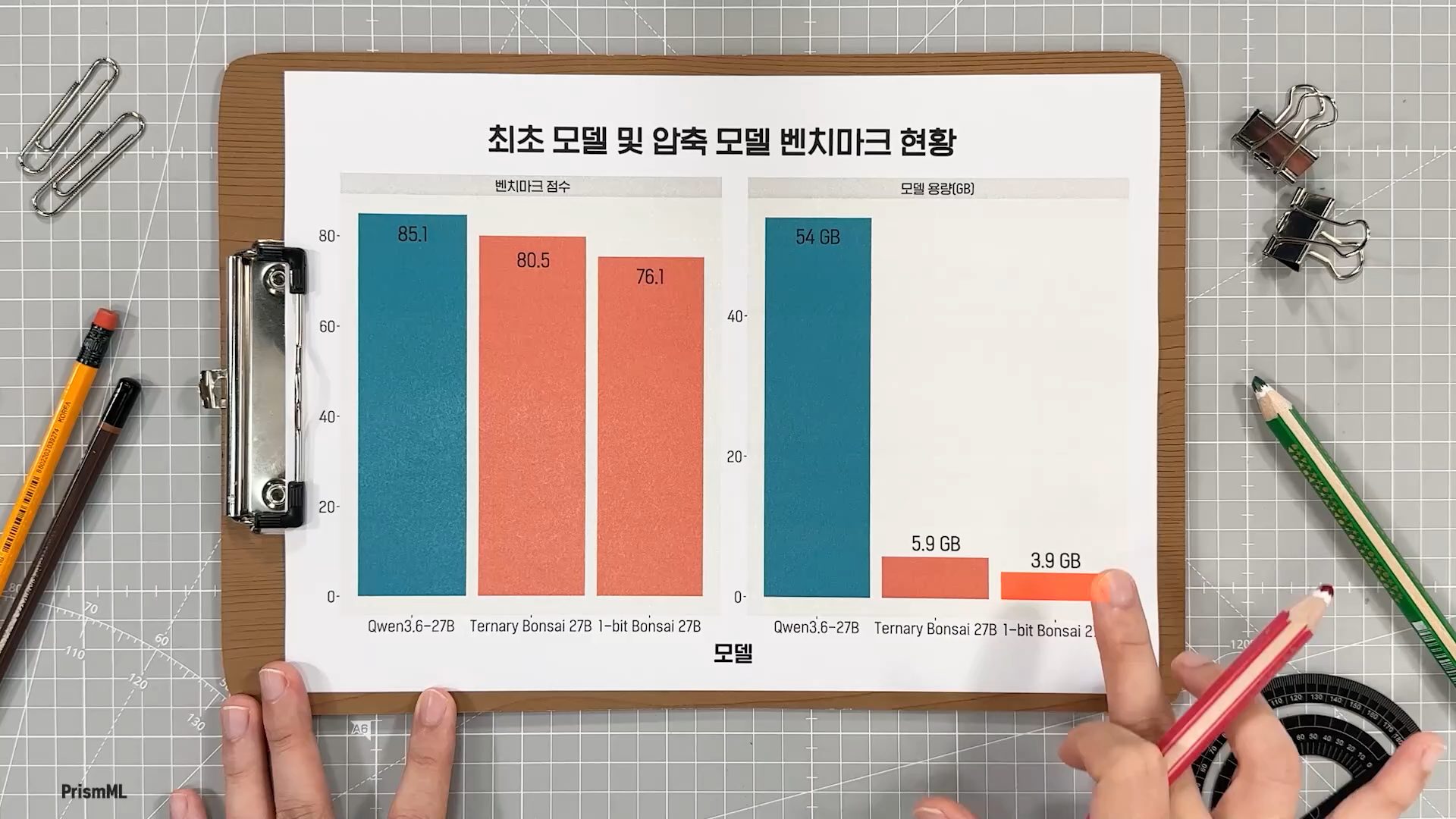
Thus, the primary R&D field Apple is currently focusing on is AI model lightweighting (model compression). It is concentrating on technology that shrinks model size while maintaining high performance so models can run on handheld smartphones. In fact, reports recently emerged that Apple has entered negotiations with an AI model compression startup.
The company in question is PrismML, founded by Caltech researchers in the United States. PrismML promotes technology capable of compressing models to the extreme, enabling high-performance AI to run even on smartphones.
However, this space is not without competitors. OpenAI has officially entered the AI device market, while Nvidia is also stepping into the AI PC arena with its RTX Spark.
The direction toward on-device AI, investments in model compression tech, and an overwhelming hardware foundation in the iPhone—looking at these three factors, it is difficult to view Apple's current stance as merely benefiting from collateral gain. It is entirely plausible to interpret it as Apple steadily preparing for the AI era in its own way. Of course, as other companies jump full force into the AI hardware market, further observation is needed. Will Apple emerge as the true winner of the AI era? That is all for today's article. Thank you very much for reading this long piece to the end.
References
- Here's Why Apple CEO Tim Cook Says Prices Will Have to Increase | WSJ video
- A Conversation with Sam and Jony | OpenAI YouTube
- Yigal Rosen, Ph.D. | LinkedIn Chang L. | LinkedIn
- U.S. District Court for the Northern District of California, Complaint in Apple Inc. v. Liu et al.
- Yahoo Finance Markets
- Macrotrends Stock Screener
- Hyperscaler capex is on trend to outpace their cash inflows by the end of 2026 | Epoch AI
- PrismML Official Website
Written by: An Hye-min Designed by: Ahn Jun-seok Intern: Shin Yeon-seong
※ Please note: This article was translated by AI and may contain errors.





