
 KOR
KOR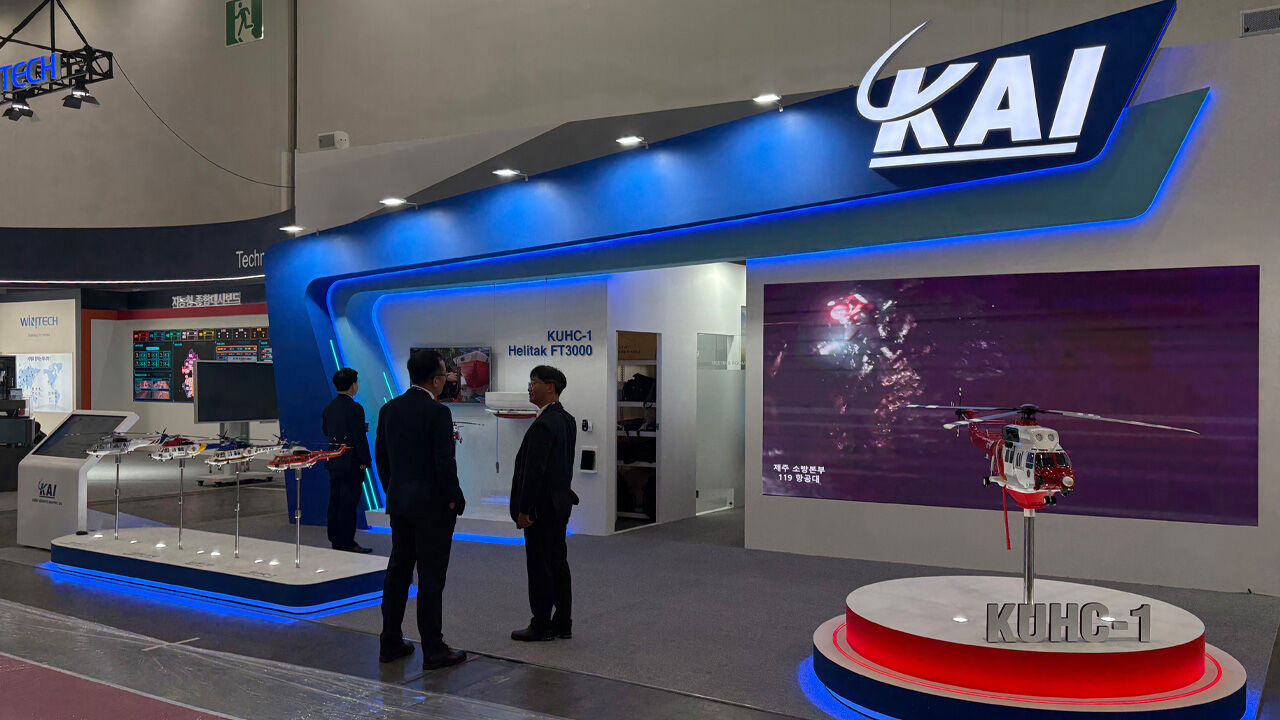
▲ Korea Aerospace Industries (KAI) by Hanwha Group
Hanwha Group's stake in Korea Aerospace Industries (KAI) has surpassed 15%.
As the second-largest shareholder of KAI, Hanwha plans to expand business cooperation and strengthen its competitiveness in the space, aviation, and defense sectors.
Hanwha Systems announced on the 10th that it had acquired a 3.45% stake in KAI on the open market over the past month.
Consequently, Hanwha Group's total stake in KAI has increased to 15.89%, comprising 9.90% held by Hanwha Aerospace, 4.98% by Hanwha Systems, and 1.01% by Hanwha Aerospace USA.
This comes a month after disclosing a 12.44% stake on July 8 and announcing Hanwha Systems' plan to make additional purchases of up to 500 billion KRW within the year.
Having acquired a stake of 15% or more in KAI, a listed company, Hanwha plans to apply for a business combination review with the Fair Trade Commission.
Currently, KAI's largest shareholder is the Export-Import Bank of Korea, which holds a 26.41% stake.
As KAI's second-largest shareholder, Hanwha is reviewing ways to participate in KAI's decision-making processes regarding expanding synergies through business cooperation between the two companies and supporting global exports.
Previously, Hanwha specified the purpose of holding KAI shares as "management participation."
The dominant analysis is that Hanwha's rapid expansion of its stake in KAI is aimed at acquiring the company if its privatization is pursued.
Through this stake expansion, Hanwha aims to contribute to securing space sovereignty and national defense self-reliance while strengthening its overseas export competitiveness in the space, aviation, and defense sectors.
Hanwha explained that this move is designed to respond to unmanned and intelligent future battlefields and the formation of defense blocs in Europe, as well as to compete with major global defense companies.
Hanwha possesses technology and manufacturing capabilities in aircraft engines, guided missiles, radars, satellites, and land and maritime defense, while KAI possesses system integration capabilities for fighter jets, helicopters, and unmanned aerial vehicles.
Hanwha expects that cooperation between the two companies will enable the establishment of a comprehensive space, aviation, and defense system encompassing land, sea, air, and space.
KAI also explained that it can enhance its export competitiveness by utilizing Hanwha's overseas network and integrated packages.
Hanwha Group recently announced a mid- to long-term strategy called "AI Space Power," committing 55 trillion KRW by 2040.
The plan is to secure integrated space and defense infrastructure by building independent launch vehicles, satellites, space artificial intelligence (AI) data centers, low-earth orbit communication networks, and defense AI data centers.
Hanwha Group Vice Chairman Kim Dong-kwan said during the AI Space Power strategy presentation held in Jinju, South Gyeongsang Province, last July, "South Korea must no longer view space and aviation as separate industries," adding, "We can leap forward as a true AI space powerhouse only when space, aviation, AI, and defense are connected as one."
Hanwha plans to take the lead in establishing a southern regional space and aviation comprehensive belt connecting Changwon in South Gyeongsang Province, where Hanwha Aerospace is located; Sacheon in South Gyeongsang Province, home to KAI; and Goheung in South Jeolla Province, home to the Naro Space Center.
(Photo: Yonhap News)
※ Please note: This article was translated by AI and may contain errors.



 Video News
 Video News
 Video News
 Video News
 Video News