
 KOR
KOR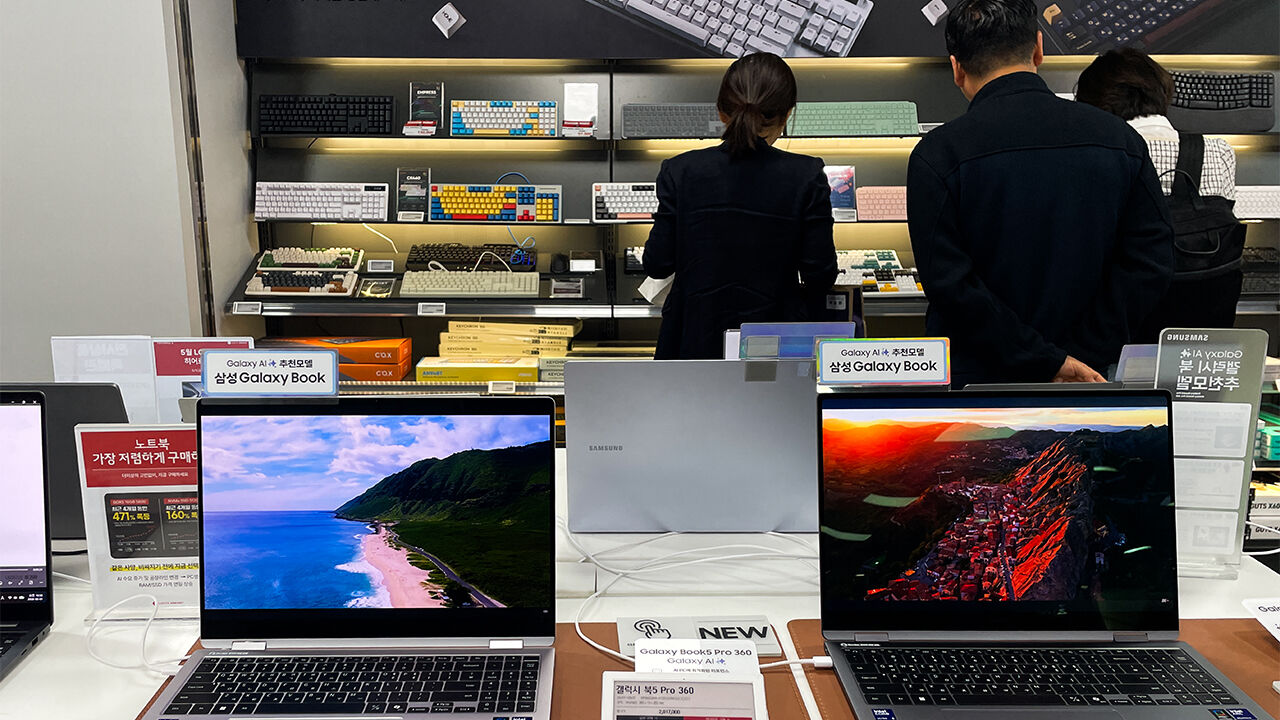
▲ PCs and laptops are on display at a large discount store in Seoul.
Driven primarily by artificial intelligence (AI) demand, the monthly average prices of memory chips, including DRAM and NAND flash, have broken records to reach all-time highs once again.
The price of DDR4, a legacy DRAM product, surged by more than 14 percent in a single month to reach 24 dollars, while NAND prices continued their upward trajectory, surpassing 30 dollars.
According to market research firm DRAMepexchange today (August 3), the average fixed transaction price for general-purpose PC DRAM (DDR4 8Gb 1Gx8) in July stood at 24 dollars, a 14.3 percent increase from the previous month (21 dollars).
This represents an increase of more than eight times compared to the price of 2.9 dollars when the survey began in June 2016.
After rising for 11 consecutive months from April 2025 (1.65 dollars) through February of this year and holding steady in March, the average price of DDR4 resumed its upward trend from April to July of this year.
TrendForce analyzed, "DRAM manufacturers plan to reduce PC DRAM supply next year to respond to growing server memory demand from cloud service providers (CSPs)," adding, "Due to the resulting supply shortages, fixed transaction prices for PC DRAM in the third quarter are expected to rise by 15 to 20 percent compared to the previous quarter."
The July average fixed transaction price for general-purpose NAND used in memory cards and USB drives (128Gb 16Gx8 MLC) was 30.1 dollars, up 4.3 percent from 28.8 dollars the previous month.
This marks 19 consecutive months of increases.
TrendForce stated, "NAND has seen sustained inventory-securing demand centered around AI edge computing, next-generation smart vehicles, and industrial automation," while noting, "However, in July, legacy products such as single-level cell (SLC) and multi-level cell (MLC) showed divergent trends."
As memory suppliers concentrate their production capabilities on high-layer stacked 3D NAND and advanced processes, the supply shortage for SLC deepened, causing its average selling price to spike by 35 to 51 percent compared to the previous month.
On the other hand, the price increase for MLC remained limited to the 4 to 8 percent range as customers faced growing cost burdens following a year-long surge in prices.
TrendForce projected, "In the third quarter, SLC will maintain high prices due to supply shortages, but the upward trend in MLC prices is expected to gradually slow down."
(Photo: Yonhap News)
※ Please note: This article was translated by AI and may contain errors.





 Video News

