
 KOR
KOR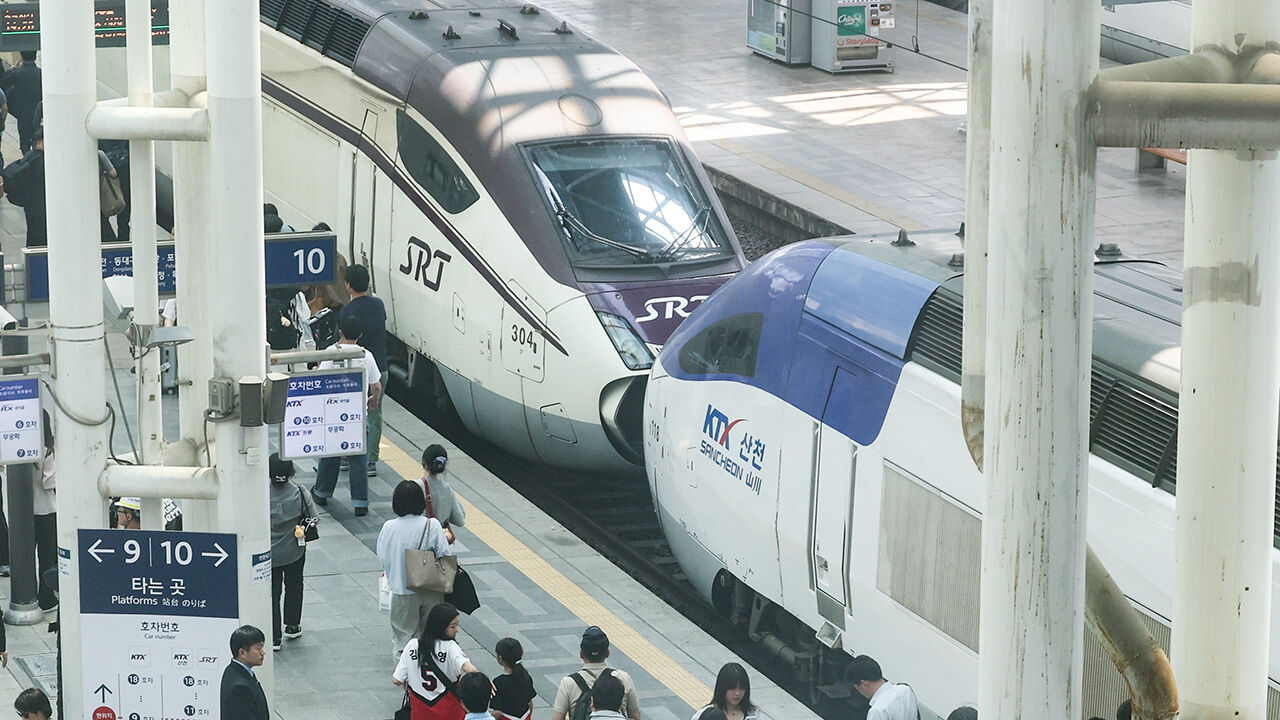
▲ Combined KTX-SRT
The corporate merger between Korea Railroad Corporation (Korail) and SR Co., Ltd., which operate South Korea's two major high-speed rail services, KTX and SRT, has been granted final approval.
As a result, KTX incorporating SRT will begin operation starting in September, and train fares will be aligned with the relatively lower SRT rates for a period of three years.
Seat supplies and the number of operations will also increase for three years following the corporate merger.
The Fair Trade Commission (FTC) announced today (the 2nd) that it has given final approval to the corporate merger—in which Korail acquires SR's business and shares—having determined that the risk of restricting competition is low.
Accordingly, high-speed rail services will be operated in an integrated manner under the name KTX starting in September.
Korail is a quasi-market public corporation established with 100% government investment, and SR is also a quasi-market public corporation.
Because both companies are exclusively government-controlled public corporations, their merger falls under the simplified screening category, which the FTC can in principle approve without a formal review under the Fair Trade Act.
However, the FTC conducted an in-depth review considering that high-speed railways are national infrastructure and have a significant impact on the national livelihood and economy.
As a result of the review, the FTC determined that the risk of this corporate merger restricting competition is low.
The rationale is that while restricted competition could lead to side effects such as reduced high-speed train operations and fare hikes due to a transport operator's monopolistic position, such a possibility is not high.
The FTC noted that the high-speed rail industry is subject to a considerable level of regulation under relevant laws such as the Railroad Industry Development Act, and that Korail, as a public corporation, pursues public interest purposes as stipulated in its articles of incorporation.
Because of this, train fares cannot exceed the maximum fare ceiling designated and notified by the Minister of Land, Infrastructure and Transport in consultation with the Minister of Finance and Economy.
Changing fares requires the acceptance of a report by the Minister of Land, Infrastructure and Transport.
The structure prevents the two companies from arbitrarily raising fares.
Approval or acceptance of a report from the Minister of Land, Infrastructure and Transport is also required to change business plans related to supplied seats, such as operating routes and frequencies, or to alter service-related railway business terms and conditions.
It was judged that the risk of service quality degradation is low because the two companies cannot arbitrarily reduce operations.
Rather, through this corporate merger, fares for the integrated KTX will become cheaper, and the number of operations will increase.
Along with this corporate merger, the two companies, in consultation with the FTC and the Ministry of Land, Infrastructure and Transport, have also prepared a business plan containing details on fares and seat supplies for the three years following the merger.
The Ministry of Land, Infrastructure and Transport plans to reflect and implement this in the Comprehensive High-Speed Rail Integration Plan.
According to the business plan, the two companies have decided to lower high-speed rail fares on KTX routes by 10% for three years following the merger so that they match the current SRT fares.
When comparing the same routes, KTX fares are about 10% more expensive than SRT, and the integrated KTX fare level is being adjusted to the cheaper of the two.
As for seats, based on the sum of all routes, more than 15,000 seats will be added on weekdays and more than 17,000 seats on weekends.
Combined for weekdays and weekends, this translates to an increase in seat supply of about 6%.
The number of operations is also expected to increase by 23 to an average of 402 on weekdays, and expand by 26 to 457 on weekends.
The explanation is that operating coupled trains—joining KTX and existing SRT units together—will make it possible to supply more seats per single run.
Mileage will accrue at 5% of the payment amount, the same as existing KTX services.
SRT did not have a separate regular mileage program.
Other services, such as discount programs and regular commuter passes, will also be integrated and operated in a direction that enhances consumer convenience.
Along with this corporate merger, the FTC and the Ministry of Land, Infrastructure and Transport also signed a business agreement to establish fair market order and protect consumer rights in the high-speed rail passenger transport market.
The two ministries will form a working-level consultative body to monitor the implementation status of the business plan for three years following the corporate merger.
This corporate merger marks the first case of an in-depth review of a corporate merger between public corporations.
The Ministry of Land, Infrastructure and Transport will complete the integration of the two companies in September through subsequent procedures such as approving the transfer and takeover of the business.
Some point out whether Korail's operations, which are already running deficits, might face further difficulties due to fare cuts.
Regarding this, a government official forecasted, While there may be some impact on management due to fare reductions, it can be managed within an appropriate debt-to-equity ratio, and revenues could increase as seat supplies expand through future operational expansions and the Pyeongtaek-Osong 2-track expansion.
(Photo: Yonhap News)
※ Please note: This article was translated by AI and may contain errors.



 Video News


