
 KOR
KOR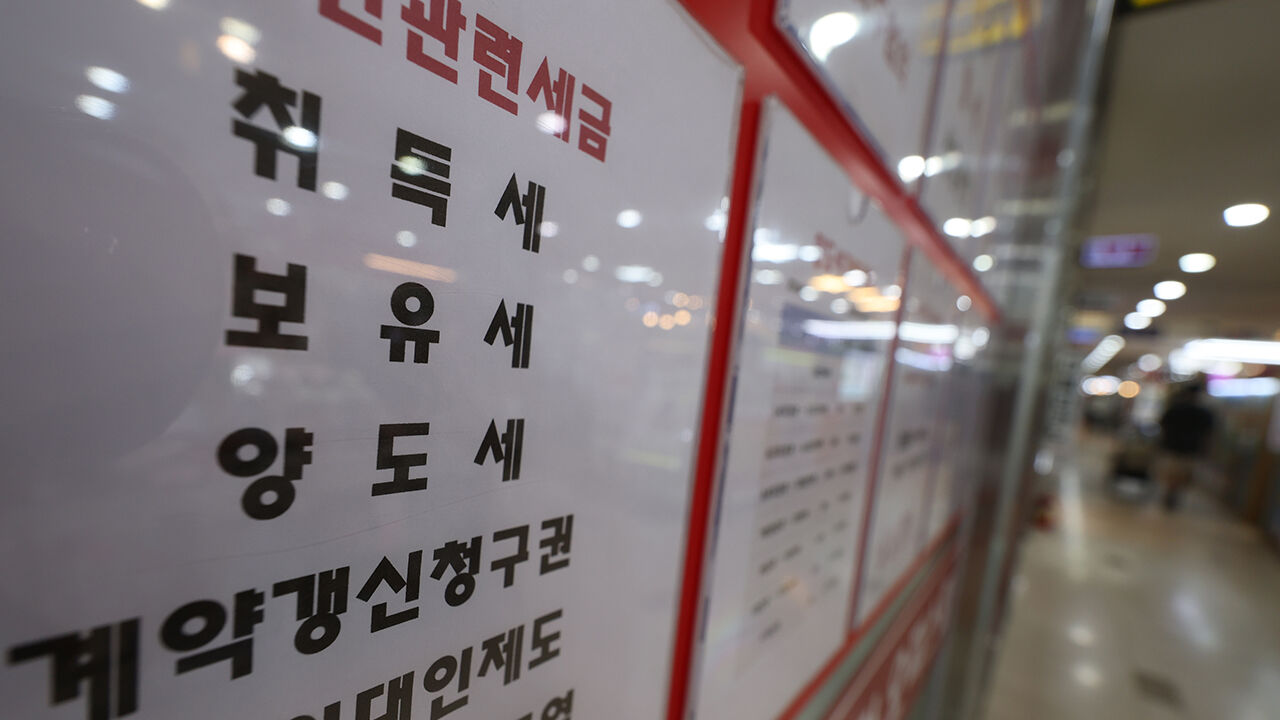
▲ A real estate agency in the Gangnam area of Seoul
The government is in final coordination over a real estate tax reform package aimed at protecting actual homeowners while increasing the burden on ultra-high-end properties and massive capital gains.
For capital gains tax, the focus is expected to shift toward properties with massive capital gains rather than simply high-priced homes, while comprehensive real estate holding taxes are strongly being considered for application at the multi-homeowner tax rate level starting from market values of around 4.6 billion won.
However, to prevent the side effect of freezing the housing market and locking up listings, discussions are also underway to temporarily and conditionally ease heavy capital gains taxes for multi-homeowners, alongside providing incentives for retirees relocating to regional areas.
The government plans to finalize the tax reform package during a party-government consultation today (July 30) and announce the final plan early next month.
According to relevant authorities on July 29, the core of this capital gains tax reform is normalizing the tax burden for ultra-high-end properties that have generated massive capital gains.
The stance is that even for single-homeowners using the property for residence, if capital gains reach billions of won, excessive benefits need to be restricted by setting a cap on the long-term holding special deduction.
The long-term holding special deduction offers single-homeowners with actual transaction prices exceeding 1.2 billion won up to a maximum 40 percent deduction based on the holding period and residency period respectively, totaling up to an 80 percent combined deduction.
Since larger capital gains mean the special deduction reduces the tax burden significantly, the government is known to be pushing for and reviewing measures to cap this deduction benefit to limit excessive reductions.
The cap amount is rumored to be around the 1 billion won range.
The key factor is not just the housing price itself, but the scale of the capital gains.
For instance, if a house is bought for 5 billion won and sold for 52 billion won, it will not be subject to the cap if the gain is small despite the high price. However, ultra-home properties bought relatively cheaply and yielding massive profits are highly likely to be subject to the cap.
The policy weighs heavily on protecting regular single-homeowner residents by shifting the long-term holding special deduction from a holding-period-centered system to a residency-period-centered one.
The government is also preparing complementary measures to ensure that increased tax burdens do not lead to a freeze in listings or a freezing of transactions.
Kim Yong-beom, the presidential chief policy officer, stated during a CBS radio broadcast on July 27 that the administration is contemplating ways to appropriately reflect opinions in policy, such as opening an exit route for multi-homeowners to release listings if holding taxes are strengthened.
Measures to reintroduce the heavy capital gains tax surcharge suspension for multi-homeowners—which expired on May 9—on a temporary and conditional basis have emerged as a subject of discussion.
However, rather than simply reviving the expired tax surcharge suspension as it was, the administration is reportedly leaning toward crafting a compromise that takes policy credibility and market conditions into account.
Also under review is providing capital gains tax incentives for retired single-homeowners who dispose of their metropolitan area housing and migrate to regional areas.
Opinions have simultaneously been raised that a requirement to reside in regional areas for a certain period should be established to prevent cases of quick returns to the capital area from regional locations.
The government is also pushing to strengthen the comprehensive real estate holding tax burden on ultra-high-end properties.
Observations suggest the targets will likely be homes with market values exceeding approximately 4.6 billion won.
The government plans to expand the heavy tax rates (2.0 to 5.0 percent) previously applied to those holding three or more homes to single and dual-homeowners in brackets where the comprehensive real estate tax base exceeds 1.2 billion won (official appraised value of approximately 3.2 billion won, market value of about 4.6 billion won).
As the taxation system is overhauled from being based on the number of homes to the value of the homes, the intent is to correct fairness issues where a single-homeowner with a so-called "pricey single home worth 3 billion won" ends up paying less tax than a multi-homeowner holding "three homes worth 1 billion won each," thereby aligning tax equity.
Raising the fair market value ratio—currently at 60 percent—to 70 percent or higher is also being discussed.
An increase in the fair market value ratio enlarges the comprehensive real estate tax base, expanding the pool of taxable subjects and increasing actual tax burdens.
However, a buffer mechanism is expected to be arranged to raise the basic exemption for single-homeowners from the current 1.2 billion won to reflect recent housing price increases.
This is interpreted as an effort to prevent a sharp surge in the tax burden of the middle class following the strengthened holding tax rates and increased fair market value ratios, while easing tax pressure on actual residents caught in borderline brackets.
If such a reform plan is actually applied, the tax burden for a single-homeowner with a market value of around 5 billion won is expected to roughly double.
For a single-homeowner holding an apartment with a market value of about 5 billion won (official appraised value of 3.5 billion won), the comprehensive real estate tax (based on calculated tax amount) under current criteria (1.2 billion won basic deduction, 60 percent fair market value ratio, 1.3 percent basic tax rate) amounts to 11.94 million won.
However, under the reform plan applying a heavy tax rate (2.0 percent) and a 70 percent fair market value ratio, the tax amount will roughly double even if the basic exemption rises to the 1.3 billion to 1.5 billion won range.
(Photo: Yonhap News)
※ Please note: This article was translated by AI and may contain errors.



 Video News
 Video News
 Video News
 Video News
 Video News