
 KOR
KOR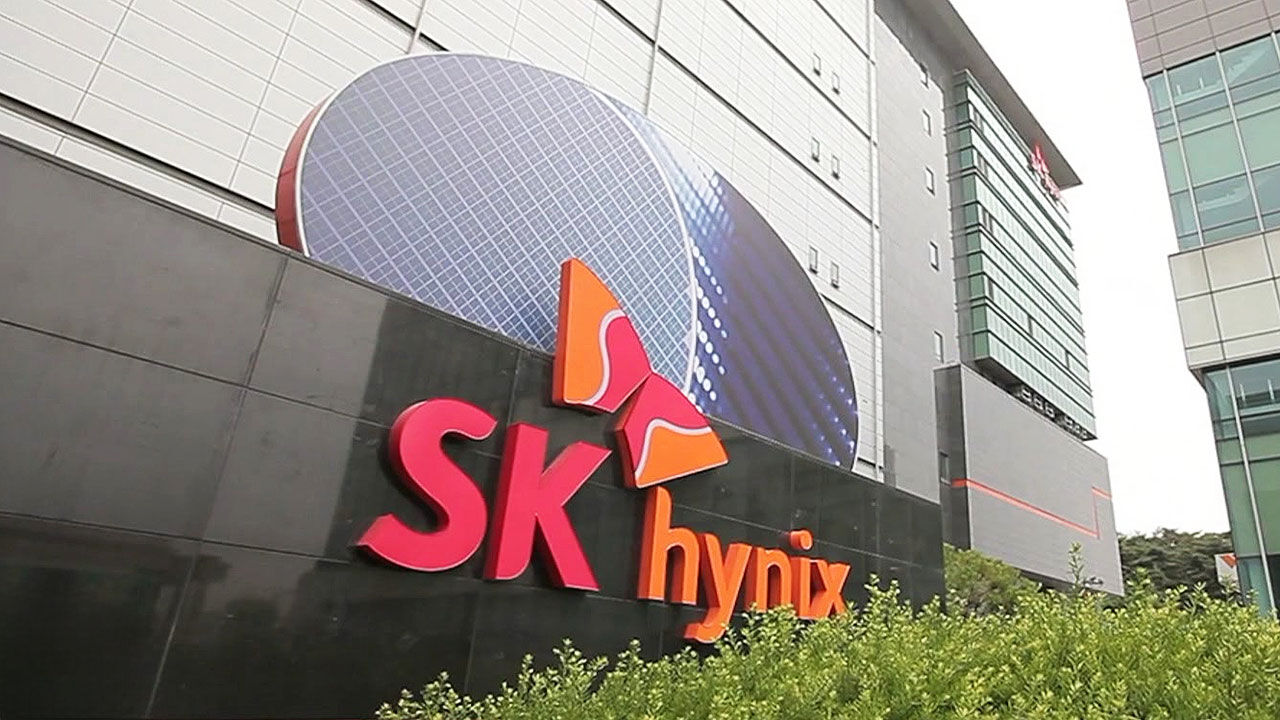
▲ SK Hynix
SK Hynix has continued to achieve the highest level of profitability in the semiconductor industry, recording an operating profit margin of 76% in the second quarter of this year, outperforming the world's largest foundry, Taiwan's TSMC.
Analysis suggests that the AI memory supercycle is prolonging, driven by sharp price increases not only in high-bandwidth memory (HBM) but also in conventional DRAM and NAND flash.
SK Hynix announced in a regulatory filing today (the 29th) that it recorded 79.3187 trillion won in revenue and 60.5426 trillion won in operating profit for the second quarter of this year.
The operating profit margin rose 4 percentage points from the previous quarter (72%) to reach 76%, setting a new all-time high once again.
This means the company makes a profit of about 7,600 won for every 10,000 won worth of products sold, a level rarely seen in the manufacturing sector.
Notably, since the fourth quarter of last year, it has outperformed TSMC—the top foundry boasting the highest profitability in the semiconductor industry—in operating profit margin for three consecutive quarters.
TSMC's operating profit margin for the second quarter of this year stood at 60.3%, maintaining a gap of around 15 percentage points between the two companies.
Previously, SK Hynix's operating profit margin had plunged to around minus (-) 67% in the first quarter of 2023, but after turning a profit at 3% in the fourth quarter of the same year, it has been on an upward trajectory every quarter.
This favorable performance is attributed to the combined effects of expanded HBM sales and rising prices for conventional DRAM and NAND.
Industry watchers note that the memory supply shortage continues as the AI memory market reorganizes around long-term agreements (LTAs).
As major players focused their production capacity on HBM and expanded LTAs with U.S. big tech companies, the supply of conventional memory also became constrained.
Consequently, price increases have translated into improved profitability.
An increase in demand for enterprise solid-state drives (eSSDs), driven by expanded AI data center investments by North American cloud service providers (CSPs), also lent support.
According to market research firm TrendForce, contract prices for conventional DRAM and NAND in the second quarter rose 58% to 63% and 55% to 60%, respectively, compared to the previous quarter, forming a "supplier-dominated" market.
In addition, profitability was maximized as the margins of conventional DRAM rose to levels exceeding those of HBM.
It is reported that HBM accounts for about 30% of SK Hynix's total DRAM shipments, with the rest filled by conventional products.
Typically, conventional DRAM broadly encompasses everything from cutting-edge products like DDR5, LPDDR5X, and GDDR7 to legacy products like DDR4, essentially referring to all DRAM excluding HBM.
Furthermore, given that Samsung Electronics, which announced its preliminary earnings earlier this month, is also estimated to have recorded an profit margin of over 60% in its memory division, the two South Korean memory giants are evaluated to be maintaining a side-by-side ultra-high profitability trend.
The financial structure has also further improved.
Following an increase in its net cash (a state where cash and cash equivalents exceed borrowings) to 35 trillion won by the end of the first quarter of this year, SK Hynix further expanded its investment capacity in the second quarter based on its cash-generation capabilities.
Cash and cash equivalents at the end of the second quarter of this year were approximately 88 trillion won, an increase of more than 33 trillion won from the end of the previous quarter (54.3 trillion won).
Conversely, the scale of borrowings decreased.
Over the same period, borrowings decreased by about 700 billion won to record 18.6 trillion won.
As a result, a net cash position of 69.4 trillion won was achieved.
SK Hynix had previously achieved a net cash position in the third quarter of last year for the first time since entering a net debt state in the second quarter of 2019.
As of the end of last year, SK Hynix's net cash stood at around 12.7 trillion won.
The company plans to inject the secured financial resources into the Yongin semiconductor cluster, the ramp-up of the Cheongju M15X fab, the P&T7 packaging plant, the M17 NAND production base, and the expansion of next-generation HBM production capacity.
※ Please note: This article was translated by AI and may contain errors.



 Video News
 Video News
 Video News
 Video News