
 KOR
KOR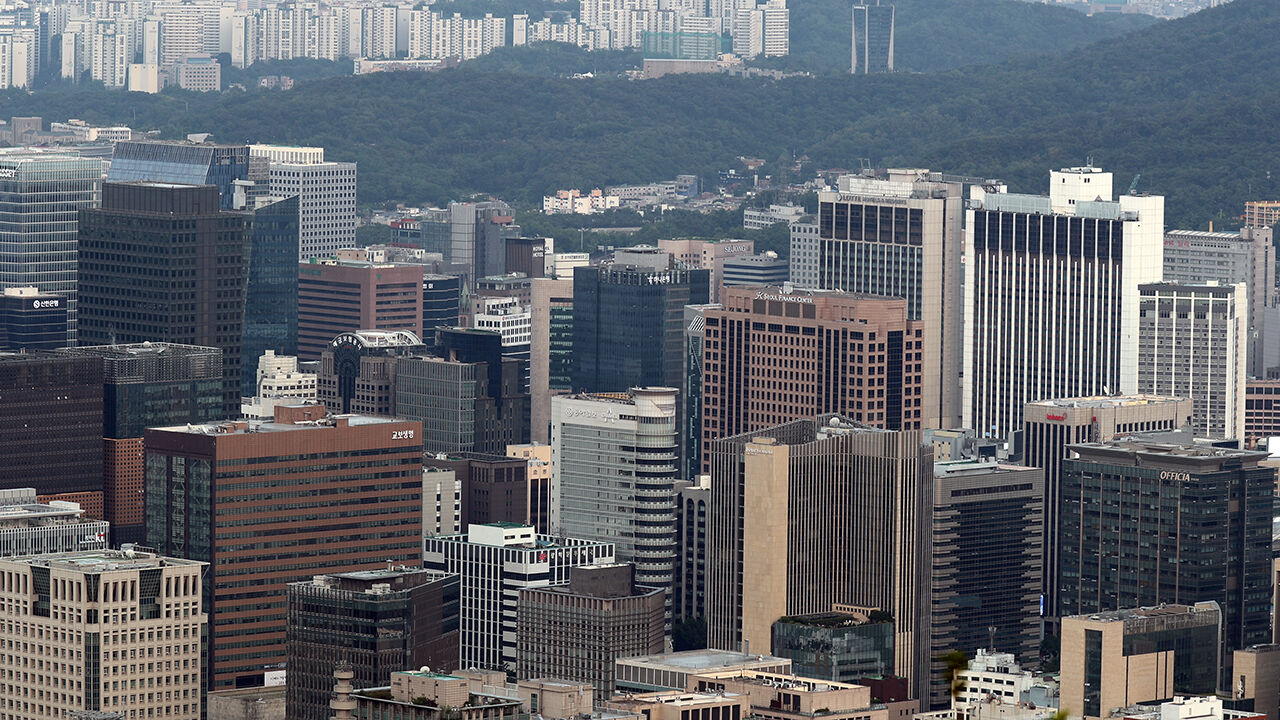
▲ A view of downtown Seoul, dense with high-rise office buildings.
The business outlook for domestic companies has deteriorated further as tensions in the Middle East flare up again.
The Federation of Korean Industries (FKI) announced today (July 28) that the Business Survey Index (BSI) outlook for August, based on a survey of the top 600 companies by sales, stood at 89.9.
A BSI above 100 indicates a positive business outlook compared to the previous month, while a reading below 100 means a negative outlook.
The BSI outlook has remained below 100 for five consecutive months since April (85.1).
This is the first time it has dropped back into the 80s in three months, following May (87.5).
By sector, the manufacturing index stood at 88.4 and non-manufacturing at 91.5.
Among the 10 detailed manufacturing sectors, six showed pessimistic outlooks: petroleum refining and chemicals (57.7), general and precision machinery and equipment (75.0), wood, furniture, and paper (83.3), non-metallic minerals and products (85.7), automobiles and other transport equipment (90.6), and metals and metal products (92.0).
Notably, petroleum refining and chemicals (57.7) recorded its lowest level in 17 years and six months, since February 2009 (54.5) in the wake of the global financial crisis.
The FKI explained that this reflects ongoing burdens from raw material and energy costs due to the prolonged Middle East conflict, alongside growing concerns over deteriorating profitability and supply chain uncertainties caused by the renewed clashes.
Among the seven detailed non-manufacturing sectors, six were projected negatively, with the exception of leisure, accommodation, and food services (116.7), which benefit from peak vacation season demand.
The indexes were lowest in the order of electricity, gas, and water (73.7), construction (87.8), information and communications (92.3), professional, scientific, technical, and business support services (92.3), wholesale and retail (93.0), and transportation and warehousing (95.7).
By category, exports (100.0) remained at the baseline, while financing conditions stood at 87.8, domestic demand at 90.8, profitability at 93.5, employment at 95.0, investment at 97.0, and inventories at 103.3.
An inventory index exceeding the baseline of 100 indicates overstocking, which is considered negative.
However, the investment outlook reached its highest level in three years and 11 months since September 2022 (98.2), which the FKI analyzed as a reflection of expectations for facility investment in export manufacturing, including semiconductors.
Meanwhile, the BSI actual result for July stood at 94.4, remaining below 100 for four years and six months consecutively since February 2022 (91.5).
Lee Sang-ho, head of the FKI Economic Research Division, emphasized, "Continuous support is needed to alleviate the burden of raw materials and logistics costs, and to ensure that the business restructuring of the refining and petrochemical industries proceeds without a hitch."
(Photo: Yonhap News)
※ Please note: This article was translated by AI and may contain errors.



 Video News
 Video News
 Video News
 Video News