
 KOR
KOR
▲ Dongdaemun faction members during a rally in July 2024
Around 40 gangsters who formed a syndicate claiming to inherit the legacy of the infamous 1950s "political gangster" Lee Jung-jae and repeatedly engaged in group street brawls have been apprehended by police.
The Seoul Metropolitan Police Agency's Metropolitan Crime Investigation Unit announced today (July 23) that it has arrested a total of 40 individuals, including 21 members of the "Dongdaemun faction" and 19 members of allied criminal organizations such as the "Sanggye faction," "Itaewon faction," and "Eagles faction," on charges including violations of the Act on the Punishment of Violences, Etc.
Fourteen individuals, including a 33-year-old high-ranking Dongdaemun faction member surnamed A, have been transferred to the prosecution in custody, while the remaining seven Dongdaemun faction members were sent to prosecutors without detention.
Authorities found that from 2017 until this year, these individuals operated as members of the Dongdaemun faction by recruiting local juniors and engaged in collective gang fights with rival groups.
Investigators discovered that Dongdaemun faction members expanded their influence by recruiting a total of 16 students who were known as school "fighters" (iljin) during their middle and high school years between 2017 and last year.
They reportedly promoted the syndicate by boasting, "We are an authentic organization tracing back to Chairman Lee Jung-jae following liberation. If you're going to get tattoos, live the real gangster life."
During the 1950s and 1960s, Kim Doo-han's Jongno faction, Lee Jung-jae's Dongdaemun faction, and Lee Hwa-ryong's Myeongdong faction formed a triangular rivalry in Myeongdong, Jongno, and Yeongdeungpo. The modern syndicate aimed to inherit this historical lineage.
New recruits lived in safehouses where they learned the syndicate's hierarchy and behavioral codes, and participated in violent activities, according to police.
Notably, the group set up safehouses across Seoul and in Seo-gu, Incheon, appointing mid-level leaders as "safehouse managers" to drill outdated behavioral codes into new recruits.
Key rules included "greeting seniors Yakuza-style," "appointing prison duty rosters to visit jailed members," "strictly obeying seniors' orders," and "ruthlessly punishing anyone who defects from the syndicate."
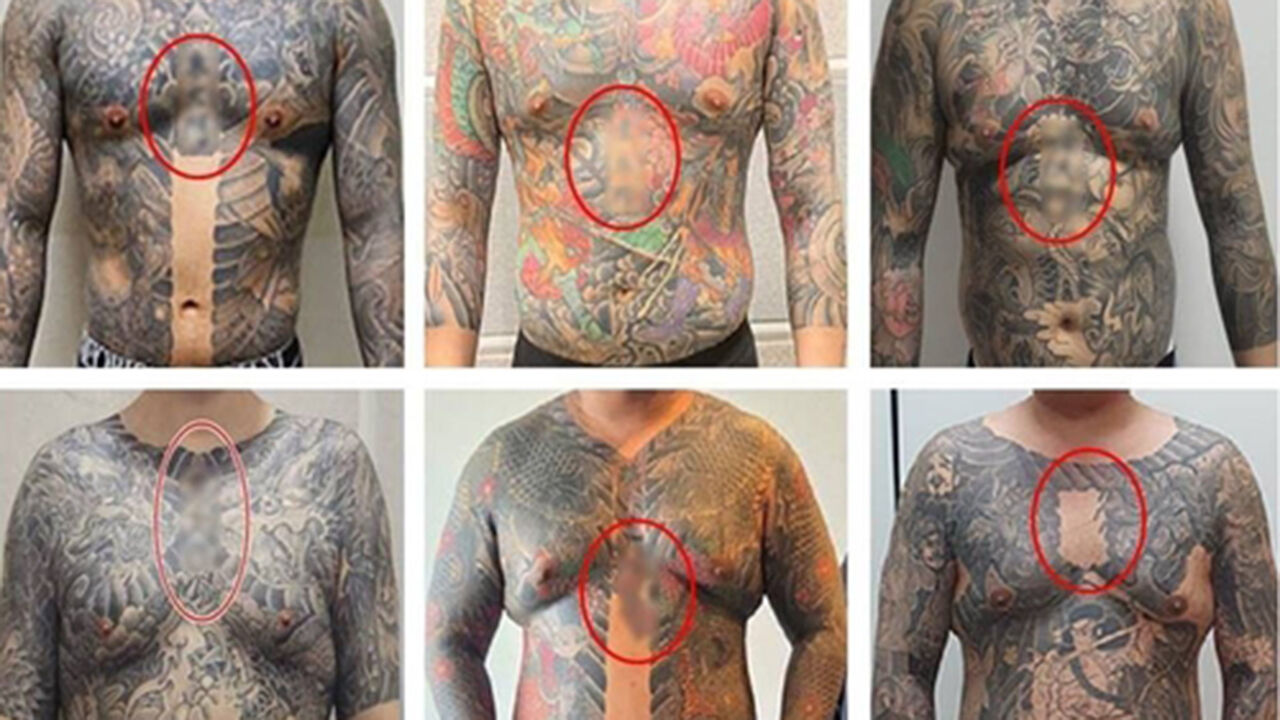
Recruits were forced to tattoo the Chinese characters for "Dongdaemun" (東大門) in the middle of their chests, and hierarchical order was maintained by assaulting members who violated the rules.
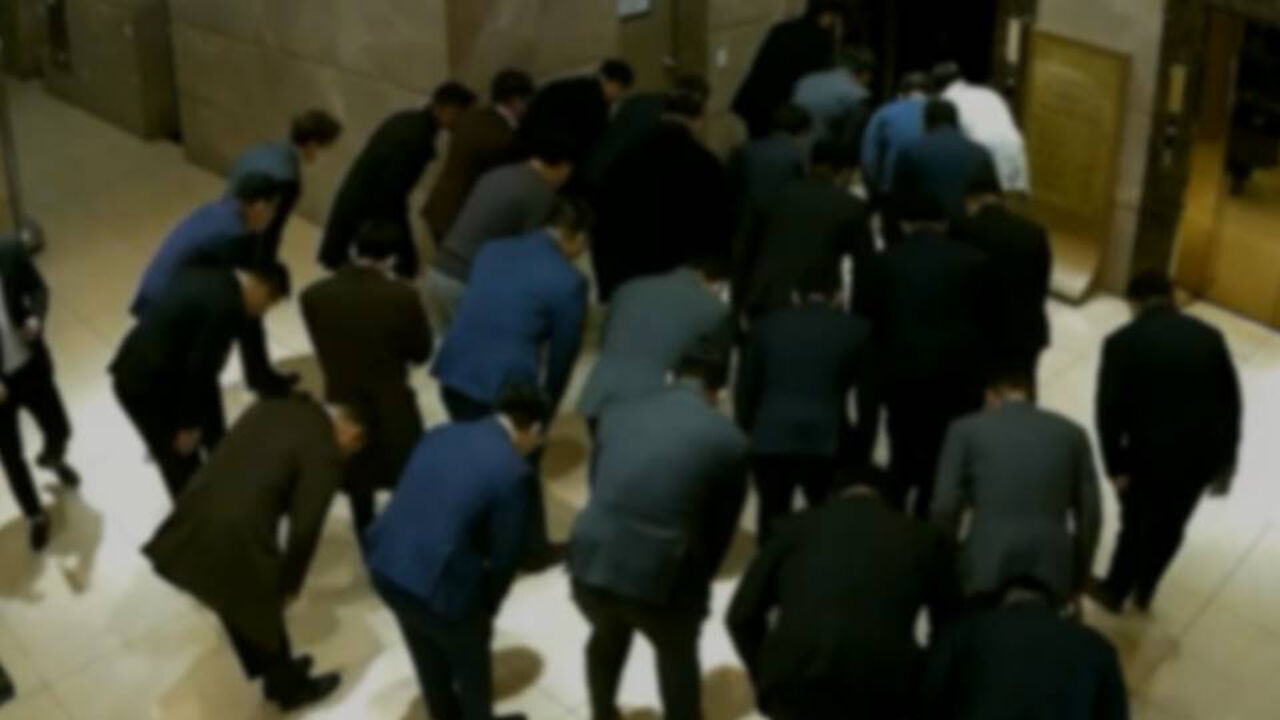
Members cultivated through these safehouse lives served as an "emergency strike force" that stood in formation like folding screens at syndicate events to display the Dongdaemun faction's power or immediately mobilized when conflicts arose with rival groups.
In December 2020, when leading member A got into a dispute with local gangsters in Ingye-dong, Suwon, he gathered four junior syndicate members to engage in a mass brawl with about 10 rival gangsters.
Furthermore, in September 2023 at a restaurant in Nonhyeon-dong, Gangnam-gu, when a member of another group bumped shoulders with a Dongdaemun faction leader and tried to leave, they chased him down and launched a group assault. In February of this year, after a rival group allegedly glared at them, they mobilized members from allied factions including the Sanggye, Itaewon, and Eagles groups to start a brawl.
Police applied charges of joint assault under the Act on the Punishment of Violences, Etc., to those who participated in the group assaults and street brawls.
Beyond traditional gang crimes involving violence to intervene in local lucrative businesses, police also uncovered circumstances where the syndicate sustained itself through crimes such as voice phishing.
According to police, the Dongdaemun faction set up a safehouse for voice phishing operations in Qingdao, China, starting in 2013, while managing accounts and deploying cash collectors domestically.
Recently, they operated personal information trading and investment reading room offices in collusion with other syndicates.
Police are currently investigating their underground business operations.
The original Dongdaemun faction was dismantled during the government's "war on crime" in 1990.
However, the organization was re-established in 1996 by local thugs under the premise of "inheriting Lee Jung-jae's Dongdaemun division."
Between 1996 and 1999, they systematically extorted street vendors around central Seoul, and in 2011, some members were arrested after interfering in commercial building reconstruction rights and engaging in gang fights with groups from northern Seoul.
Police, who had been closely monitoring the Dongdaemun faction's activities, pursued an exhaustive investigation involving the execution of over 200 communication and search warrants and two years of closed-circuit television (CCTV) analysis.
As a result, investigators proved that the organization formed in 1996 to succeed the Dongdaemun faction and the newly dismantled faction members constituted a "continuous association," applying Article 4 of the Act on the Punishment of Violences, Etc. (Formation and Activities of Organizations, Etc.).
A police official explained, "Applying Article 4 of the Act on the Punishment of Violences requires long-term, multi-dimensional, and tenacious investigations to prove that it constitutes a violent criminal organization."
The official added, "By applying this charge, leaders can now be punished with fixed-term imprisonment with a minimum of seven years or more, and ordinary members with two years or more."
Police have identified a total of 75 members belonging to the Dongdaemun faction.
Among them, the 21 individuals arrested this time form the core power of the syndicate, while the remaining bosses and elders reportedly do not engage in active operations and only participate in family events.
Police emphasized, "Younger generations harboring a vague romanticism or vanity toward violent criminal organizations are flowing in and committing organized violent crimes. We will concentrate our investigative capabilities and respond strongly to prevent these acts from harming the peaceful daily lives of citizens."
(Photo provided by Seoul Metropolitan Police Agency, Yonhap News)
※ Please note: This article was translated by AI and may contain errors.


 Video News

 Video News
 Video News
