KOR
KOR
Olympic Park These Days
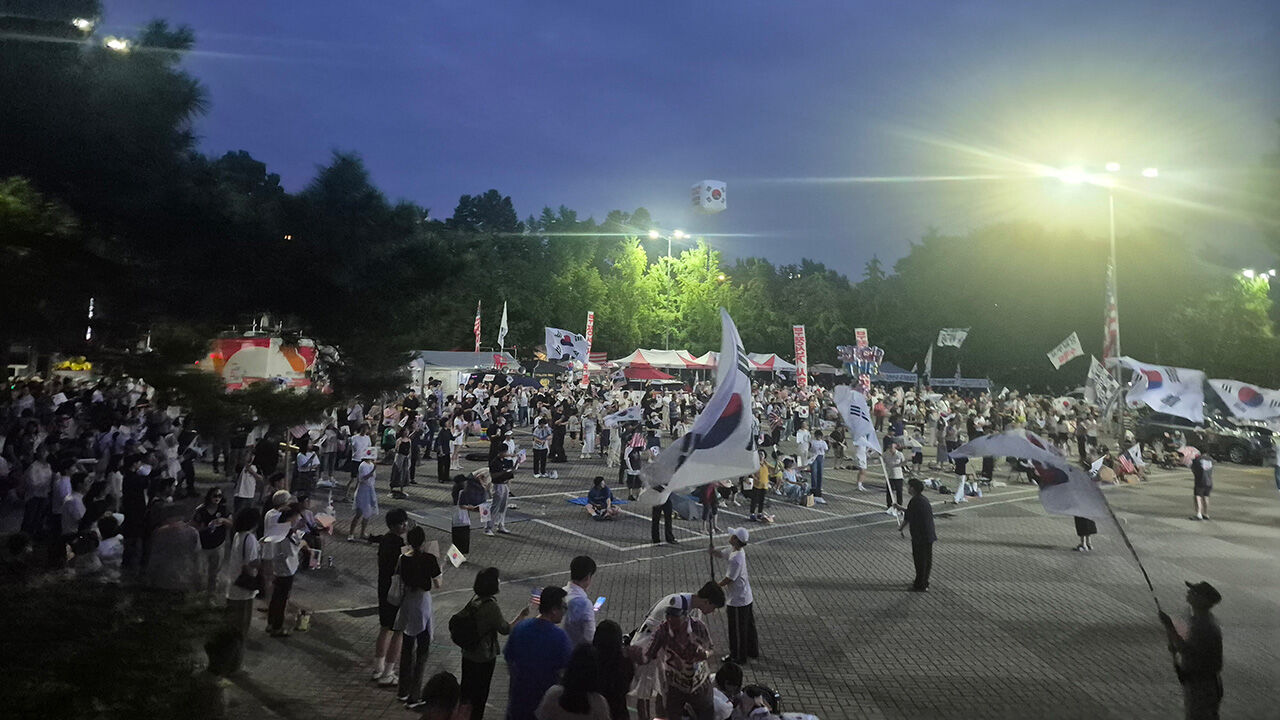
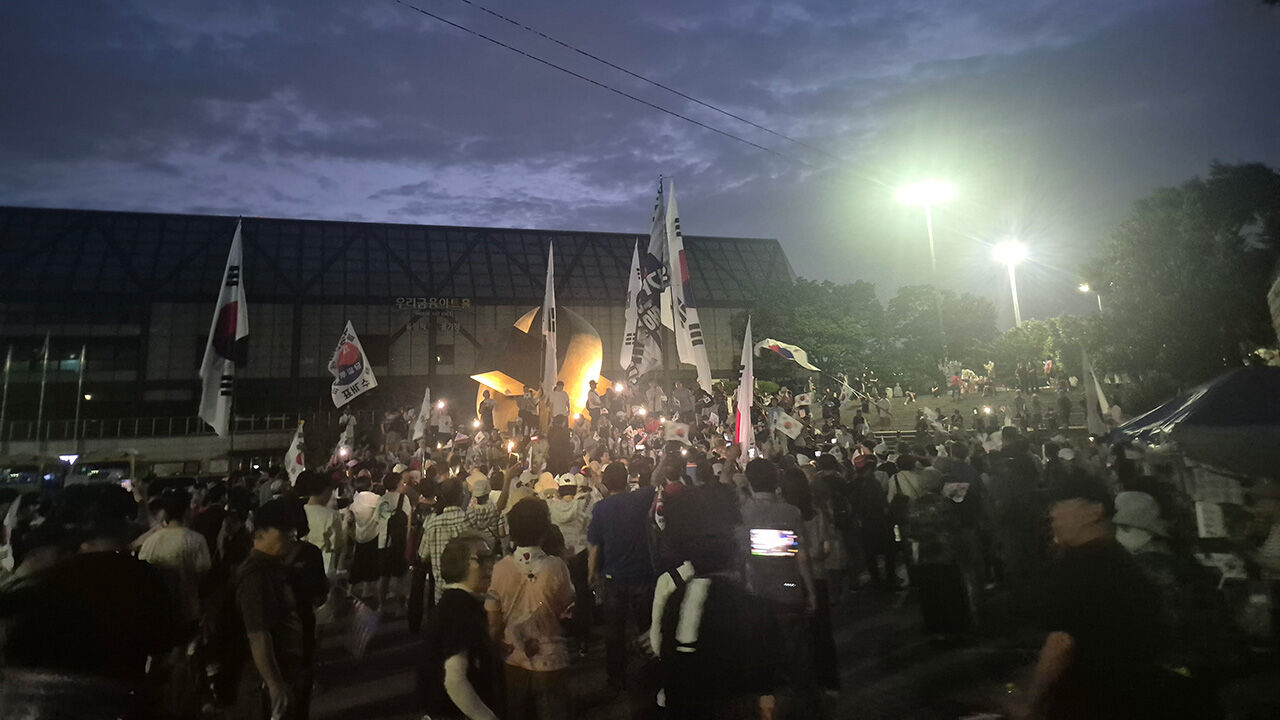
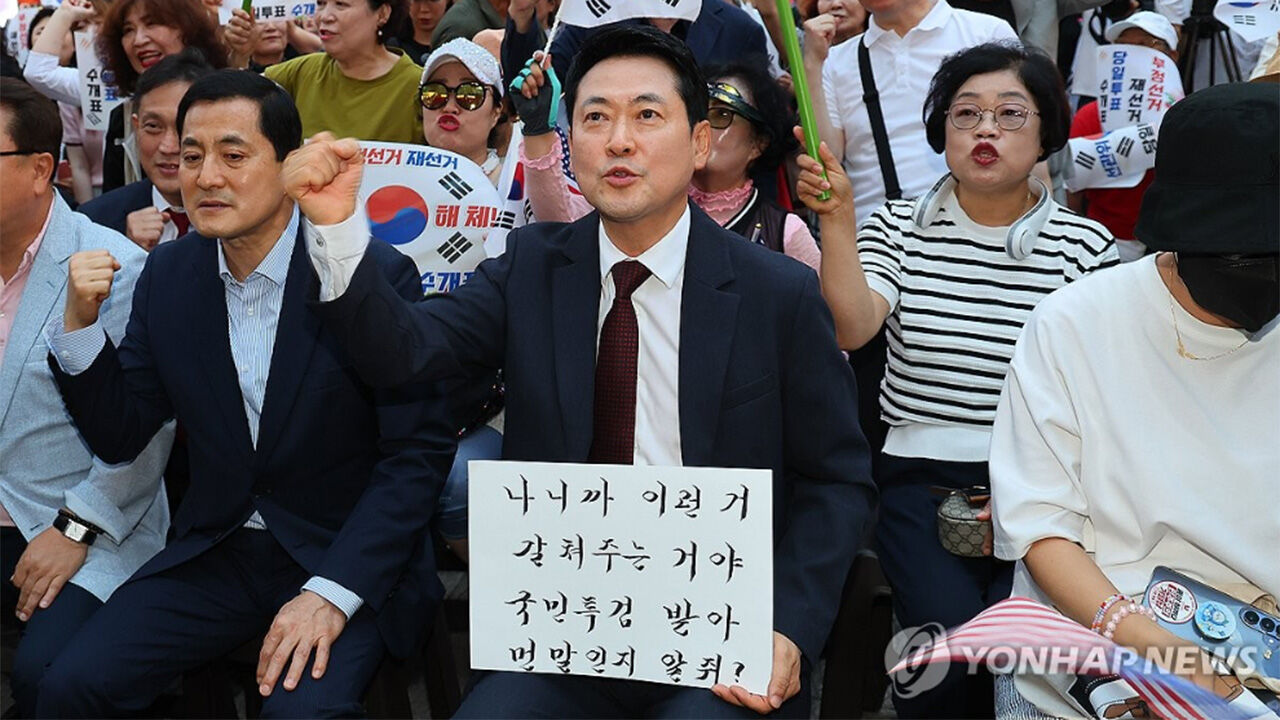
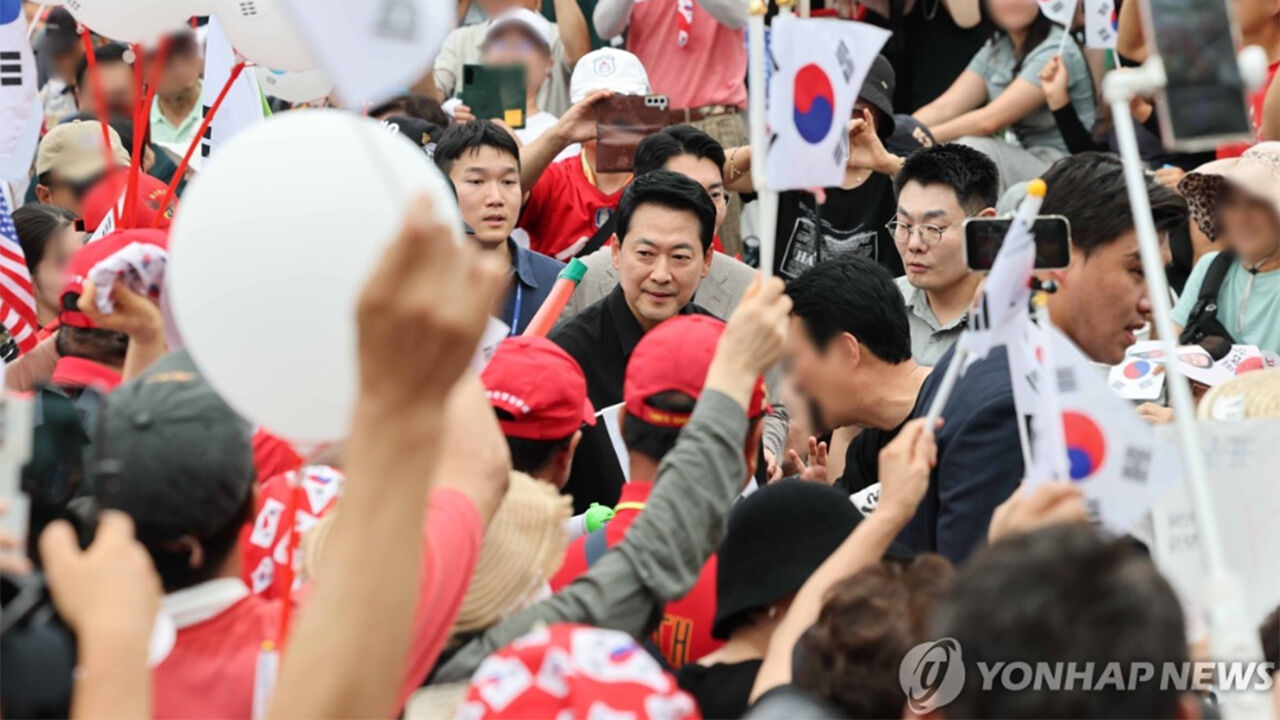
The largest number of participants was in Section 1-3. Section 1-2 is an area with high foot traffic. It is where People Power Party (PPP) leader Jang Dong-hyeok comes every day to sit before leaving. A key feature of this spot is that crowds instantly gather when Representative Jang arrives. In addition, participants were spread across Section 2-1, the outer perimeter of the stadium, and bus rest areas. The number of volunteers is also considerable. Although it is impossible to count every single person, the on-site crowd observed firsthand over about two hours on the evening of July 19 was at least 5,000. Considering those who could not be observed directly during the same period, the actual figure could be much higher.
It should be taken into account that July 19 was a Sunday evening. Participation by office workers who had to go to work the next day was likely low. On the other hand, because Representative Jang designated Constitution Day on July 17 as "Olgong Day" and encouraged attendance, turnout might have been higher than usual.
'Olgong' Politics Becoming Main Opposition Leader's Official Schedule
Although there is no leader, the chant is consistent: "Rigged election, re-election, same-day voting, manual counting." Then, when someone in the crowd starts singing the first stanza of the national anthem, everyone sings along through all four stanzas. Afterward, they return to the chant: "Rigged election, re-election, same-day voting, manual counting." During the two hours on Sunday evening, the only other chant heard was "Eradicate Communism" ("Myeongong"). Even then, while someone shouted "Eradicate Communism," it was soon drowned out by the main chant.
Representative Jang Dong-hyeok also seems to have grasped these characteristics. On this day as well, I spotted Representative Jang visiting the rally site. He stayed exclusively in Section 1-2 before leaving. While Representative Jang occasionally held and waved a large Taegeukgi (Korean national flag), he chanted the exact same slogans as the participants. Although he might have tried changing the slogan to "Let's hold a special counsel," he refrained from chants that rally participants would not respond to. His so-called "drawing paper message politics"—which stirred controversy in political circles over referring to the president informally—appears to stem from this background. Representative Jang writes what he wants to say on drawing paper and displays it as a written message rather than shouting it as a chant.
Although there are voices of criticism from both inside and outside the party regarding the main opposition leader's continued attendance at street rallies, Representative Jang appears to be trying to build an image of himself as one of the attendees rather than someone taking a leading role. Perhaps because of this, when he first began attending the rallies, he did not include rally attendance in his public schedule as party leader at all. Simply put, he framed it as a personal, unofficial activity rather than a move as party leader.
Recently, however, he began attending rallies not only at Songpa Olympic Park but also in Incheon and other regions. Around this time, rally attendance started to be included in official schedule announcements for the party leader. What began as a personal, unofficial activity has now transformed into an official move by the party leader.
An opposition leader participating in street rallies—and doing so daily for an unprecedentedly extended period—inevitably faces fundamental criticism from inside and outside the party that "the leader of a political party responsible for representative democracy has abandoned that responsibility, even though social conflicts and problems should be resolved through parliamentary politics." Nevertheless, Representative Jang has actively taken steps to turn "Olgong" into one of his political assets, prompting curiosity about what at "Olgong" is driving him to act this way.
The Anonymous Collective
There is also a point that does not match the characteristics of an anonymous collective: geographic location. An anonymous collective is not restricted by location. Conversely, the Olympic Park rally site is limited to the area in front of the Handball Gymnasium. This is because it carries great symbolic significance as the place where ballot boxes were located. The Olympic Park rally site can be considered a unique manifestation of "The Anonymous Collective" in South Korea.
Are They Far-Right?
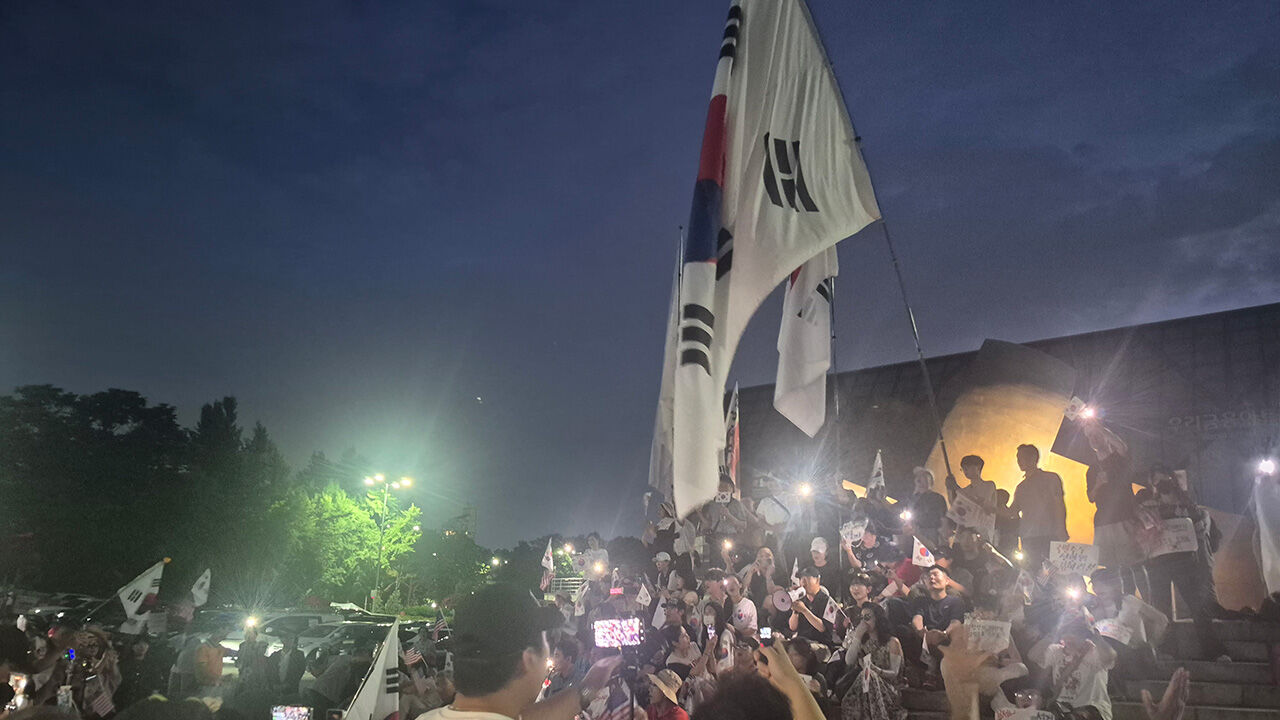
What was confirmed on site is that at least they do not shout "I am far-right" or "I am Yoon Again." There is only "Rigged election, re-election, same-day voting, manual counting." While participants may harbour specific ideological inclinations in their hearts, unless multiple people express them publicly at the same time, no basis was found to conclude that the group as a whole is far-right.
There is also aversion caused by the phrase "rigged election" among the participants' chants. This is because claims of rigged elections have been equated with baseless conspiracy theories. However, the term "rigged election" used at this site sounded as though it also encompassed the concept of a botched election triggered by the recent ballot paper shortage. Their notion of "unrigged/improper" (不正) literally means "not right" in its dictionary definition. Expressed in full, their logic is: "Since it was an improper election, a re-election must be held."
Are People in Their 20s and 30s the Majority?
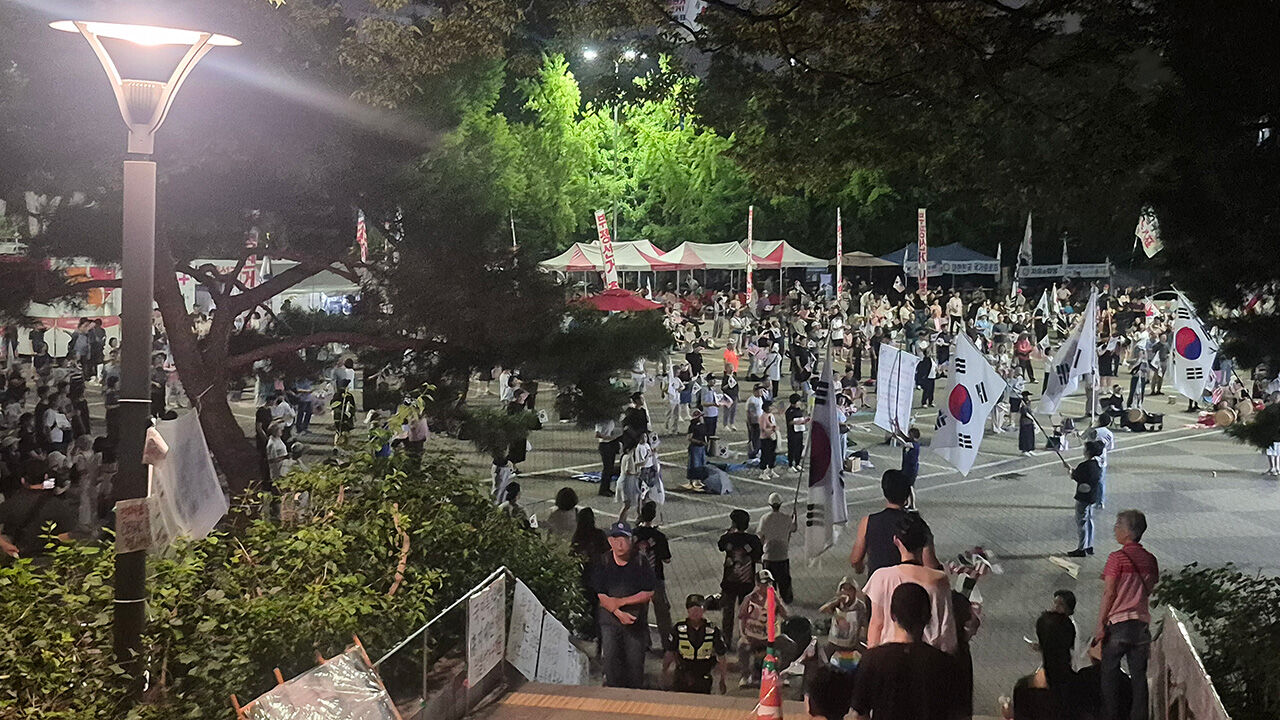
This brought to mind the "generational coalition theory" (or "generational encirclement theory") mentioned by Reform Party leader Lee Jun-seok when he was leader of the People Power Party. It meant that to win elections, the young demographic in their 20s and 30s and the elderly demographic, traditional supporters of the PPP, must unite. Can Olympic Park right now truly be called a venue where such a phenomenon is being manifested? Did Representative Jang view it as such?
Jang Dong-hyeok's Olympic Park
The PPP cannot pass the NEC special counsel bill alone because it falls far short of seats. Consent from the ruling Democratic Party is essential. The party must negotiate with the Democratic Party. Those close to Representative Jang argued that for Floor Leader Jeong Jeom-sig to gain an upper hand in negotiations with the ruling party, outrage among people in their 20s and 30s must be sustained. Their rationale was that only when young people speak up and public sentiment among 20-and-30-somethings simmers will the Democratic Party move, which explained why Representative Jang went to Olympic Park every day despite criticism from inside and outside the party over his street politics.
Representative Jang's decision to skip the Constitution Day ceremony held at the National Assembly on July 17 to plan "Olgong Day", as well as his plans to attend rallies to defend voting rights in Daegu following those in Incheon, Busan, Gwangju, and southern Gyeonggi Province, appear to stem from the same perspective. After concluding the Daegu rally, Representative Jang reportedly plans to organize "Olgong Day Season 2," similar to the Constitution Day rally. This seems to be a calculation to drive issues outside parliament on his own strength, even without support from his party's lawmakers.
Narrative of the NEC Special Counsel: Jang Dong-hyeok's Gains and Losses?
For now, Representative Jang's side sees clear benefits in the fact that both parties agreed to process the NEC special counsel bill. The passage of the special counsel bill is a tangible achievement, and there is a narrative through which credit could fall to Representative Jang. The internal logic operates as: "Thanks to the party leader attending rally sites every day, the issue was not buried, making it possible to argue that the special counsel bill was passed." Independent of external criticism, the argument that "Jang Dong-hyeok successfully preempted the NEC issue and ultimately performed well" could gain traction. Likely reflecting this internal assessment, Representative Jang reportedly intends to continue attending Olympic Park rallies for the time being, despite the bipartisan agreement on processing the bill.
On the other hand, with the bipartisan agreement on the NEC special counsel bill, a key justification underlying Representative Jang's "Olgong politics" has disappeared. Furthermore, if the special counsel bill passes, a process to persuade party members and supporters regarding the content of the agreement will be necessary. Some hardline party members are already dissatisfied with the agreement, and if their backlash continues, Representative Jang, who has drawn support from them, will have to take personal responsibility.
Above all, if he intends to keep participating in street rallies, finding an objective justification may become even harder without resetting his rationale and goals. Some predict he might set abolishing early voting as a new goal—given that one of the chants at Olympic Park emphasizes same-day voting—and continue street politics. Conversely, if his goals remain unclear, scolding and criticism asking what the party leader is doing wandering around outside parliament could grow even stronger, and calls for his resignation that were painstakingly quieted could resurface at any moment.
Rear Support for 'Brother Jeom-sik'
Jang Dong-hyeok's Yeouido New Normal?
<References>
Yun Min-woo and Kim Eun-young, "All Wars" (Modeun Jeonjaeng), Parkyoungsa, 2023, pp. 385-395.
※ Please note: This article was translated by AI and may contain errors.




 Video News