
 KOR
KORMonsoon Season, Underground Spaces Are Dangerous

In fact, you may remember that four years ago, in 2022 when Typhoon Hinnamnor hit the Korean Peninsula, a river overflowed and flooded an underground parking lot of an apartment complex in Pohang, North Gyeongsang Province. At that time, seven residents lost their lives after failing to escape the parking lot; they were people who had gone to move their cars after hearing an announcement that the parking lot was flooding. In the summer of the same year, a pair of sisters in their 40s and a teenage daughter died in Sillim-dong, Gwanak-gu, Seoul, after failing to escape a flooded semi-basement apartment.
According to the government's statistics on the number of people who died or went missing due to storm and flood damage over the past 10 years, 37 out of 199 people, or about 20 percent, were victims of underground space flooding. The reason underground spaces are so fatal during heavy rains is that the point where water enters and the place where people evacuate are the same, making it difficult to evacuate against the rushing water.
Gong Ha-sung / Professor of Fire and Disaster Prevention at Woosuk University
People have to evacuate through the very place where water is entering, and water rushes in there with a very strong current.
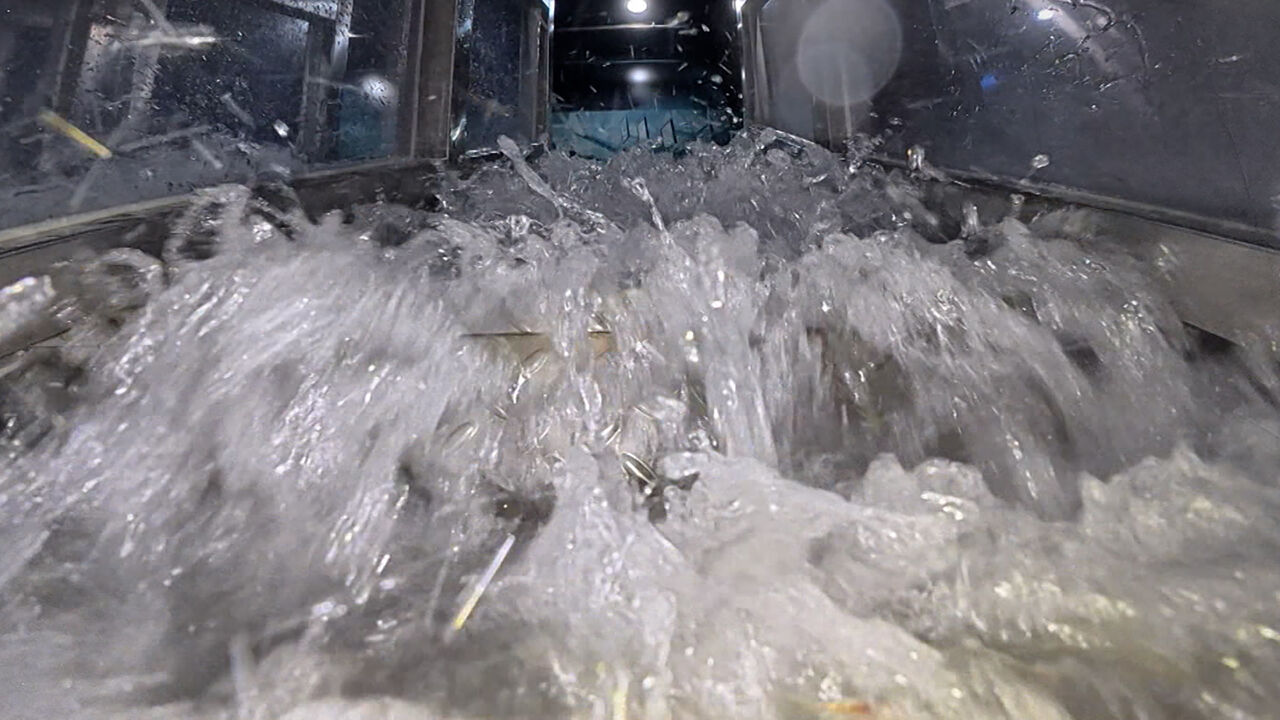
Experiencing Underground Flooding: Just How Dangerous It Is
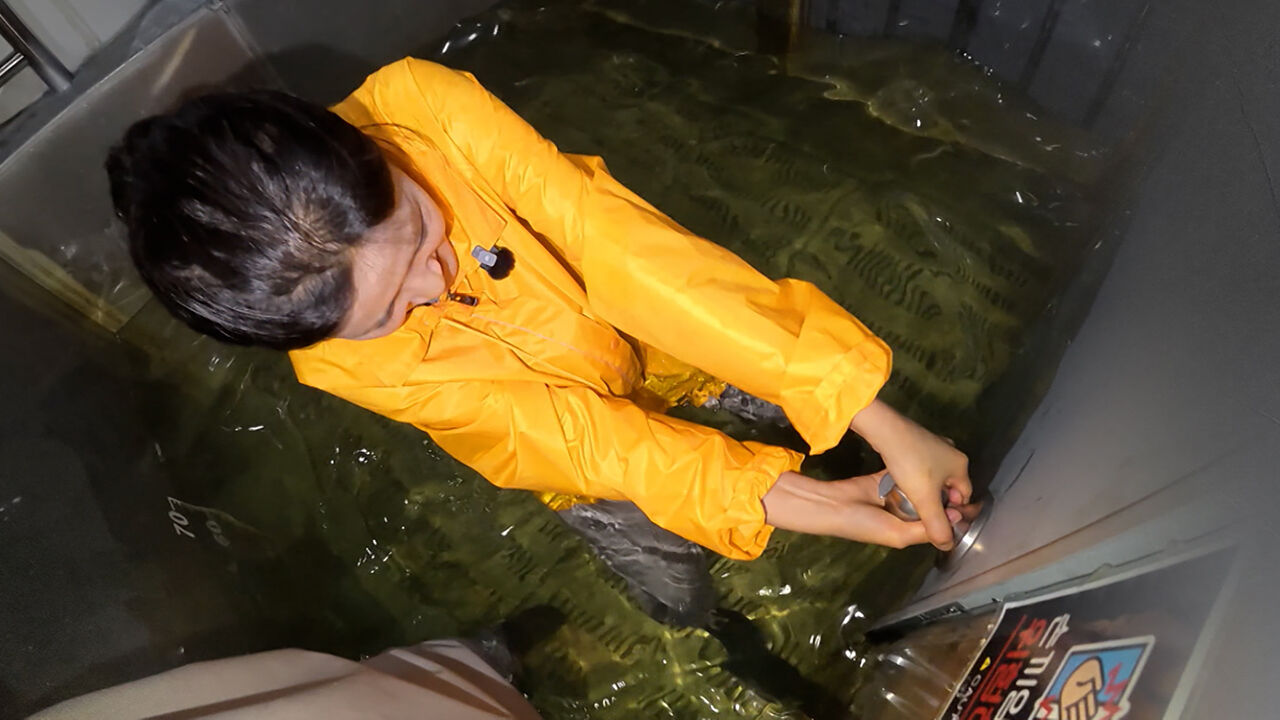
When this report was broadcast on the 8 p.m. news, there were a few comments questioning, "Can't you easily escape from that level of water?" or "Is the reporter not trying hard enough?" Before going to the experience center, I also thought that since I am physically strong, I might be able to escape. However, after the experience, I realized how arrogant I had been.
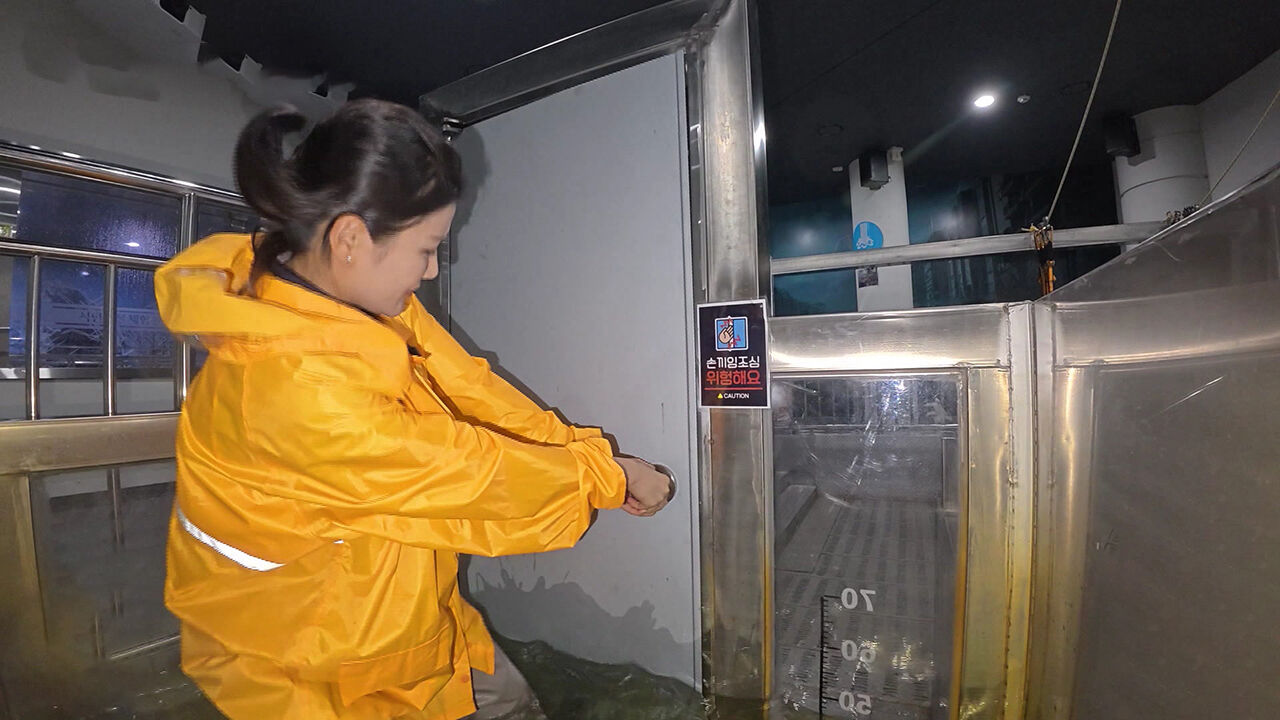
The water is about 50 cm deep, reaching up to my knees. No matter how much force I apply, the door won't open .
I also watched other citizens try the experience. An adult woman could not open the door, and even when a physically fit adult man tried, the door only shook slightly but did not open. Although it wasn't shown in the news broadcast, I also experienced a situation where the water rose to 70 cm, which is about thigh-high. At this level, no matter how much force I exerted, the door would not budge at all, as if someone was pushing back from the other side.
In fact, there is an experiment conducted by the National Disaster Management Research Institute (NDMRI). When the floodwater depth was about 30 cm, both men and women were able to escape. However, when the water rose to 40 cm, reaching around calf height, men could escape but women could not. When the water reached about 50 cm, up to knee height, it was impossible for both men and women to escape. When I asked a researcher at the National Disaster Management Research Institute who conducted this experiment, they explained that water rising to about 50 cm exerts a force similar to having a boulder weighing about 110 kg (242 lbs) blocking the door.
Kim Hak-su / Head of the Urban Flood Experiment Team at the National Disaster Management Research Institute
Even if the water rises by just 50 cm, it creates an effect similar to having a boulder weighing about 110 kg (242 lbs) outside the door. The door becomes that heavy, making it impossible to open. At 40 cm, in terms of water pressure on a standard fire door, it is close to 70 kg (154 lbs).
Therefore, once water reaches adult knee height, it becomes impossible to open a closed door and escape. The best course of action is to evacuate immediately at the first sign of rising water or if water begins to back up from the drains. Some of you might wonder what posture to adopt when trying to open the door. If you need to push the door open, you should lower your body, press your shoulder tightly against the door, and push with all your might. If you need to pull the door open, you should grab the handle with both hands, assume a squatting position, and pull the door with maximum force.
Choi Yeon-woo / Operations Team Leader at the Boramae Safety Experience Center
Take a step back from the handle and press your shoulder tightly against the center of the door. Standing slightly at an angle in that position, you need to apply your force there.
What to Do When Escaping via Stairs?
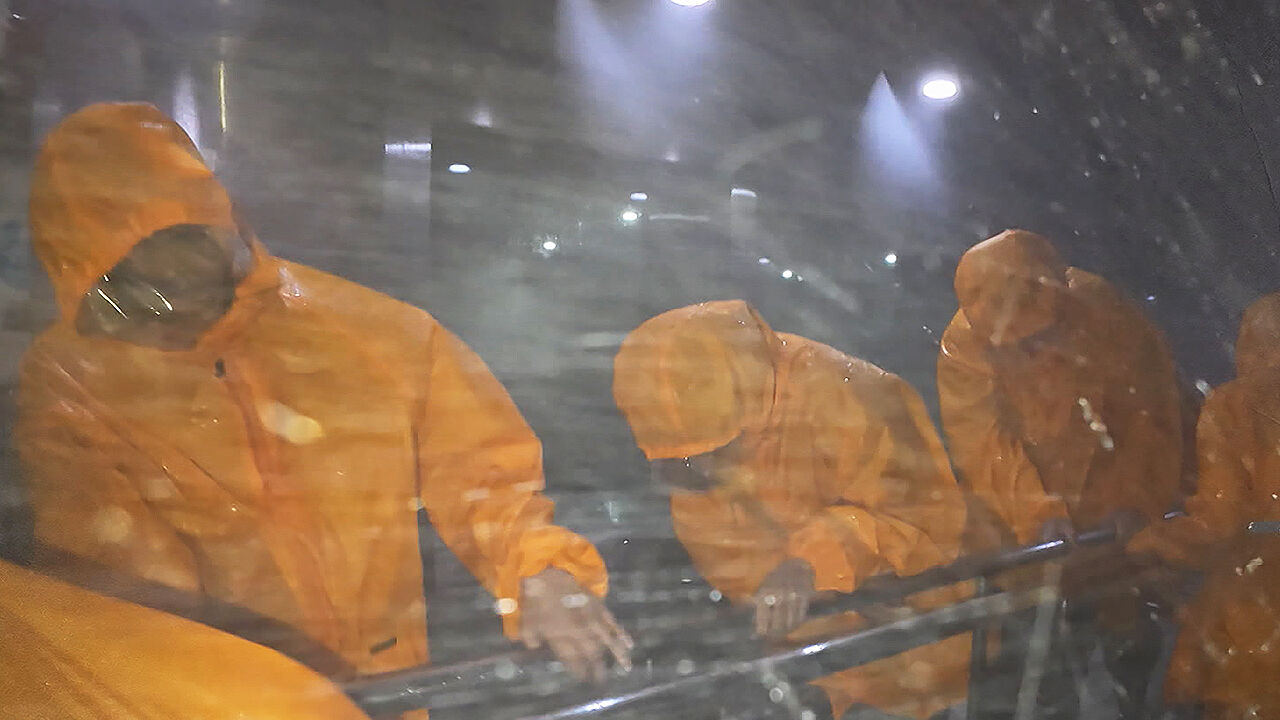
You might think you should hold onto the handrails on both sides. However, if you hold the handrails with your arms spread wide while water is pouring down heavily, you could lose your balance in the rapid current and fall backward. Therefore, you should hold onto a single handrail on one side with both hands. Once you have a firm grip with both hands, you should move as if you are ice skating—keeping your feet flat on the ground and sliding them rather than lifting them—to stay safe.
Choi Yeon-woo / Operations Team Leader at the Boramae Safety Experience Center
Usually, the stairs are not visible due to sediment. In that situation, lifting your feet too high can cause you to fall backward due to the water pressure, so you should keep your feet as close to the ground as possible, almost sliding them...
Additionally, going barefoot is actually better than wearing rain boots, which can fill with water and make it hard to lift your feet, or high heels/dress shoes, which can cause you to slip.
What If Water Rises in an Underground Parking Lot?
Some people might think they should quickly drive their cars up to the ground level before the parking lot floods, but experts warn this is extremely dangerous. If water reaches just two-thirds of a vehicle's height, the car will float due to buoyancy. Even a slight current can then leave the car stranded and drifting helplessly, so it is highly dangerous to assume you can drive through, no matter how shallow the water seems.
While we have looked at evacuation methods, experts emphasize that prevention is the most important step. They stress that if heavy rain is expected, sandbags or flood barriers should be installed in advance, and drains should be checked beforehand. We hope everyone stays safe and trouble-free this summer.
※ Please note: This article was translated by AI and may contain errors.


 Video News
 Video News
 Video News
 Video News
 Video News