
 KOR
KOR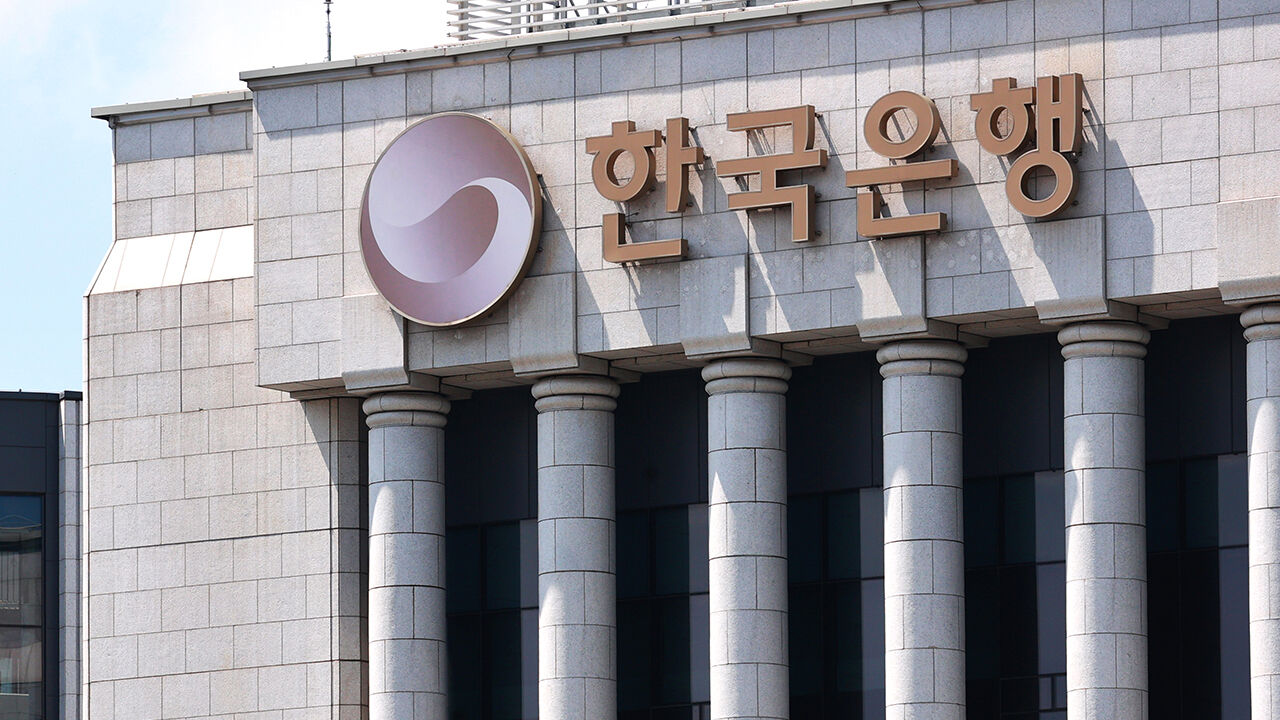
▲ The Bank of Korea
The Monetary Policy Board of the Bank of Korea (BOK) will decide whether to adjust the base interest rate during its monetary policy meeting this morning (July 16).
In a survey of media outlets, five out of six economic experts predicted that the base rate would be raised by 0.25 percentage points (p), from the current 2.50% to 2.75%.
If this forecast holds, it will mark the beginning of monetary tightening for the first time in three years and six months, since January 2023.
Experts anticipated that the rate hike would proceed barring any surprises, as BOK Governor Rhee Chang-yong and the central bank have signaled multiple interest rate increases.
Governor Rhee expressed his stance with unusual clarity during a press conference immediately following the Monetary Policy Board meeting back in May, stating, "It is judged that there is a need to raise the base interest rate at an appropriate time."
He subsequently stated in his address for the 76th anniversary of the BOK on June 12 that "it is necessary to raise interest rates without delay, with a focus on price stability," and repeated similar sentiments during a parliamentary report on July 9.
The BOK also reiterated in its Financial Stability Report on June 24 that it "judges it necessary to raise the base interest rate at an appropriate time, considering inflationary pressure, economic trends, and financial stability risks."
When the Monetary Policy Board froze the base rate in May, board members Yoo Sang-dae and Jang Yong-sung had already presented minority opinions in favor of a rate hike.
The dot plot, which reflects the board members' projections for the base rate six months ahead, also clearly revealed a tightening stance, with 19 out of 21 total dots placed at levels higher than 2.50%.
The background for this growing atmosphere of a base rate hike is complex.
Above all, inflationary pressure has increased as the Middle East war, which began with U.S. and Israeli airstrikes on Iran in late February, has become prolonged.
The consumer price inflation rate gradually rose from 2.0% in January and February of this year to 2.2% in March and 2.6% in April, before recording 3% levels in both May (3.1%) and June (3.2%), significantly exceeding the target level (2.0%).
In a report on the status of inflation targeting operations on June 17, the BOK predicted that international oil prices, which surged due to the Middle East war, are expected to decline gradually, and that the consumer price inflation rate for the second half of this year would remain around 3%.
The index of living costs, which reflects the perceived level of inflation, also continued to rise, reaching 1.8% in February, 2.3% in March, 2.9% in April, 3.3% in May, and 3.4% in June.
Governor Rhee cited the fact that the living cost inflation rate has consistently shown a higher upward trend than the consumer price inflation rate since March as one of the grounds for the need for tightening.
On the other hand, growth indicators are showing noticeable improvement.
In its second-half economic growth strategy announced on July 14, the government presented a forecast of 3.0% for this year's real gross domestic product (GDP) growth rate.
This is 0.4 percentage points (p) higher than the BOK's May forecast of 2.6%.
According to the Korea Center for International Finance, the growth rate forecasts presented by major overseas investment banks (IBs) as of the end of last month also averaged 3.0%.
The prevailing view is that high economic growth, which significantly exceeds the potential growth rate of around 1.8% based on BOK estimates, will not be short-lived.
In a recent written response to the National Assembly, the BOK predicted that the semiconductor market expansion would continue at least until next year, stating, "Compared to the significant increase in semiconductor demand, the pace of supply expansion is slow."
In this sense, the situation is far from one where the economy needs to be supported by keeping the base interest rate low.
Household debt and housing prices, which are key considerations for monetary policy, also add weight to a rate hike.
As of the end of last month, the balance of household loans (including policy mortgage loans) at deposit-taking banks increased by 7.6 trillion won from the end of May, recording the largest increase in one year and 10 months since August 2024.
Among the five major banks (KB Kookmin, Shinhan, Hana, Woori, and NH Nonghyup), the balance of mortgage loans at three of them has already exceeded the annual growth target submitted to financial authorities.
Regarding this, the BOK diagnosed during its parliamentary report on July 9 that "housing prices in the Seoul metropolitan area are continuing a high upward trend, and pressure from rising household debt is also expanding."
The won-dollar exchange rate has fallen to the 1,480 won range due to factors such as expectations for the conversion of funds raised by SK Hynix's American Depositary Receipts (ADR) into won and a moderation in foreign stock selling, but it remains at a high level.
Governor Rhee has mentioned several times that if the gap between the policy rates of South Korea and the U.S. narrows due to a base rate hike, it could help restore the fundamental value of the won.
Experts predict that the Monetary Policy Board may raise the base rate one more time in August or October of this year, considering these overall circumstances.
Furthermore, the prevailing view is that the interest rate hike cycle will continue until next year.
Governor Rhee is scheduled to personally explain the background of the base rate decision and the future direction of monetary policy at a press conference starting around 11:10 a.m. today.
(Photo: Yonhap News)
※ Please note: This article was translated by AI and may contain errors.


 Video News
 Video News
 Video News
 Video News
 Video News