
 KOR
KOR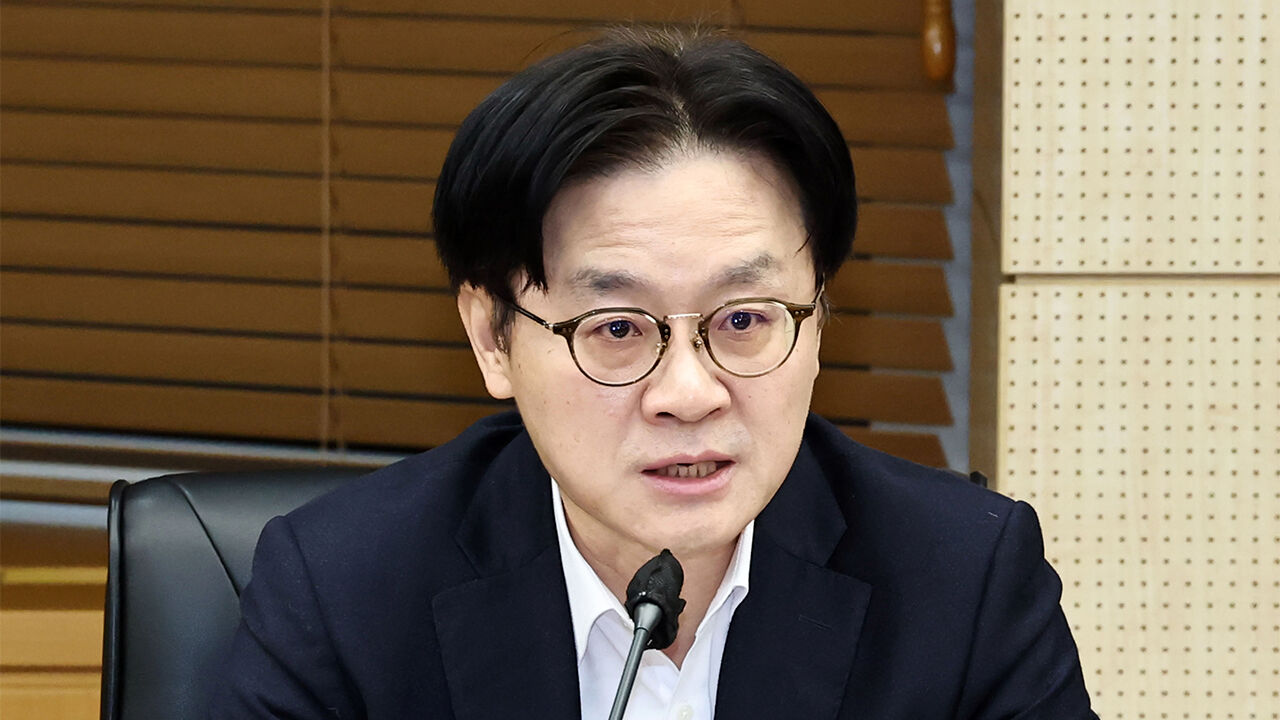
▲ Minister of Trade, Industry and Energy Kim Jeong-gwan
Amid ongoing debates over the distribution of excess profits at major semiconductor companies, sparked by the recent bonus controversy at Samsung Electronics, Minister of Trade, Industry and Energy Kim Jeong-gwan has made it clear that investment for the future must be the top priority.
Minister Kim made these remarks while attending a forum titled "Corporate Investment and the Future of Labor in the AI Era," held today (July 15) at the Korea Growth Investment Corp. in Yeouido, Seoul.
In his opening remarks, Minister Kim posed three questions: "What should companies invest in, how should labor change, and what should labor-management relations look like to secure a leading position in the midst of the AI revolution, which is reshaping the global economy?" He then emphasized, "First and foremost, in the AI era, corporate profits must be converted into investments for the future."
Citing the biblical story of Joseph, Minister Kim said, "Joseph stored grain during the seven years of plenty to prepare for the seven years of famine, while nations that took the years of plenty for granted were forced to kneel and borrow grain from Joseph and Egypt when the famine arrived."
Minister Kim added, "If the windfall of one era does not translate into the competitiveness of the next, that wealth will never last. Whether we consume current profits as temporary gains or channel them into new investments to prepare for AI will determine the future of South Korea's industry and our own future."
He further stated, "Today's profits must be poured into tomorrow's semiconductor plants, AI data centers, and world-class research and development and talent cultivation."
Regarding the future of labor, Minister Kim said, "Innovation in the way we work is more important than the quantity of work."
Minister Kim noted, "The most dangerous thing in the AI era is to resist change. If we delay small changes, we cannot avoid larger structural adjustments."
On the subject of labor-management culture in the AI era, he stated, "It should not be a culture of competing over who gets a larger share, but a culture of contemplating how we can grow together on a larger scale."
This is interpreted as an emphasis on the idea that reinvestment to enhance a company's global competitiveness must take precedence over profit clawbacks or social distribution.
The forum was co-hosted by the Ministry of Trade, Industry and Energy and the Korea Institute for Advancement of Technology.
Experts who presented at the forum also supported the Ministry's direction.
Ahn Dong-hyun, a professor of economics at Seoul National University, emphasized, "Excess profits are difficult to measure, and creating arbitrary standards could weaken corporate innovation capabilities and only increase social confusion." He added, "The semiconductor industry is seeing accelerated international competition in facility and R&D investment, and due to its high volatility and the risk of investment failure, corporate profits must be used as a source for reinvestment to secure future returns."
Kim Dong-wook, a professor at Korea University Law School, diagnosed the situation by saying, "Our labor laws were structured during the industrialization era and are failing to bridge the gap between companies and the law in the high-speed race of the AI and semiconductor hegemony war." He suggested, "Rigid legal systems may paradoxically fail to help protect vulnerable workers, so we need to evolve toward a 'flexicurity' model that supports flexible workforce management while strengthening retraining and social safety nets."
(Photo: Yonhap News)
※ Please note: This article was translated by AI and may contain errors.





 Video News
 Video News