
 KOR
KOR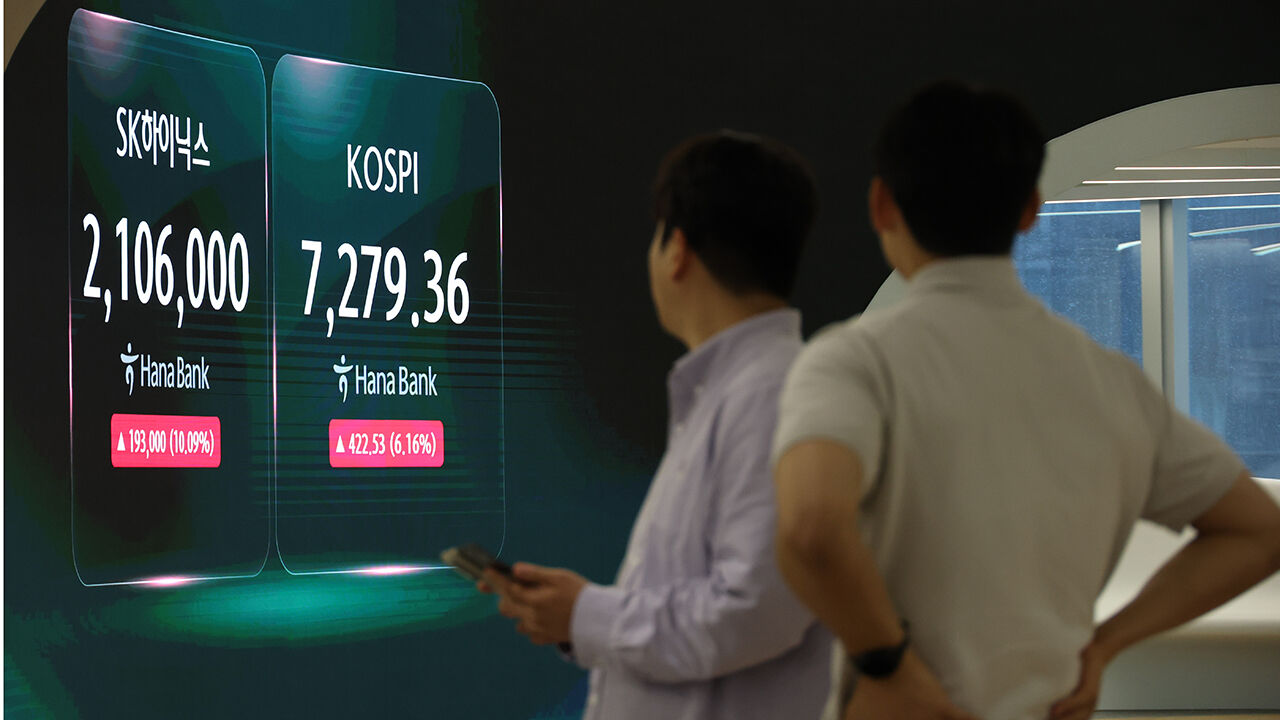
▲ The KOSPI and real-time stock prices for SK Hynix are displayed at the dealing room of Hana Bank in Jung-gu, Seoul, on July 15, as the index recovered the 7,000-point mark.
Regarding the recent sharp decline in domestic stock prices, major overseas investment banks and foreign media outlets have assessed that the downturn was driven by profit-taking amid concerns over reaching a peak, as well as supply-demand imbalances caused by the unwinding of leveraged positions.
In a report titled "Overseas Perspectives on Recent Increased Volatility in the Domestic Stock Market," released on July 14, the Korea Center for International Finance stated, "The prevailing view is that the recent plunge in stock prices is a correction resulting from profit-taking and global portfolio rebalancing following a short-term market rally, rather than a deterioration in domestic economic or corporate fundamentals."
According to the report, Goldman Sachs commented on the KOSPI’s nearly 9% drop on July 13, stating, "This is not due to company-specific issues, such as poor performance in the semiconductor sector, but rather has the characteristics of forced liquidation of leveraged products and position adjustments driven by market sentiment." The firm added, "The semiconductor cycle itself remains solid."
JPMorgan assessed that "the overall valuation of the Korean stock market remains at an attractive level compared to both emerging and developed market indices."
However, the firm pointed out that the concentration of market weight in a few semiconductor stocks, such as Samsung Electronics and SK Hynix, and the expansion of retail leveraged investments are factors contributing to market vulnerability.
JPMorgan noted, "Leveraged ETFs can amplify short-term volatility without affecting fundamentals, potentially creating risks of overheating in both upward and downward directions."
Regarding the semiconductor industry, the prevailing view was that it is too early to worry about a slowdown, given the robust demand, the upward trend in memory prices for the second half of the year, and the expansion of long-term semiconductor supply contracts, despite the recent stock price correction.
Bloomberg projected, "Given the solid demand for semiconductors and tight supply conditions, the semiconductor-led upward momentum is expected to continue despite the recent sharp decline."
(Photo: Yonhap News)
※ Please note: This article was translated by AI and may contain errors.



 Video News
 Video News
 Video News
