
 KOR
KOR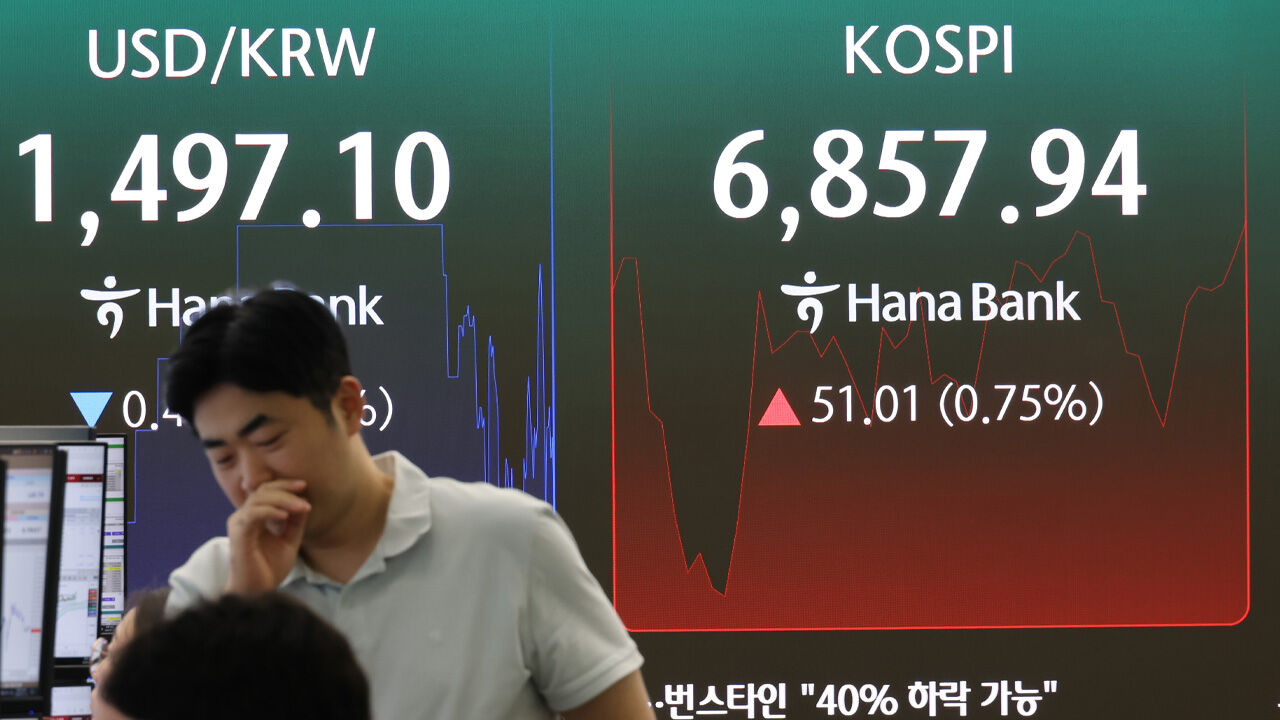
▲ The KOSPI index is displayed at the dealing room of Hana Bank headquarters in Seoul on the 14th.
The won-dollar exchange rate fell below 1,490 won during intraday trading for the first time in two months.
The decline is attributed to expectations of dollar supply stemming from SK Hynix, as well as net buying by foreign investors in the domestic stock market.
As of 10:20 a.m. today, the won-dollar exchange rate was trading at 1,489.8 won, down 13.6 won from the previous day's closing price.
Starting the day at 1,500 won at 6:00 a.m., the exchange rate saw its downward trend accelerate quickly after the market opened.
This marks the first time in two months since May 14 that the exchange rate has dipped below the 1,490 won level during trading.
Expectations that the 26.5 billion dollars (approximately 40 trillion won) raised by SK Hynix through its American Depositary Receipt (ADR) listing will be converted into won are believed to have fueled dollar-selling sentiment.
Moves to defend the dollar, such as Hanwha Ocean's large-scale forward exchange selling of over 2 billion dollars (approximately 3 trillion won) yesterday, also had an impact.
Foreign investors, who sold 1.7021 trillion won worth of domestic stocks yesterday, are currently net buying 3.3631 trillion won worth of stocks on the KOSPI market today.
The dollar index, which measures the value of the dollar against six major currencies, is down 0.047 to 101.244.
The yen-dollar exchange rate is up 0.02% at 162.387 yen, and the won-yen cross rate is 919.57 won per 100 yen, up 6.94 won from the reference rate at 3:30 p.m. on the previous trading day.
(Photo: Yonhap News)
※ Please note: This article was translated by AI and may contain errors.




