
 KOR
KOR
▲ A criminal complex in Cambodia surrounded by barbed wire
Even after graduating from school, they could not graduate from gambling.
Long after taking off their school uniforms, the swamp of gambling debt and secondary crimes continued to haunt Lee (20).
Lee first dabbled in gambling when he was in his second year of middle school.
It started on an illegal website he accessed to watch webtoons for free, which offered a "free money" promotion—a bonus for gambling.
He thought he would just try it for fun.
Three years later, by his second year of high school, Lee's gambling debt had ballooned to 80 million won.
Lee needed to make money.
"I sold fake luxury goods on platforms like Danggeun Market and Joonggonara, pretending they were authentic," he said on July 13. "It wasn't fraud as long as I sent the items."
However, it was not enough to pay off his debt.
Eventually, he became a "distributor" (sales agent) within his school.
He received a commission from illegal gambling sites for luring other students into cyber gambling.
In this way, an entire school became tainted by cyber gambling.
Lee eventually graduated, but once he left the classroom, his gambling site marketing efforts no longer generated profit.
There was no place better than a classroom to spread gambling.
"That was when I learned about 'bank account extortion,'" Lee confessed. "I chose this path because I could earn between 2 million won and 5 million won in a single day with just one job."

Bank account extortion is a new type of crime where perpetrators threaten gambling site operators or others, claiming they will freeze their collection accounts unless they pay up.
Recently, the accounts of ordinary citizens and small business owners have also become indiscriminate targets.
Linked to voice phishing organizations, these criminals deposit "ping money"—funds stolen from voice phishing victims—into the target's account and then report it to financial authorities to have the account frozen.
They are exploiting the account suspension system designed to protect voice phishing victims.
"Criminals who used to engage in voice phishing have recently flooded into this area. It has become a new business model for crime," said Jo Ho-yeon, director of the civic group 'School Without Gambling.' "People in their 20s who struggle to make a living after graduating from school are committing bank account extortion."
He added that some organizations even disguise themselves as legitimate groups, using Telegram channels to indiscriminately collect and publish the account information of illegal gambling sites to extort money.
Beyond this, many people in their 20s are trying to pay off gambling debts by working as voice phishing or drug couriers, distributors of illicit bank accounts, or illegal private lenders.
Some sell their own bank accounts to raise gambling funds or work as "errand runners" for illegal private lenders, delivering the family information and home addresses of debtors.
"There are cases where people became involved in voice phishing collection while working part-time jobs to pay off gambling debts," a counselor at a government-affiliated agency said cautiously. "Even those who come to the center find it difficult to open up because it involves criminal activity."
As in Lee's case, the seeds of secondary crime were sown during their teenage years.
Along with gambling addiction, their sense of economic reality collapses, and the threshold for committing crimes is lowered.
According to a study titled 'A Study on Secondary Crimes by Internet Gambling-Addicted Adolescents' released last year by Yeom Hee-jung (a doctoral candidate in the Department of Social Welfare at Sungkyunkwan University), nine teenagers addicted to gambling who participated in in-depth interviews had engaged in various crimes, including assault, identity theft, prostitution, selling electronic cigarettes, fare evasion, and driving without a license.
One teenager who engaged in prostitution said, "Once I started making money from gambling, I felt that money was trivial."
Recently, when the police accepted voluntary reports of gambling from teenagers, cases were revealed such as a 17-year-old identified as A, who habitually ran away from home and broke into cars to raise gambling funds, and a 15-year-old male student who assaulted his mother and attempted to take his own life because she would not pay off his 4 million won gambling debt.
Some who suffered from gambling debt headed to places like the 'Cambodian criminal complexes,' which emerged as hotbeds for phishing crimes, after they turned 20.
They continued to gamble at local casinos and other venues.
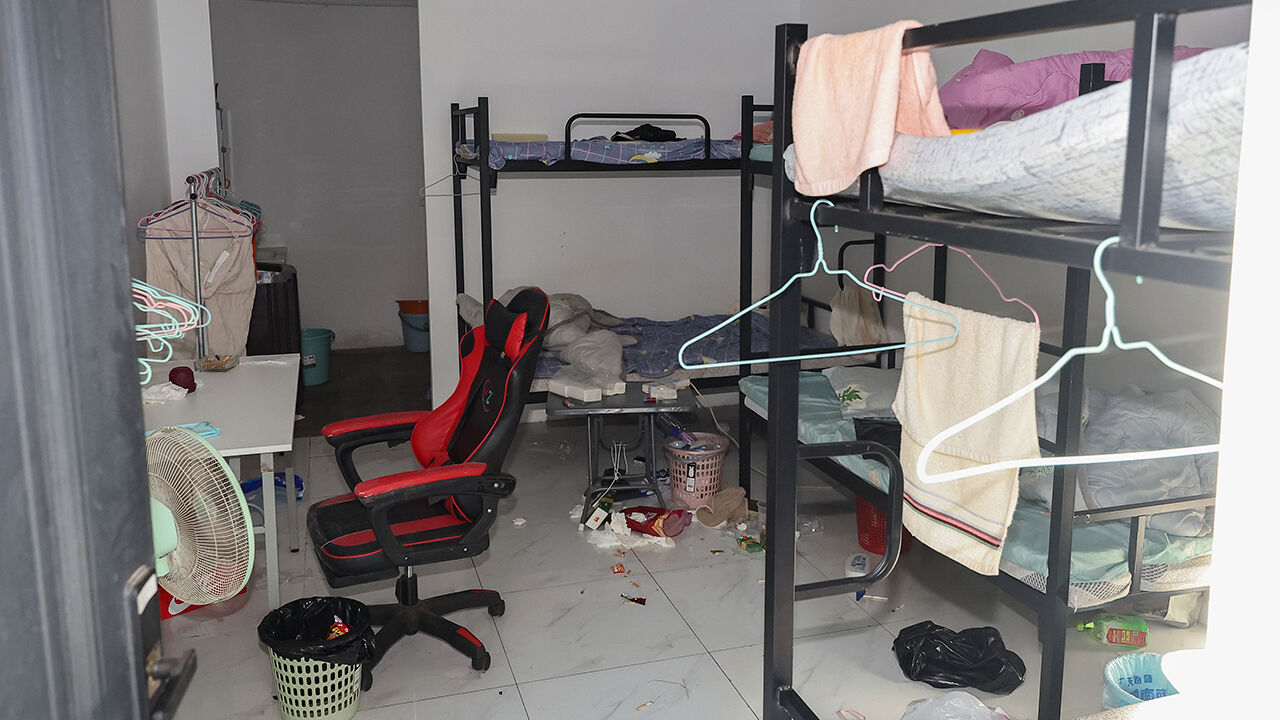
A man in his 20s who was at a Cambodian criminal complex said, "Since it's easy to make money, it seems like almost everyone there gambles. There are casinos inside the 'Wench' (criminal complex)," adding, "Most of the people who came from Korea had debts or were credit delinquents."
"There were cases where families forcibly brought people to the center after they were involved in the Cambodian situation," said Shin Sung-beom, head of the Korea Gambling Addiction Healing Center. "There are also those in their 20s who have sadly taken their own lives. It just doesn't become known to the outside world because their acquaintances tell others they passed away due to depression."
He added, "Roughly over 70% of the clients I see are teenagers involved in crime. There was even a case where someone listed a used computer for 500,000 won and swindled 500,000 won each from 27 different people."
Experts emphasized that the "golden time" is before teenage gambling addicts cross the threshold of school.
They argued that rather than focusing solely on a hardline response, psychological healing processes must accompany interventions to reduce the likelihood of them falling into the swamp of gambling or secondary crimes as adults.
Jo Yun-o, a professor of police administration at Dongguk University who has studied the problem of adolescent cyber gambling, pointed out, "Teenagers, especially delinquent teenagers, suffer from severe depression due to gambling debt."
"If these problems are not resolved and they enter their 20s, gambling-related behavioral issues can suddenly emerge even while they are working, or they may commit other crimes," he said. "In many cases, conflicts with parents over debt are also very severe."
"They end up becoming both victims and perpetrators," Jo said, emphasizing that the government must devise prevention strategies that focus on issues such as school and family relationships before the gambling itself.
Work is also needed to close loopholes in the system so that secondary criminal behaviors like bank account extortion are impossible in the first place.
Under the current system, account suspension can be requested via phone by providing the account holder's name, resident registration number, account number, and account password.
There is no detailed verification mechanism to determine whether the reporter is the actual victim or a third party maliciously trying to freeze someone else's account by stealing their personal information.
"Financial authorities are pushing for system improvements to simplify the objection process, but in this structure, no matter how much it is simplified, it cannot prevent the act of unjust account suspension from occurring," pointed out Woo Ji-won, a lawyer at the law firm Myungwon.
He emphasized, "System maintenance that makes identity verification practical at the reporting stage must come first, and improvements to the objection process will only be effective if they act as a supplement."
"Under current law, it is possible to freeze only the amount that needs to be suspended," noted Kim Byeong-guk, a lawyer at the law firm Beonhwa. "Banks are passive about partial suspension and almost never do it. As a result, the basic problem is that the entire bank account ends up being frozen."
(Photo: SNS capture, Yonhap News)
※ Please note: This article was translated by AI and may contain errors.



 Video News
 Video News
 Video News
 Video News