
 KOR
KOR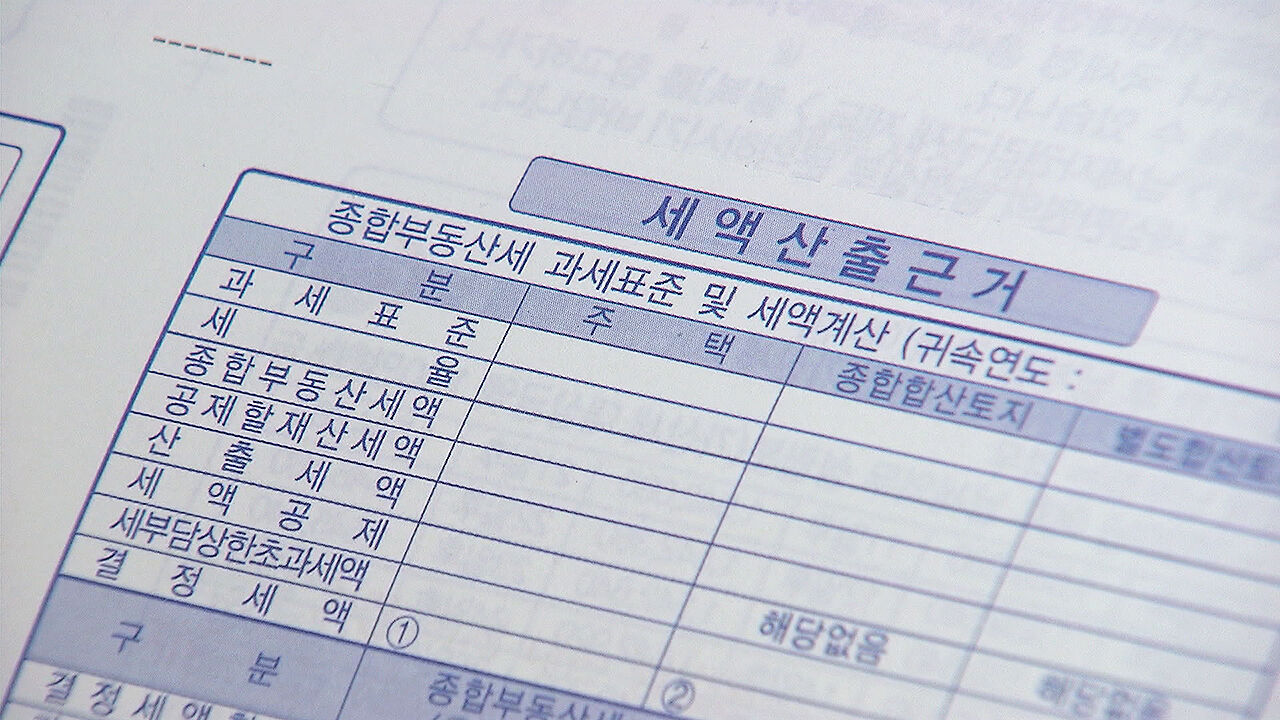
▲ Comprehensive Real Estate Tax
An analysis suggests that if the fair market value ratio for the Comprehensive Real Estate Tax is raised from the current 60% to 80%, the total housing property tax revenue for this year will exceed 10 trillion won.
According to data received today (July 9) by Representative Lee Jong-wook of the People Power Party, a member of the National Assembly's Land, Infrastructure and Transport Committee, from the National Assembly Budget Office, the housing property tax for 2026 is estimated at 8.6995 trillion won if the current 60% fair market value ratio is applied.
The fair market value ratio is the percentage applied to the officially assessed price to calculate the tax base for the Comprehensive Real Estate Tax.
The fair market value ratio for the Comprehensive Real Estate Tax was raised to 95% under the Moon Jae-in administration, but was lowered to 60% after the launch of the Yoon Suk Yeol administration and has been maintained at that level since.
The analysis shows that if the fair market value ratio for the Comprehensive Real Estate Tax is raised to 80%, the housing property tax would increase to 10.0658 trillion won, a 15.7% (1.3663 trillion won) increase from the current level.
If a 95% ratio is applied, the property tax is estimated to rise to 10.7726 trillion won, a 23.8% (2.0731 trillion won) increase compared to the current level.
Property tax is the sum of the local property tax and the Comprehensive Real Estate Tax.
The National Assembly Budget Office projected this year's housing property tax to be 7.2233 trillion won.
It estimated that the Comprehensive Real Estate Tax would increase from 1.4763 trillion won at a 60% fair market value ratio to 2.8425 trillion won at an 80% ratio, and to 3.5494 trillion won at a 95% ratio.
By region, Seoul and Gyeonggi Province showed the largest increases in tax burden.
The housing property tax in Seoul is analyzed to increase by 21.1% from the current 4.5191 trillion won to 5.4721 trillion won if the fair market value ratio is raised to 80%, and by 31.9% to 5.9595 trillion won if 95% is applied.
In Gyeonggi Province, the tax is expected to increase from 2.0377 trillion won to 2.2580 trillion won at an 80% ratio, and to 2.3707 trillion won at a 95% ratio, marking increases of 10.8% and 16.3%, respectively.
The burden per taxpayer is also expected to increase significantly.
Based on the 455,331 people subject to the Comprehensive Real Estate Tax in 2024, the average housing-related Comprehensive Real Estate Tax per person is estimated to increase from the current 3.24 million won to 6.24 million won at an 80% fair market value ratio, a 1.9-fold increase, and to 7.8 million won at a 95% ratio, a 2.4-fold increase.
Representative Lee stated, "Increasing property taxes raises the burden on citizens who own a single home, retirees, and actual residents, and there is a concern that the increased tax burden on landlords will be passed on to tenants through higher monthly and jeonse (lump-sum deposit) prices."
He further emphasized, "Rather than trying to suppress instability in the real estate market through taxes, we must prepare supply measures and practical market stabilization plans that can alleviate the housing cost burden on the public."
※ Please note: This article was translated by AI and may contain errors.


 Video News
 Video News
 Video News
 Video News
 Video News