
 KOR
KOR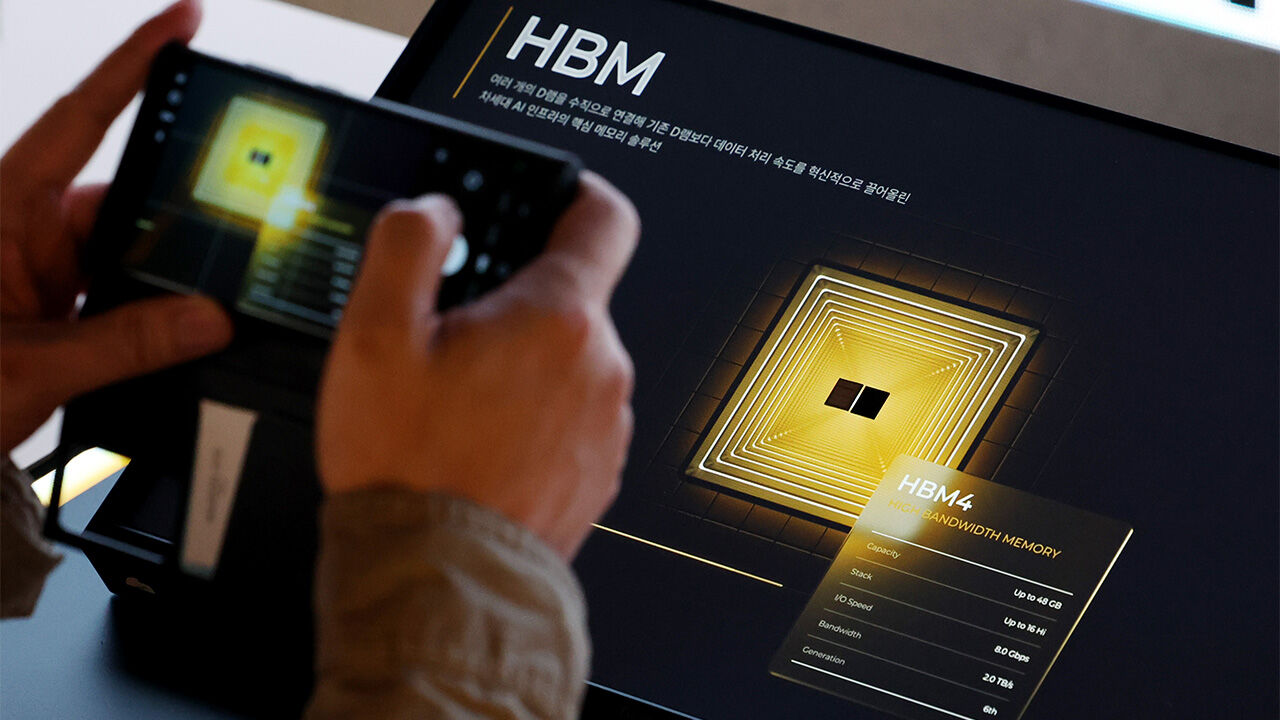
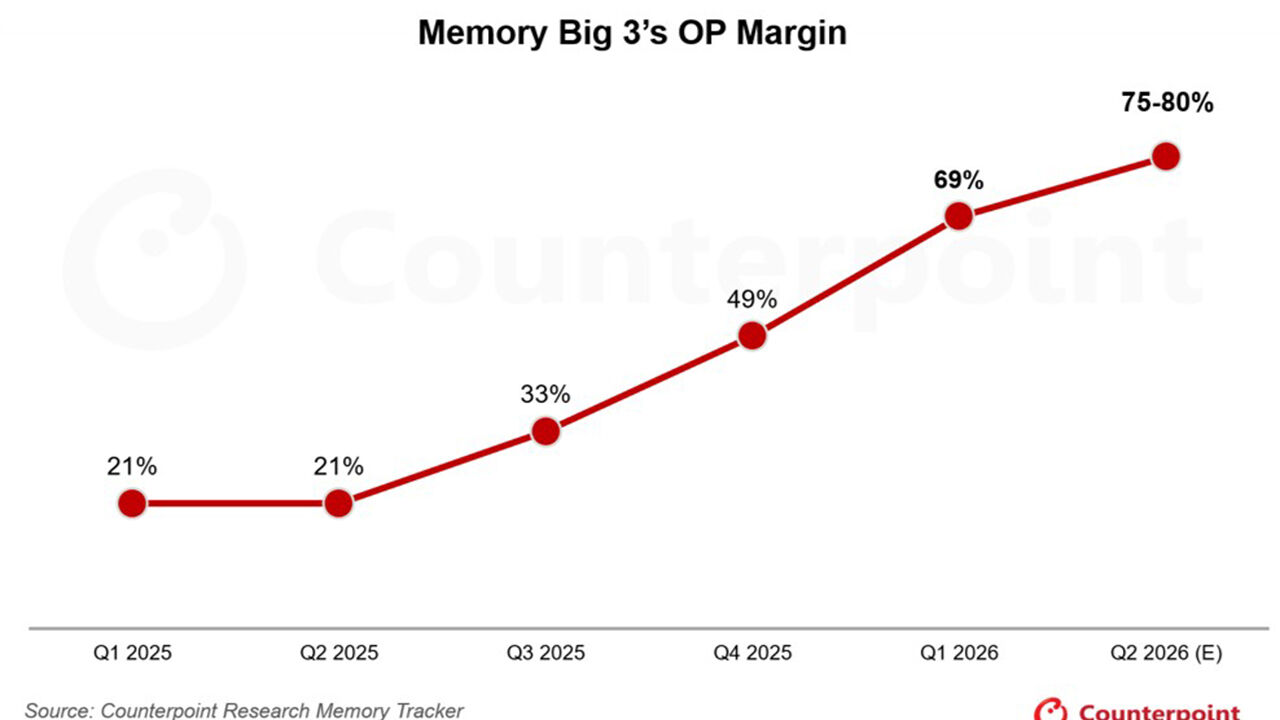
▲ Trend of average operating margin for the top 3 memory companies
With global memory market revenue and operating profit projected to reach record highs in the second quarter of this year, analysis suggests that the average operating margin for the top three memory chipmakers—Samsung Electronics, SK Hynix, and Micron—will climb to 80 percent.
According to the Memory Tracker by market research firm Counterpoint Research on July 7, the average operating margin for major memory manufacturers Samsung Electronics (based on its DS division), SK Hynix, and Micron is expected to be between 75 and 80 percent for the second quarter of this year.
The quarterly growth rate for the three companies is expected to reach 50 percent, with their combined revenue projected to exceed approximately 280 trillion won.
Consequently, the total size of the memory market is also expected to surpass 350 trillion won, marking an all-time high.
Micron, which was the first of the three to announce its second-quarter results, recently reported an operating margin of 81 percent.
This figure surpasses that of Nvidia and TSMC.
Counterpoint Research predicts that Samsung Electronics and SK Hynix will also record similar levels of operating margins.
This is interpreted as a result of rising memory prices driven by the global frenzy to expand artificial intelligence (AI) infrastructure.
Counterpoint Research analyzed, "The fact that the three memory manufacturers recorded record-high operating margins shows that memory has become a core pillar of the AI industry," adding, "Due to the nature of the semiconductor industry, where fixed costs are high and variable costs are low, most price increases translate into profit once fixed costs are recovered."
Some point out that the sharp rise in memory prices is leading to increased production costs for IT devices and higher subscription fees for AI services, with the burden being passed on to consumers.
Apple has raised the prices of its MacBooks and iPads, and Amazon Web Services (AWS) is also scheduled to increase its GPU instance prices by 20 percent starting in July.
"It is difficult to find a precedent for an operating margin exceeding 75 percent in any industry, but the AI boom is producing unexpected results," said Research Director Kang Kyung-soo. "Low levels of investment over the past few years are also acting as a cause for this surge, and the supply shortage may continue until the end of this year."
There are also forecasts that if AI-based demand continues, memory prices will be unlikely to fall even in 2027.
The effect of production capacity expansion by the top three memory companies, based on wafer output, is not expected to materialize in earnest until 2028.
Counterpoint Research explained, "According to a mega-project led by the South Korean government, the DRAM production capacity of Samsung Electronics and SK Hynix is set to double, but the target year is 2031," adding, "Manufacturers are intensively investing their current high operating profits into advanced technology development and fab expansion, while also preparing for future down-cycles through Long-Term Agreements (LTA)."
(Photo: Provided by Counterpoint Research, Yonhap News)
※ Please note: This article was translated by AI and may contain errors.


 Video News


 Video News
