
 KOR
KOR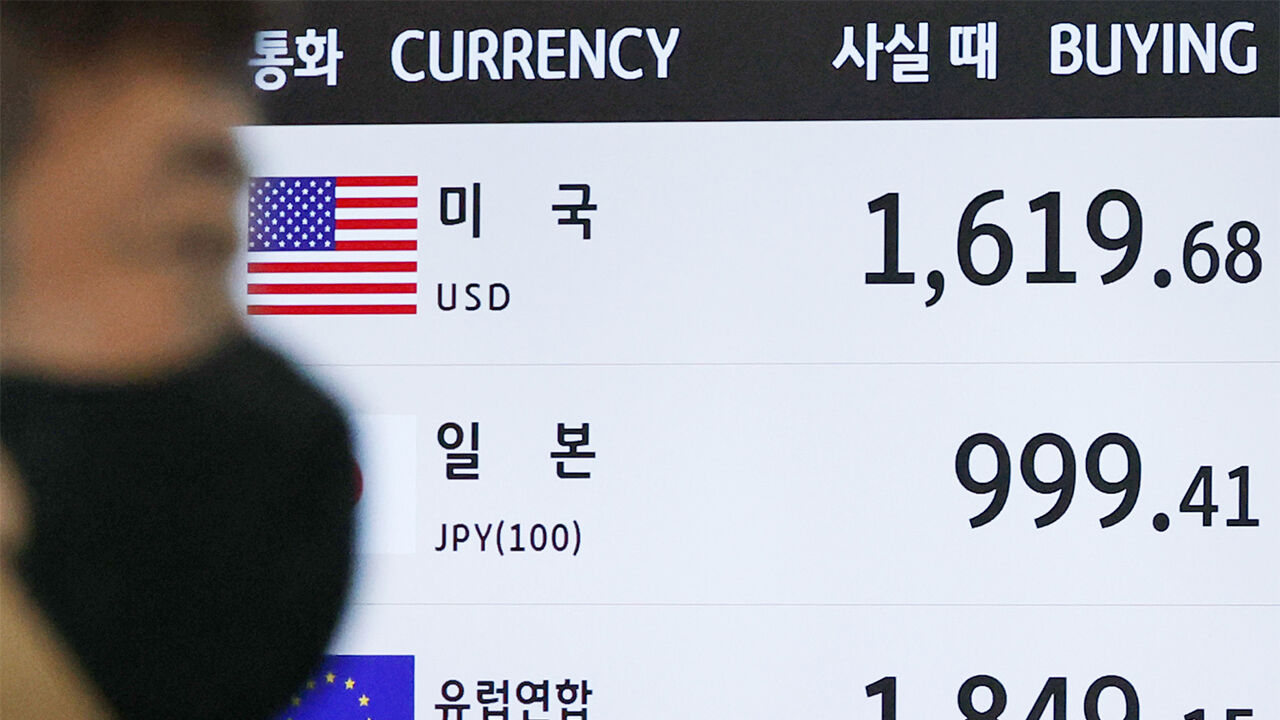
▲ The won-dollar exchange rate is displayed at a currency exchange counter at the departure hall of Incheon International Airport Terminal 2 on July 2, amid a continued high exchange rate driven by a strong dollar.
With the won-dollar exchange rate hovering in the mid-1,500 won range, the government will provide approximately 15 trillion won in emergency management funds, including loans and guarantees, to small and medium-sized enterprises (SMEs) and middle-market companies suffering from the high exchange rate.
The government has unveiled a comprehensive support package covering finance and taxation, such as strengthening trade insurance and currency fluctuation insurance for importing SMEs, as well as extending tax payment deadlines.
The government announced the "Emergency Support Plan for SMEs Facing Business Difficulties Due to High Exchange Rates" today (July 3) during a joint meeting of the Emergency Economic Headquarters and the Meeting of Economic Ministers, presided over by Deputy Prime Minister and Minister of Economy and Finance Koo Yoon-cheol.
First, a total of 14.9 trillion won in emergency management funds will be provided to SMEs and middle-market companies experiencing business difficulties due to the high exchange rate.
Specifically, a dedicated track for SMEs facing business difficulties due to high exchange rates will be established within the emergency management stabilization fund of the Korea SMEs and Startups Agency.
In particular, for SMEs whose import of raw and subsidiary materials accounts for more than 20% of their sales, the requirements will be relaxed so that they can receive emergency management stabilization funds without having to meet the criteria for declining sales or operating profits.
To help SMEs cope with worsening business conditions, the support scale for the Export-Import Bank of Korea's special crisis response program will be increased by 1 trillion won, from the original 7 trillion won to 8 trillion won, and interest rate benefits will be expanded by 0.2 percentage points.
The government also plans to introduce a "super low-interest win-win loan for overcoming high exchange rates," which will provide loans at interest rates equivalent to the Export-Import Bank's funding costs.
The guarantee ratio for the Korea Technology Finance Corporation's emergency management stabilization guarantee will be raised from 95% to 100%, and the reduction in guarantee fees will be expanded from 0.3 percentage points to 0.4 percentage points.
In addition, the government plans to defer repayments and extend the maturities of policy fund loans for SMEs struggling due to the high exchange rate.
Support for trade insurance and currency fluctuation insurance for importing companies will also be strengthened.
Eligibility requirements will be improved so that SMEs and middle-market companies without export records can also sign up for import insurance, and import insurance premiums for these companies will be discounted by 50% until April of next year.
For SMEs and middle-market companies with increased import costs for core raw materials, the Korea Trade Insurance Corporation's import financing loan guarantee limit will be increased by up to two times.
Along with this, to mitigate currency fluctuation risks for SMEs, the supply of currency fluctuation insurance will be increased by 100 billion won, from the original 1.2 trillion won to 1.3 trillion won, and the discount rate for SME currency fluctuation insurance premiums will be increased from 15% to 30%.
Furthermore, the eligibility for currency fluctuation insurance, which was previously limited to some raw material importing companies, will be expanded to include companies importing all items except for luxury goods.
The government will also establish a dedicated track within the export voucher program for companies experiencing business difficulties due to high exchange rates, providing 10 billion won in support, and will temporarily increase the support limit for trade insurance premiums within the export voucher from the original 10 million won to 20 million won.
To ease the burden of using trade insurance for companies, the government will also push for institutional improvements to allow for the advance payment of trade insurance premiums, which were previously settled and paid after the expiration of the insurance contract.
In addition, SMEs using Export-Import Bank loans will be granted a loan currency conversion right, which provides them with the option to convert loan currencies between foreign currency and won, or between different foreign currencies, free of charge.
Tax support will also be provided.
SMEs experiencing business difficulties due to high exchange rates will be granted extensions for the payment of corporate tax, value-added tax, income tax, and customs duties.
The government will provide consulting to companies and organizations so that exchange rates can be included in the linkage formula when signing contracts for the delivery payment linkage system. It also plans to reflect the performance of supporting SMEs facing business difficulties, such as high exchange rates, when preparing detailed indicators for the win-win finance index, which evaluates the level of cooperation between financial companies and SMEs.
(Photo: Yonhap News)
※ Please note: This article was translated by AI and may contain errors.



 Video News
 Video News

 Video News