
 KOR
KOR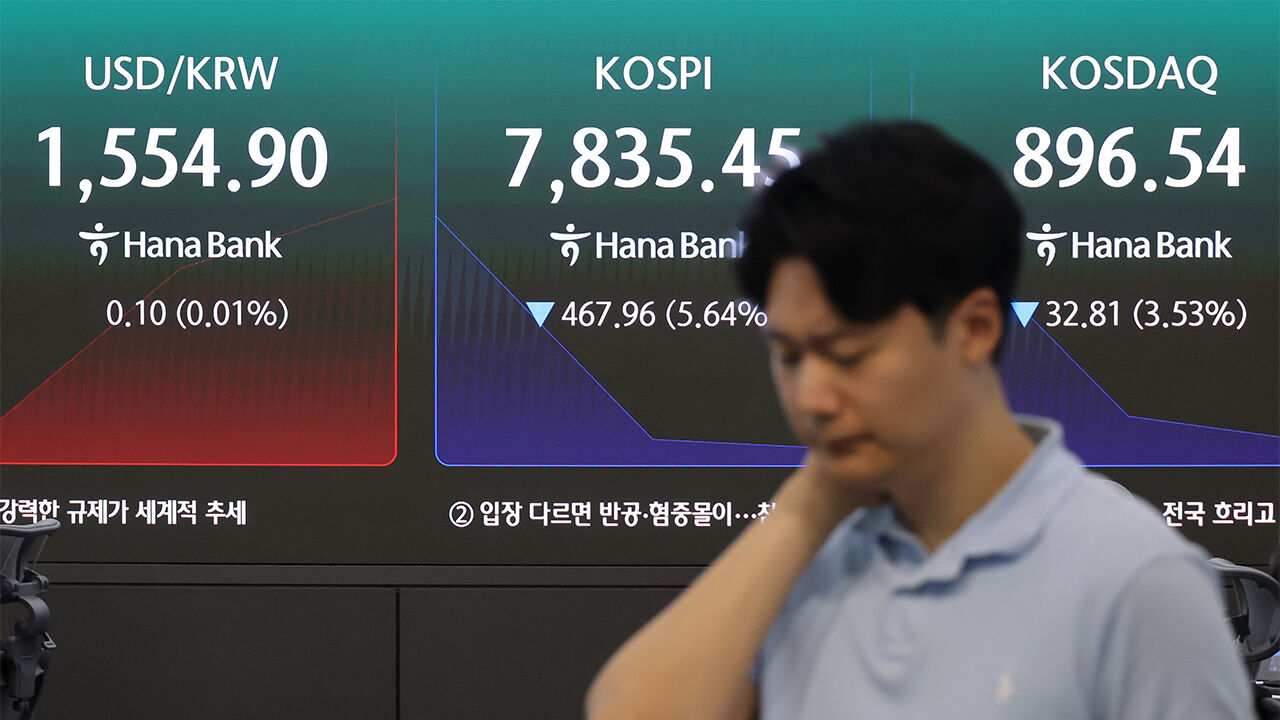
▲ The KOSPI and KOSDAQ indices are displayed on the trading board at the Hana Bank dealing room in Jung-gu, Seoul, on the 2nd, as the KOSPI opened with a sharp decline.
Shares of Samsung Electronics and SK Hynix plunged today (July 2) due to concerns over shrinking semiconductor demand sparked by Meta, leading to a significant drop in the KOSPI.
According to the Korea Exchange, as of 9:23 a.m. today, the KOSPI has fallen 5.86% from the previous trading day, dropping below the 8,000-point mark.
In the aftermath, a sell-side sidecar was triggered at approximately 9:07 a.m.
This decline is driven by the sharp drop in KOSPI heavyweights Samsung Electronics and SK Hynix.
The slump in the two major semiconductor firms follows news that Meta is entering the cloud business.
Bloomberg reported, citing multiple sources, that Meta has internally launched the Meta Compute project and is planning a cloud business model that utilizes its own data center infrastructure.
This means the company intends to sell its surplus computing resources to external parties.
This news has sparked concerns that AI computing resources may be entering a state of oversupply, dealing a blow to semiconductor and infrastructure stocks that had been enjoying a boom due to price hikes driven by supply shortages.
Consequently, in the U.S. stock market overnight, Micron Technology fell 10.6%, Intel 9.0%, SanDisk 10.6%, Broadcom 2.2%, and Nvidia 1.3%.
In particular, the declines for Micron and SanDisk were interpreted as a combination of concerns over AI computing oversupply and profit-taking, as their stock prices had more than tripled in the second quarter alone.
The iShares Semiconductor ETF (SOXX), which tracks the Philadelphia Semiconductor Index, also fell 4.7%.
Han Ji-young, an analyst at Kiwoom Securities, stated, "Meta, one of the hyperscalers that has led the AI investment cycle and the narrative of 'rising memory prices leading to improved semiconductor earnings,' has led the market to interpret that it may now shift from a buyer to a seller of computing power."
He added, "This is fueling market anxiety that demand may not be sufficient compared to the large-scale investments made by hyperscalers."
(Photo: Yonhap News)
※ Please note: This article was translated by AI and may contain errors.




