
 KOR
KOR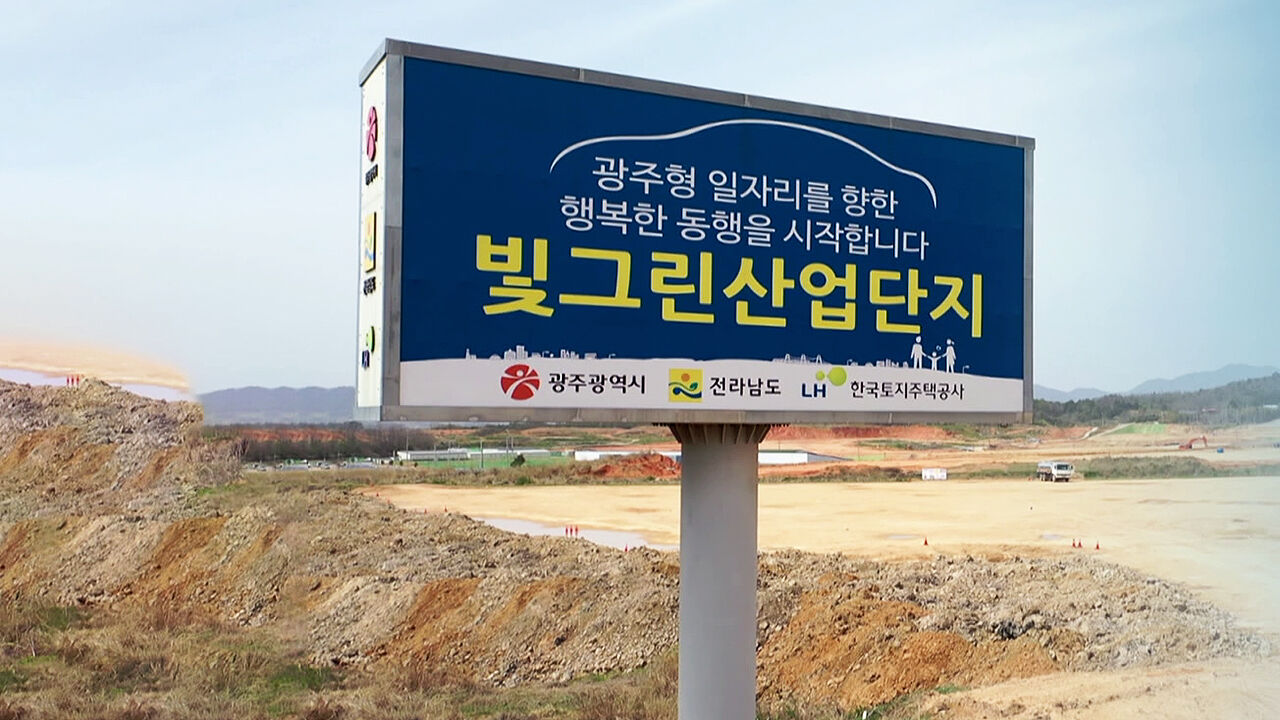
▲ The Gwangju and Jeonnam region where semiconductor plants are set to be built
Constructing a semiconductor fabrication plant, or fab, is a long-term project that takes at least five years from the initial site selection to the start of actual operations, involving a complex and precise process.
The key factors determining success are how quickly infrastructure such as power and water can be established, the ecosystem built, and administrative procedures like permitting completed.
Unlike general manufacturing plants, building a semiconductor fab involves a complicated series of steps.
Following a company's investment decision, the process includes site selection, environmental, traffic, and disaster impact assessments, industrial complex designation, and various permitting procedures. This is followed by infrastructure development, plant construction, cleanroom installation, the introduction of production equipment, and test runs before full-scale mass production begins.
Industry experts estimate that these procedures take at least five to ten years.
In the case of SK Hynix's Yongin Semiconductor Cluster, it took six years from the 2019 investment announcement to the groundbreaking of the first fab at the end of this year.
If administrative procedures are delayed, the start of construction can also be pushed back, making the shortening of the initial permitting period a core challenge.
There are many hurdles to overcome before actual commercialization.
Massive amounts of electricity and industrial water are essential for the operation of four semiconductor fabs.
The four fabs that Samsung Electronics and SK Hynix plan to build in the Jeonnam and Gwangju region will require 6.3 gigawatts (GW) of electricity and 650,000 tons of water.
Considering the suppliers that will move in alongside the fabs and the resulting population growth, the demand for electricity and water is expected to be even higher.
6.3 GW is equivalent to the generation capacity of 4.5 large nuclear power plants.
650,000 tons is the amount of water used by 2.125 million people (based on the 2024 per capita tap water usage of 305.9 liters).
Semiconductor plants are representative power-intensive industries that require a stable, 24-hour supply of large-scale electricity.
Even a momentary disruption in power supply can lead to production halts and massive losses, so transmission networks and substation facilities must be sufficiently secured in advance.
Securing industrial water is also a mandatory condition, as semiconductor production processes consume large quantities of ultra-pure water, requiring the simultaneous establishment of stable water supply systems and wastewater treatment facilities.
Transportation and logistics infrastructure are also critical tasks.
Semiconductors are high-value products that require precise quality control during transport.
As numerous materials, parts, and equipment must be supplied in real-time for semiconductor production, connectivity with regional logistics networks such as expressways, railways, ports, and airports must be enhanced.
It is necessary to build a logistics system that allows for the rapid movement of wafers, materials, and parts by constructing high-speed transport and railway networks connecting industrial complexes to airports, creating cargo infrastructure, and reinforcing regional arterial networks.
Since the semiconductor industry requires a diverse range of specialized personnel in areas such as process, design, equipment, and software, a talent development system centered on local universities and research institutions must also be established early on.
Permitting procedures are cited as the area where companies feel the most burden.
This is because significant time can be consumed as various administrative procedures, such as environmental, traffic, and disaster impact assessments, are conducted sequentially.
Consequently, experts suggest the need for an integrated permitting system where relevant agencies deliberate simultaneously, as well as the establishment of a one-stop administrative support system.
Experts emphasize that to successfully attract semiconductor plants, it is necessary to have a comprehensive support system that encompasses not only investment incentives but also power, water, industrial land, permits, transportation networks, and specialized personnel.
Attracting a semiconductor plant goes beyond local governments simply providing land; the core is how quickly an environment can be created where companies can build factories rapidly and produce goods stably.
Taking this into account, the government is considering plans to shorten permitting procedures based on the Special Act on Semiconductors and the upcoming Special Act on Mega-Special Zones, and to provide fast-track support for core infrastructure such as power, water, roads, and railways.
Minister of Trade, Industry and Energy Kim Jung-kwan stated on June 30, "We will designate at least one or more mega-special zones to resolve the various difficulties companies are facing," adding, "The central and local governments will join forces to take 100 percent responsibility for the power, water, and other infrastructure needed for the designated semiconductor clusters."
※ Please note: This article was translated by AI and may contain errors.

 Video News
 Video News
 Video News
 Video News
 Video News