
 KOR
KOR
▲ (From left) Prime Minister Kim Min-seok, former Democratic Party leader Jung Chung-rae, and former Democratic Party leader Song Young-gil
Although Democratic Party lawmaker Song Young-gil has apologized for his remarks claiming that former leader Jung Chung-rae did not attend the funeral of former President Roh Moo-hyun, the conflict between the party leadership contenders appears to be intensifying.
Beyond the apology, Song highlighted the pragmatic approach of the party's former presidents, directly targeting Jung's hardline stance. In response, Jung's side expressed displeasure, labeling the move as a biased excavation of the past.
On Tuesday (June 30), Song stated through Facebook and a YTN radio interview that his claim about Jung being at odds with the late former President Roh and failing to attend his funeral was a mistake, adding that he "clearly acknowledges and apologizes" for it.
Nevertheless, Song's offensive continued.
Moving beyond the debate over who represents the party's true lineage, Song appeared to be aiming directly at Jung's commitment to his political identity.
Jung has been employing a strategy to appeal to the party's traditional base by emphasizing his reformist tendencies, focusing on issues such as the right to supplementary investigations.
Song argued, "When President Roh pushed for the Korea-U.S. Free Trade Agreement (FTA), most Democratic Party lawmakers were fiercely opposed to it. Lawmaker Jung was at the forefront of that opposition," adding, "I consistently supported the pursuit of the Korea-U.S. FTA."
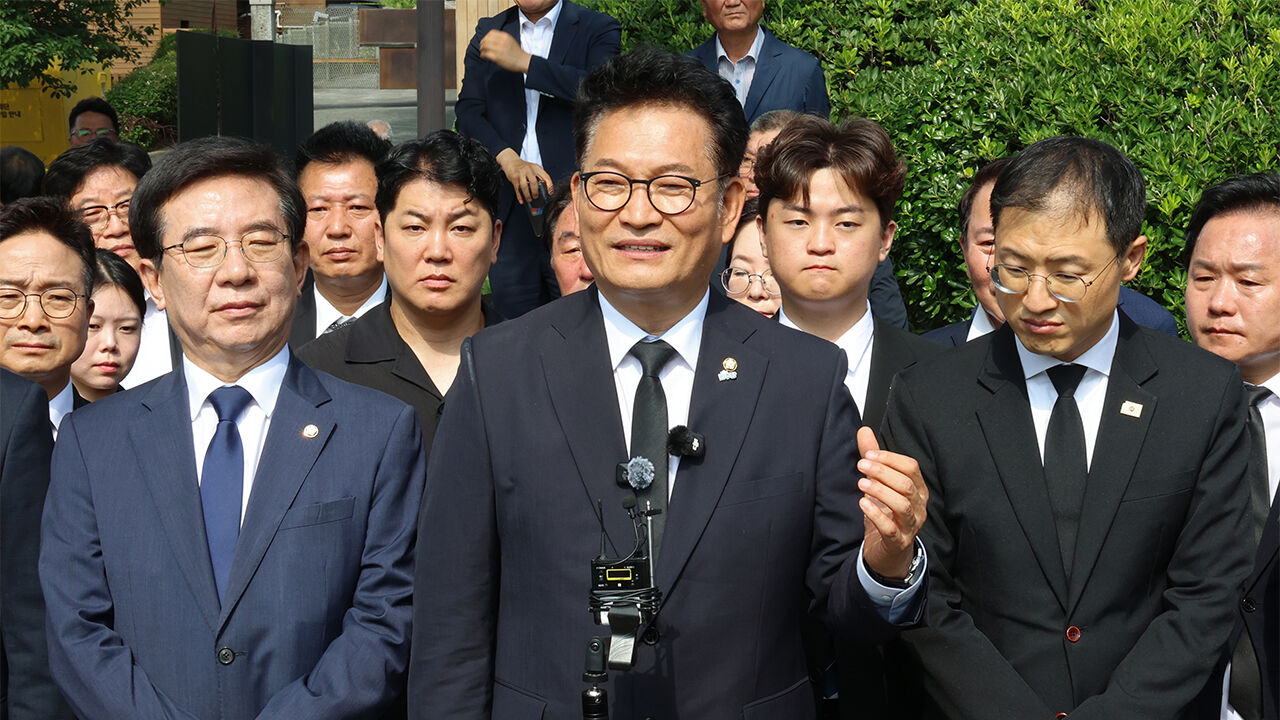
Furthermore, after visiting Bongha Village in Gyeongsangnam-do to pay his respects at the former president's grave on Tuesday, Song met with reporters and pointed out, "The pragmatic policies of Presidents Roh Moo-hyun and Kim Dae-jung are connected to the pragmatic politics of President Lee Jae-myung," adding, "It is not right to weaponize issues like the right to supplementary investigations to create a structure where the party and the president are in conflict."
Jung did not hide his displeasure at the continued attacks.
In a Facebook post, Jung emphasized, "I have never once brought up the word 'lineage' myself. I have no intention to do so. I have never claimed to be the true successor of any great president," adding, "I have only said that we should inherit the history of all four presidents."
He then remarked, "Why is that a problem?" and added, "I hope there will be no more playing along with the media's framing of 'lineage or not' by imagining and twisting things I never even said."
Lawmaker Choi Min-hee, who is classified as being part of the pro-Jung faction, refuted Song's criticism directly on Facebook, stating, "The Korea-U.S. FTA was a policy decision, and therefore, there can be policy-based disagreements."
She continued, "The 'Hudanhyup' (Council for Political Reform) incident was about 'killing candidate Roh Moo-hyun,' wasn't it?" and asked, "Can we not avoid this kind of biased excavation of the past? If someone digs up things like this, who benefits and who loses?"
The Hudanhyup incident refers to the internal party turmoil sparked by calls for a single candidacy between Roh Moo-hyun and Chung Mong-joon during the 2002 presidential election, and Prime Minister Kim Min-seok was one of the people who led the discussions at the time.
Lawmaker Han Min-soo, who served as chief of staff for Jung, also wrote on Facebook, "Do not turn the start of the national convention into a regressive spectacle. What good does hostility and division within our party do?"
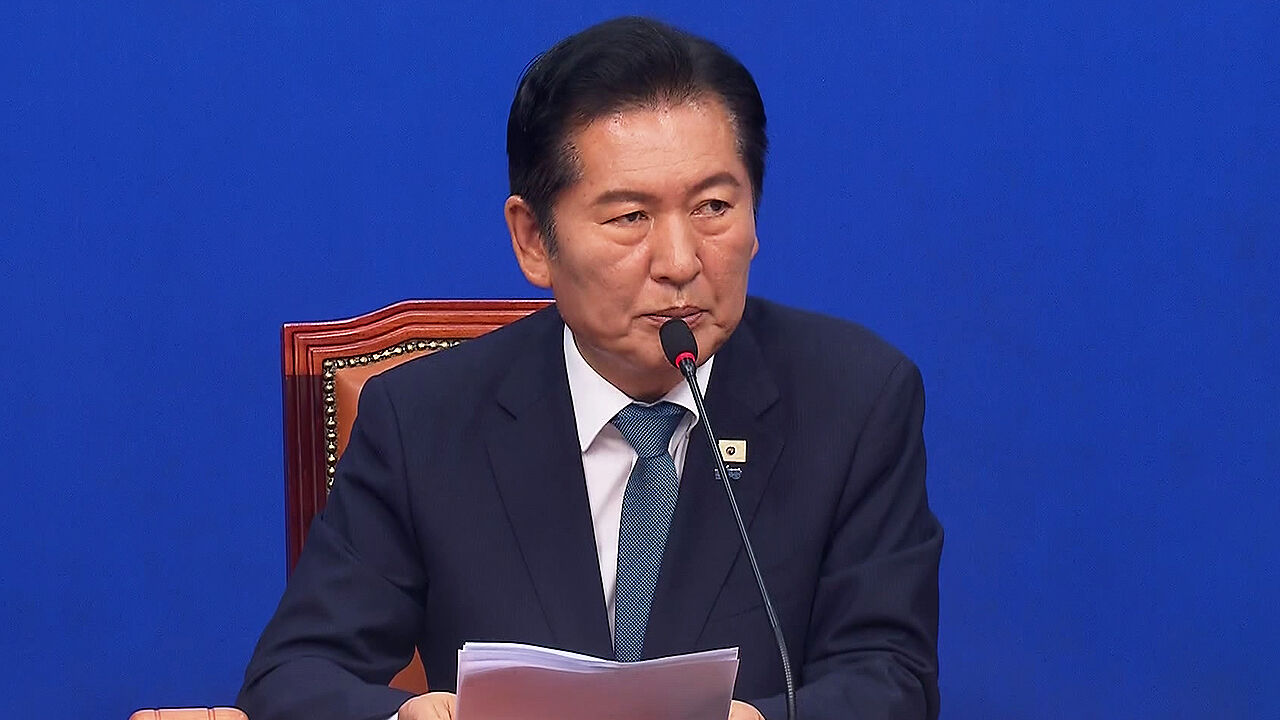
Within the party, attention is focused on how Song's move as a "sniper" against Jung will affect the future landscape of the race.
Initially, it was observed that Song would merely play the role of a pacer for Prime Minister Kim, but recently, some have raised the possibility that Song might consider "unifying the candidacy toward himself" in the runoff.
On YTN radio, when asked if he aims to run the full race, Song replied, "Yes," adding, "Since the national convention has introduced a runoff system, I will be freer."
He also added, "Politics is like a living organism."
The race among the party leadership contenders is expected to accelerate further early next month.
Once the confirmation motion for Prime Minister nominee Han Seung-sook is passed at the plenary session on Tuesday, Prime Minister Kim is also expected to return to Yeouido and begin his full-scale campaign for party leadership.
There is also a sense of anticipation within the party regarding what message will emerge from the luncheon between President Lee Jae-myung and former President Moon Jae-in scheduled for July 1.
Attention is focused on whether the meeting between the former and current presidents produced by the Democratic Party will serve as an opportunity to alleviate the intensifying factional conflict within the party.
Lawmaker Yoon Kun-young, who served as the chief of the State Affairs Situation Room under the Moon Jae-in administration, wrote on Facebook, "With the national convention approaching, internal conflict is amplifying, and many are worried about the Democratic Party," adding, "I earnestly hope that the meeting between the two will be an opportunity to break through this situation."
(Photo: Yonhap News)
※ Please note: This article was translated by AI and may contain errors.

 Video News
 Video News
 Video News
 Video News
 Video News