
 KOR
KOR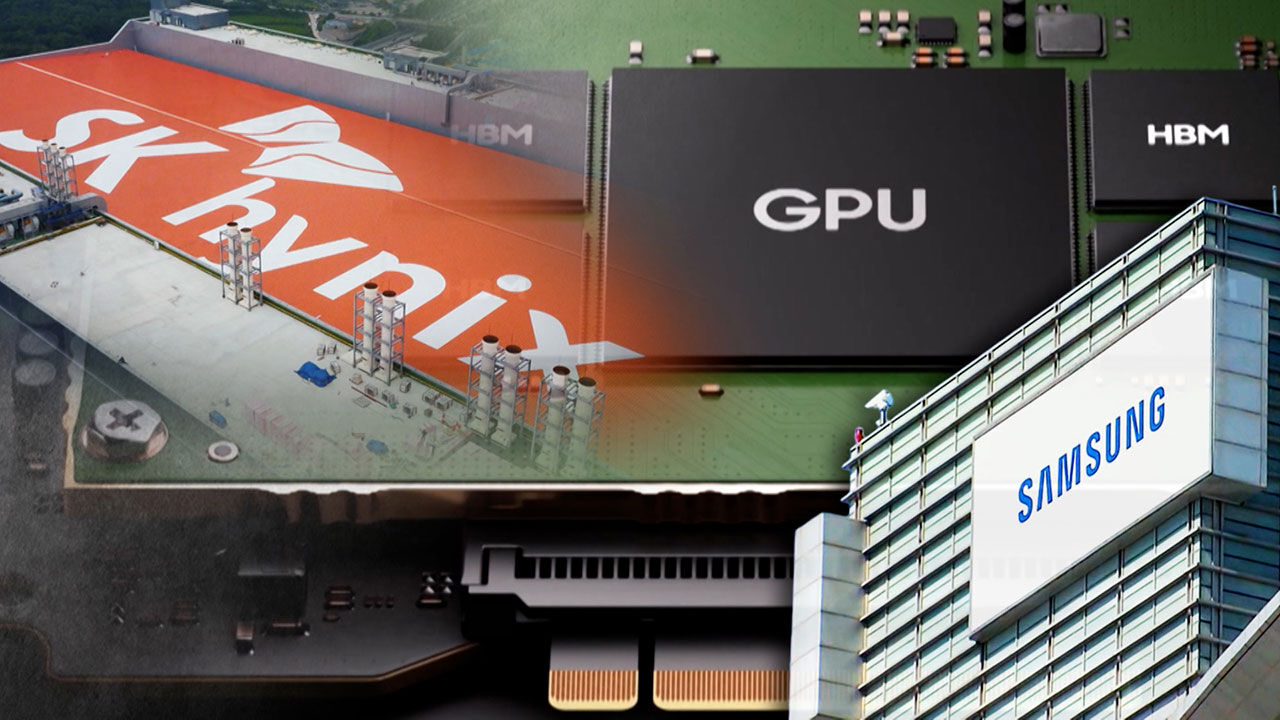
⚡ Spotlight Key Summary
Global Rate Hike Trend and Hawkish Fed: New Fed Chair Kevin Warsh took a hawkish stance, hinting at a rate hike within the year to curb inflation driven by the aftermath of the Iran war, while central banks worldwide have simultaneously entered a rate-hiking cycle.
Semiconductors Dominate Amid Rate Bomb: Much like the KOSPI surpassing the 9,000 mark for the first time in history, the strong semiconductor sector is dominating by absorbing the shock of high interest rates. However, the market is starkly divided, with weak links such as small and medium-sized software companies that must continuously raise capital feeling the pinch.
South Korea's Rate Hikes and Real Estate/Exchange Rate Dilemma: In South Korea, where additional rate hikes are projected through the first half of next year, the upper limit of commercial lending rates has already exceeded 7%. However, as these hikes have already been priced into the market, the focus is expected to be on the increased burden on low-to-mid-priced homeowners and managing exchange rate defense, rather than a real estate crash like the one in 2022.
※ This article is based on a video released on June 19, 2026.
The global cycle of interest rate hikes has begun in earnest. Around the third week of June, the monetary policy meeting that garnered the most attention was, of course, in the United States. At the Federal Open Market Committee (FOMC) meeting, the first presided over by the new Federal Reserve Chair Kevin Warsh, the decision was made to hold rates for now. However, a strong signal was sent that a rate hike could occur within this year. Although the war in Iran—the most direct cause of the global shift toward rate hikes—is drawing to a close, central banks still believe it is time to raise rates.
On June 16, Japan raised its benchmark interest rate for the first time in six months, entering the 1% interest rate era. While this still seems extremely low to us, for Japan, such a high figure is the first in 31 years since 1995. Europe had already raised its benchmark rate earlier on June 11, returning to a hiking cycle for the first time in three years. Following last month's announcement, the Bank of Korea also signaled once again on June 17 that it will begin raising its benchmark interest rate starting in July.
In fact, even before central banks began their official rate hikes, our interest burden had already been growing throughout this year. Will the burden of high interest rates ultimately drag down the stock market in the second half of the year? What will happen to the real estate market? Will South Korea's rate hikes, set to resume this year, help stabilize the exchange rate?
There was some anticipation of a potential shift. Some expected that the new Fed Chair, Kevin Warsh, might show something in his first meeting to align with President Trump, who appointed him. After all, he was chosen by President Trump, who had relentlessly attacked former Chair Jerome Powell for not lowering interest rates quickly enough.
On the other hand, some observed that giving the impression of being too easily swayed by President Trump in his very first meeting would be a burden for the new Fed Chair, given the weight of the position. Analysts suggested that rather than being manipulated, Warsh himself would naturally prefer to keep rates relatively low. Warsh has generally been analyzed as someone who believes that "AI will ultimately boost U.S. productivity and keep inflation in check. Therefore, interest rates should be kept low to ensure AI companies can continue borrowing without burden to develop AI. Instead, we should reduce the sheer volume of money that the Fed pumps into and drains from the market—which has grown excessively since the 2000s—so that the flow of market money is not overly influenced by the funds controlled by the Fed."
However, when the results were unveiled, his first meeting delivered a sense that he would tighten the reins on the market, even if it was within expected boundaries. Rather than a gentle dove, he was closer to a resolute hawk this time. Consequently, immediately after the meeting's tone was conveyed, the dollar strengthened on expectations that the cost of borrowing dollars would rise. With concerns growing that the burden would increase if interest rates did not fall, the New York stock market also closed lower.
[Reporter]: They say interest rates might go up in the second half of this year. What are your thoughts?
President Trump: It's hard to believe. (A rate hike) is not a good thing for the country. But now that we have a good person at the Fed, we will follow his judgment.
President Trump: It's hard to believe. (A rate hike) is not a good thing for the country. But now that we have a good person at the Fed, we will follow his judgment.
President Trump, who heard about this development while in France, held his tongue for the moment. He chose to wait and see, maintaining a stance of supporting Kevin Warsh for now. President Trump is well aware that whenever anxiety grows over the Fed Chair being swayed by him, the stock market and capital markets fluctuate wildly due to rising concerns.
There were two major takeaways from the June FOMC meeting. First, the primary concern for those deciding U.S. interest rates right now is inflation, which has risen rapidly due to the energy shock caused by the war in Iran. While economic growth and jobs in the U.S. are at reasonable levels, inflation remains a major worry.
The FOMC releases economic projections at the end of each quarter. In this meeting, they raised this year's inflation forecast by nearly 1 percentage point compared to the projections made during the March meeting, which was held shortly after the war in Iran began. This forecast also reflected concerns that inflation might not drop significantly next year if left unchecked. Therefore, any expectations of a rate cut should be abandoned. The committee completely wiped out any room for such speculation from its statement.
Although there was unanimous agreement to freeze interest rates this month, 8 out of the 19 FOMC participants projected that the U.S. would raise rates at least once this year, with 6 of them expecting two or more hikes. This represents a much stronger tilt toward rate hikes compared to March.
The second point is that Chair Kevin Warsh did not release any of his own projections. During the press conference, he repeatedly answered reporters' questions with "We'll see at the next meeting" or "We'll see in six weeks." He made it clear that he would not provide so-called "forward guidance"—the practice of telling the market what to expect and how to prepare.
Kevin Warsh | Chair of the Federal Reserve
We are also not providing so-called "forward guidance." The committee members agreed that it is not appropriate in the current policy environment.
We are also not providing so-called "forward guidance." The committee members agreed that it is not appropriate in the current policy environment.
As mentioned earlier, Kevin Warsh is someone who is dissatisfied with the excessive power of the Federal Reserve. He believes that if FOMC members talk too much and disclose interest rate forecasts in advance, they become reluctant to change their minds later when economic conditions shift, simply because they do not want to be proven wrong. He thinks this is why the FOMC made a mistake in 2021, failing to raise rates in a timely manner while inflation was surging, instead claiming, "It's not because rates are low, it's not our fault."
His style is entirely new to the existing financial markets, requiring some adjustment. Everyone was accustomed to the Fed providing some level of guidance and predicting market trends accordingly, but this approach increases uncertainty. It is expected that the market will react more dynamically to economic indicators as they are released. In the short term, this could actually lead to greater market volatility.
Even with an Interest Rate Bomb... Are Semiconductors "Invincible"?
While some expected the market to fluctuate in response to this FOMC tone, the KOSPI surged past the 9,000 mark for the first time in history. Why? First of all, this level of hawkishness was largely within the market's expectations. The sentiment was: "Market interest rates had already risen sharply after the war in Iran precisely because of fears over benchmark rate hikes. It has already been fully priced into market rates."
There is another crucial point. Although the New York stock market closed lower after the FOMC meeting, the semiconductor sector continued to rise slightly. When semiconductors perform well in New York, it is rare for the South Korean stock market, which opens shortly after, to start on a weak note.
Rising interest rates naturally place a burden on corporations and can weigh on the stock market. However, in the current climate, semiconductor product prices have risen much faster than interest rates. For major semiconductor companies and their connected ecosystems, which are busy keeping up with orders, investors in New York believed that this level of rate hikes would not deal a major blow. This sentiment carried over to the South Korean stock market, led by Samsung Electronics and SK Hynix.
Companies in poor financial health can suffer significant damage even from minor rate hikes. When interest rates rise, the so-called weak links are exposed. For instance, concerns will mount for the U.S. private credit market, which faces persistent anxiety, and small-to-medium software companies that are already struggling with high interest rates as AI increases industry uncertainty.
However, the prevailing view is that the current rate-hiking environment is not severe enough to swallow the semiconductor giants riding the AI boom. This suggests that within the stock market and across industries, the gap between the winners and losers will likely widen further.
Even After the War, "No Way We're Going Back to Old Prices"... Oil Tankers Still Playing a "Waiting Game"
So, what is the best outlook for the second half of this year? Whether it is the U.S., which plans to make decisions based on incoming data, or Japan, Europe, and South Korea, which have already started or signaled rate hikes, inflation remains the biggest issue for everyone. For South Korea and Japan in particular, rising energy costs are largely driven by the severely weakened Korean won and Japanese yen. These are countries deeply concerned about their exchange rates.
Shin Hyun-song | Governor of the Bank of Korea
We will closely monitor future inflation trends and take active measures until we are confident that inflation will stabilize at our target level. If a vicious cycle develops, we could face a situation where monetary policy is deemed to have been too late.
We will closely monitor future inflation trends and take active measures until we are confident that inflation will stabilize at our target level. If a vicious cycle develops, we could face a situation where monetary policy is deemed to have been too late.
Even if the war in Iran ends like this, the consensus worldwide is that inflation in the second half of this year still needs to be watched closely. News that the Strait of Hormuz will soon reopen caused international oil prices to plunge to the high $70s to $80s per barrel. However, the aftereffects of the war are expected to linger. Current oil prices remain 15–20% higher than just before the war, and from this point, oil prices are unlikely to drop significantly, with a high probability of fluctuating throughout the second half of the year.
First, for Middle Eastern oil fields and liquefied natural gas storage facilities that halted production due to the war, calculations repeatedly emerging from the Middle East suggest it will take about four months for production to fully recover, and a month and a half to two months even to reach 70–80% recovery. Logistics will also face disruptions for some time. Until sea mines laid throughout the Strait of Hormuz are cleared, vessels will naturally have to navigate with caution. Insurance premiums, which make up a large portion of logistics costs, are also highly likely to remain elevated under these circumstances.
In fact, considering the energy burden across the globe, ships attempting to pass through the Strait of Hormuz should have been spotted immediately after the declaration of the peace agreement. Yet, the Strait of Hormuz has remained quiet for a week. This is because ships are still afraid to move. Local reports have even emerged that the U.S. government is considering a plan where "the Navy will escort ships to transport oil quickly, but in exchange, they must pay the U.S. Navy for a VIP pass."
Under these conditions, ship insurance premiums are highly unlikely to drop quickly. Concerns are growing that unprecedented costs, in the form of transit fees or commissions to either the U.S. or Iran for passing through the Strait of Hormuz, could emerge. Ultimately, the trend of declining global oil inventories is expected to persist until the end of this year, keeping energy cost anxieties alive. Analysts suggest that the energy cost burden accumulated over the past three months will likely continue to filter through to overall inflation.
However, if interest rates do not stimulate inflation and we manage to get through the second half of this year reasonably well, what then? ING has projected that "if energy costs fall and inflation cools down in the second half of the year, the U.S. could cut rates once or twice starting next year." This suggests that even if rates do not drop significantly from current levels, the current upward trend in interest rates will not become structural or long-term.
In that case, putting the U.S. aside, what should South Korea and Japan do, given that they also have to worry about their exchange rates?
Yen Fleeing Abroad Returning to Japan? "No Need to Go Back Just Yet"
First, there is an interesting point about Japan. Even though Japan's benchmark interest rate rose to 1% for the first time in 31 years and the Bank of Japan announced plans to gradually reduce monetary easing, the value of the yen is struggling to rise. The fear that funds invested globally by borrowing cheap yen would rush back to Japan if Japanese rates rose—the so-called "yen carry trade unwind panic" that struck in 2024—is nowhere to be seen this time. Instead, Bloomberg diagnosed that the scale of speculative forces betting on a weaker yen in the market has reached its largest level in nine years.
This suggests that with Minister Takaichi still appearing eager to ease monetary policy, and the Bank of Japan raising rates cautiously to avoid shocking the market, there is a strong prevailing sentiment that the yen will not become particularly scarce. Investors do not believe that a 1% benchmark rate is enough to draw overseas investment capital back to Japan. Conversely, this indicates that Japan needs to lower its exchange rate, suggesting that further measures may be required from Japan's perspective.
South Korea's Benchmark Rate to Rise Four Times by Next Year?
What about South Korea? Citigroup projected that South Korea could raise interest rates four times by the first half of next year, with the benchmark rate potentially rising to 3.5%. In fact, Citigroup is not alone in this outlook; such expectations have already been priced into market interest rates.
Many people have likely felt the weight of the rapidly growing interest burden throughout this year. As of early June, the upper limit for fixed-rate mortgage products at the country's five major commercial banks surpassed 7.3%. This is similar to the levels seen in the second half of 2022, when nationwide apartment prices turned downward for the first time in nine years due to the sudden burden of high interest rates. Although the benchmark rate has remained unchanged since May of last year, the expectation that South Korea will inevitably have to raise rates to some extent is already widespread in the market.
With semiconductor exports performing exceptionally well, economic growth forecasts have been revised upward, contrary to earlier expectations for this year. However, because this growth is heavily skewed toward semiconductors, there are concerns about weak links if interest rates rise as expected. Still, with the exchange rate hovering between 1,520 and 1,530 won for a month, South Korea is in a position where it has little justification not to raise the benchmark interest rate.
Citigroup added another layer of analysis: thanks to semiconductors, the South Korean government's tax revenue will increase. If the government spends this money in various areas—meaning it continues to pump money into the economy—South Korea would need to raise its interest rates by 1 percentage point over the course of a year to offset the inflationary impact of that spending.
Park Sang-hyun | Specialist Commissioner at iM Securities
Looking at the pace of growth, inflation, and the exchange rate, it seems that interest rates will ultimately have to be raised. However, I believe there are limits to reversing the value of the won using interest rates alone. If aggressive hikes lead to side effects—such as marginal firms failing or distortions in liquidity flows—that would also burden the domestic economy and the value of the won, placing the Bank of Korea in a complex dilemma.
Looking at the pace of growth, inflation, and the exchange rate, it seems that interest rates will ultimately have to be raised. However, I believe there are limits to reversing the value of the won using interest rates alone. If aggressive hikes lead to side effects—such as marginal firms failing or distortions in liquidity flows—that would also burden the domestic economy and the value of the won, placing the Bank of Korea in a complex dilemma.
Most experts expect the value of the won to rise as we move into the second half of the year. However, for this to happen, the government must control the scale of its spending, and the Bank of Korea must show the resolve to maintain its rate-hiking stance for the time being.
In this scenario, the impact of interest rates on the real estate market remains uncertain. High-end housing markets already have fewer buyers who purchased homes with massive loans. There are also reports that money recently made in the stock market is beginning to flow in earnest into real estate. Many borrowers are already taking out loans at rates that price in expected rate hikes. Since this upward trend is not unexpected, it differs from 2022. However, if the burden does increase, concerns are rising that those who struggled to secure loans to buy low-to-mid-priced homes will feel the heaviest impact.
※ Please note: This article was translated by AI and may contain errors.


 Video News
 Video News
 Video News
 Video News