
 KOR
KOR
▲ South Korea national football team manager Hong Myung-bo announcing his resignation
Even before the 2026 FIFA World Cup in North America, I diligently followed the opponent nations in Group A, the same group as South Korea. Watching the managers of each country preparing for the world's greatest stage stand before the press, I came to reflect on what "responsibility" means to them.
The managers I observed during the tournament were all different. There was the heavy patriotism of Czech Republic manager Miroslav Koubek, the characteristic humor and composure of Mexico manager Javier Aguirre, and the fox-like smoke-screen tactics of South Africa manager Hugo Broos. Although they faced their share of criticism back home, they were fundamentally confident before the fans and the media.
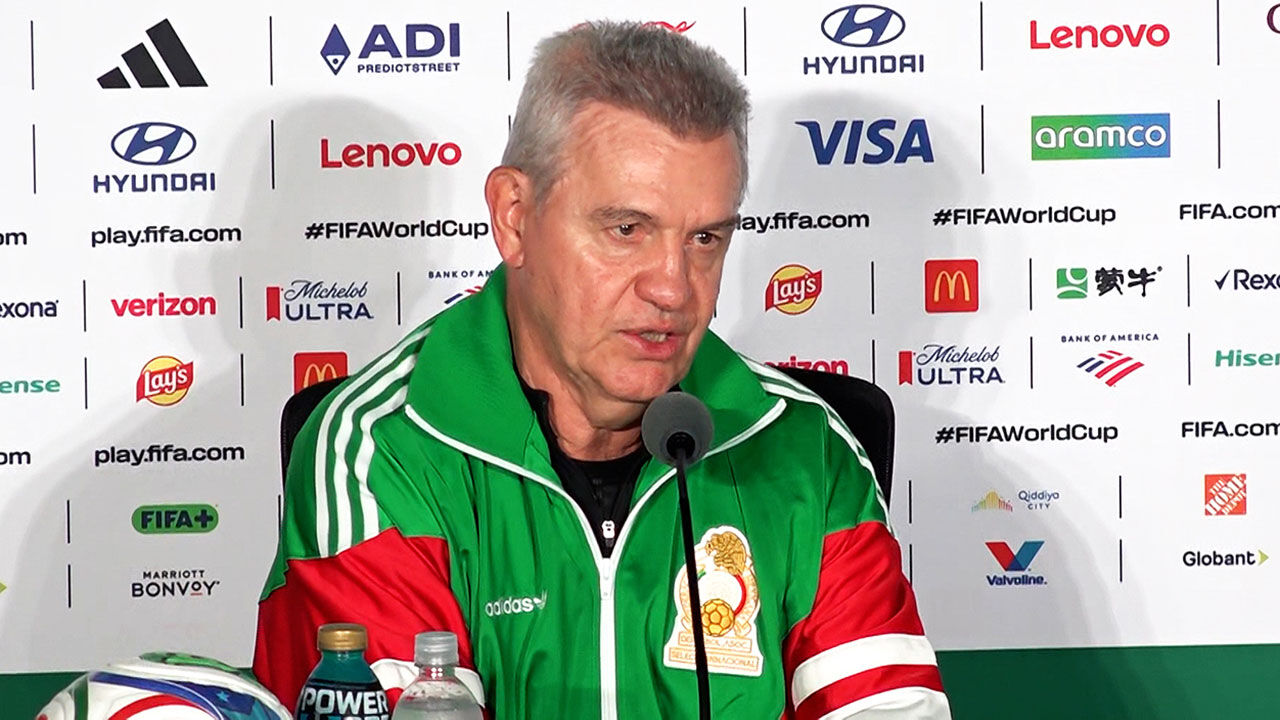
Mexico Manager Javier Aguirre
(To a reporter)
"How have you been, 'Mr. Stubborn'? Ask your question with respect.
You really are a football expert."
The reason was simple. They did not hide their efforts and direction on the fierce World Cup stage, but instead worked diligently to communicate them to the fans. They seemed to believe that this was the "responsibility" that comes with being a World Cup manager.
However, the final moments of South Korea's manager Hong Myung-bo, who prepared for the World Cup for 27 months, leave behind regret and questions.
Beyond the frustration of the press conference following the final defeat against South Africa, he closed the door on communication by limiting reporters' questions until the very last moment of announcing his resignation. While he may have verbally acknowledged that "the responsibility is mine," it was a one-way street that fell far short of resolving the doubts and disappointment in the hearts of the fans.
"I have left nothing in Uruguay"... Bielsa Bows His Head
Amid a barrage of criticism from the Uruguayan public, sharp questions were thrown at manager Marcelo Bielsa as he stood before the press. Yet, even as a world-class manager, instead of making excuses, he faced every question and openly took responsibility three times.

Q. What is the reason for this early elimination, which could be considered one of the biggest failures in the national team's history?
A. Managing and utilizing the players is my role. They were outstanding players, but in the end, I failed to make them into a strong team.
The sharp questioning from reporters continued. When asked if the critical mistakes made by the players were the problem, Bielsa replied firmly.
A. I must fully accept all the disappointment that you, who are both reporters and fans of Uruguayan football, rightfully wish to direct at me as the person in charge. Since that is my share, I will accept it.
Even as his career built over the past three years was being dismissed, he did not hide. To the final question of what he had left for Uruguayan football as a manager, he accepted the failure entirely as his own, saying, "I have left nothing."
'Zero Points' Cannavaro... "Showing My Face to Take Responsibility"
Cannavaro / Uzbekistan Manager
"Of course, it is the manager's responsibility. I have always taken responsibility, so even if we had lost 5-0 today, it would have been my mistake, not the players'."
He drew a sharp line, stating that the players' mistakes were his own. Instead, he reminded everyone of the reason for a manager's existence, saying, "My role is to give the players confidence so they can play football without fear, and to show my face and step forward to take responsibility when they falter."
"The Reason We Lost Is..."
Clarke / Scotland Manager
"Therefore, because the transition from the back to the front was difficult, we had no choice but to try and create something in the second half. We put the ball into the box several times and created one or two opportunities, but there were no truly decisive chances."
Even if it ultimately ended in failure, it was a process of reporting his decisions and the team's movements to football fans.
Finally, here are the parting words of Czech Republic manager Miroslav Koubek, whose team had to pack up early after losing to our national team.
Koubek / Czech Republic Manager
"Above all, I would like to express my deepest gratitude to the fans who gave us their unsparing support. The World Cup must have been a very costly journey. Therefore, we cherish that support even more and express our deep respect with all our hearts."
Perhaps what South Korean football fans wanted to hear most from manager Hong Myung-bo was precisely this kind of sensible and warm language of responsibility.
The Back of 'Our Manager' Leaving the Press Room
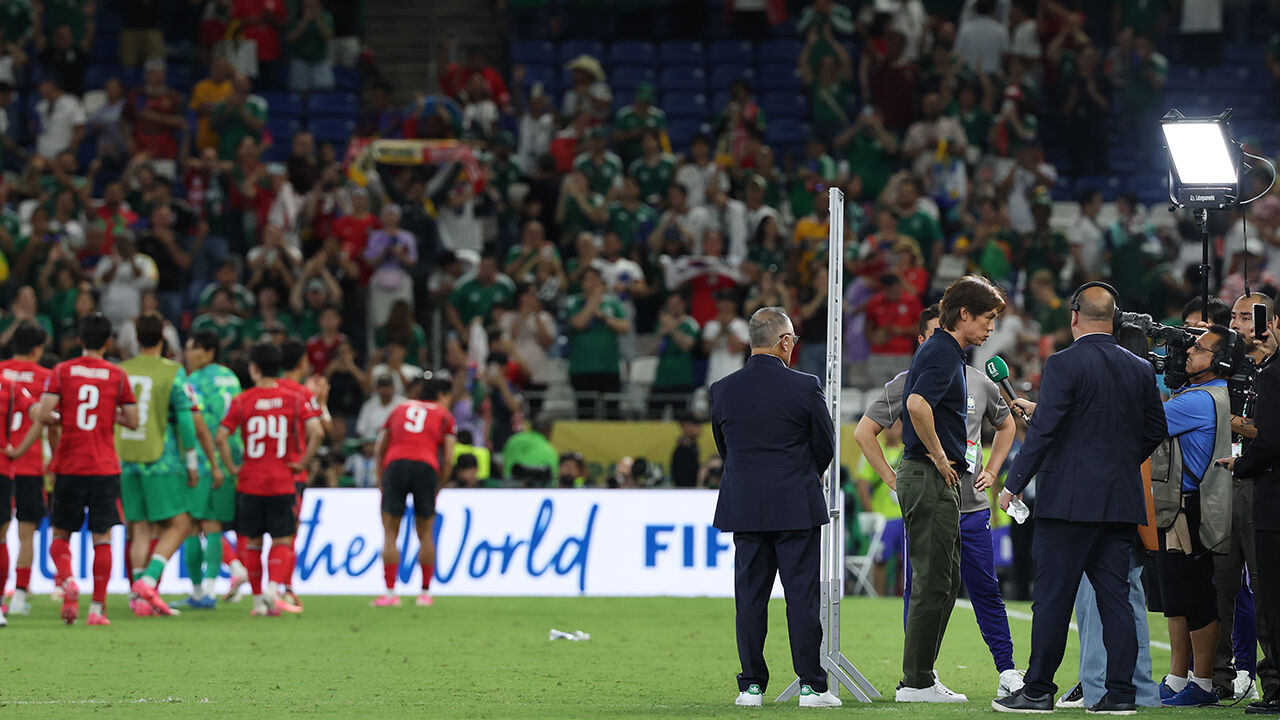
On the official FIFA YouTube channel, a playlist of managers' press conferences after each match is uploaded. While the official interview time recommended by FIFA is around 15 minutes, most managers spend over 10 minutes, and sometimes more than 20 minutes, enduring a barrage of sharp questions from reporters.
However, manager Hong Myung-bo's record in this tournament is quite different. Having held the microphone for 10 minutes and 37 seconds in the first match, which ended in a comeback victory, he finished his press conference in 6 minutes and 6 seconds in the second match as the shadow of defeat deepened, and in just 5 minutes and 52 seconds in the final third match.
Although there was an additional press conference of about 20 minutes the day after the South Africa match, it failed to convince the fans, and his reading of the resignation statement after elimination was confirmed lasted a mere 104 seconds without any Q&A.
The weight of responsibility carried by a World Cup manager is surely not measured by results alone. Enduring the disappointment of the fans with one's entire body at the moment of defeat is also a manager's responsibility. Seeing world-class managers bowing their heads with dignity is why the final image of our manager, hurriedly leaving the press room without taking questions, is remembered with even greater bitterness.
(Photo: Getty Images Korea, Yonhap News)
※ Please note: This article was translated by AI and may contain errors.

 Video News
 Video News
 Video News
 Video News
 Video News