
 KOR
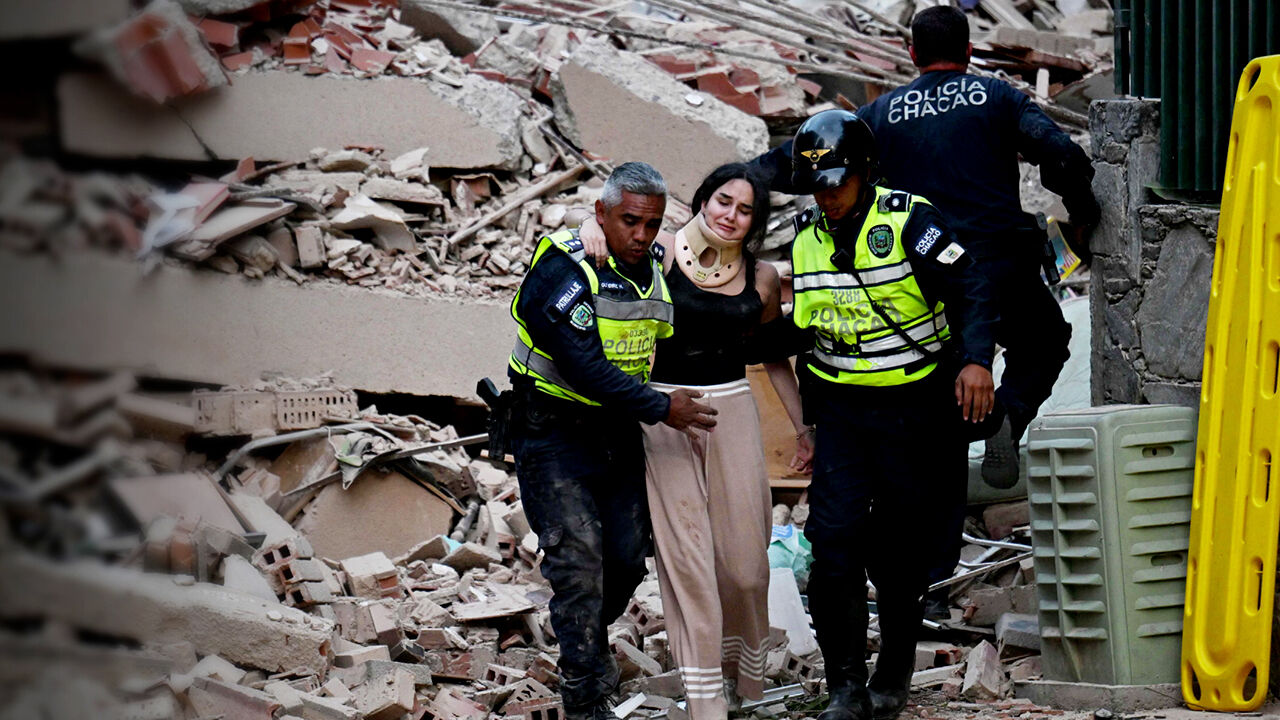
KOROn the morning of June 25 (KST), back-to-back earthquakes with magnitudes over 7.0 struck Venezuela in South America just 39 seconds apart. As buildings collapsed in an instant, more than 1,000 casualties have been reported so far.
Reporter Yoo Deok-gi reports on the terrifying moments when the earthquakes struck.
[Reporter Yoo Deok-gi]
With a roaring sound, a building collapses.
Amidst a storm of dust, terrified people cling to each other to hold on.
The ceiling structure of Maiquetía International Airport near the Venezuelan capital of Caracas also collapsed.
Citizens scream and desperately flee for safety.
[Wilmer Azuaje / Former Venezuelan Lawmaker: It's shaking. It's shaking. Everything is destroyed.]
As the city shakes, building facades and roofs collapse, with citizens narrowly escaping.
Startled residents inside their homes rush out into the streets.
The earthquakes struck the northern Caribbean coast of Venezuela at around 6 p.m. local time on June 24.
A magnitude 7.2 earthquake first struck 168 kilometers west of Caracas, the capital of Venezuela. Just 39 seconds later, a magnitude 7.5 earthquake hit 45 kilometers away from the epicenter of the first quake.
A massive cloud of dust was seen billowing into the sky as powerful tremors shook the city.
[Resident of Caracas, Venezuela: The walls were shaking, and it felt like I was in the water. It was as if a boat was tossing on the water.]
The damage from this earthquake was particularly severe in La Guaira State.
The interior facilities of a luxury seaside apartment complex were completely ruined, turning the area into a wasteland, and dozens of buildings collapsed, including a famous local hotel that caved in.
The Venezuelan government stated that at least 164 people have died and 971 others have been injured so far.
(Video by Kim Jun-hee | Graphics by Kim Han-gil)
---
[Anchor]
Desperate forecasts suggest that the death toll from this powerful earthquake could reach up to 100,000. While overnight rescue operations continued, the scale of casualties is expected to rise significantly as search efforts progress.
Reporter Kim Min-pyo reports.
[Reporter Kim Min-pyo]
At every collapsed building site, cries erupt from people pleading to find family members who failed to escape in time.
[Earthquake Victim (Caracas): Please help. He was in the same place as me.]
As the earthquake struck on the evening of a public holiday celebrating the victory of the Venezuelan independence army, desperate overnight rescue operations are underway across Venezuela, including La Guaira and Caracas, as workers clear through the rubble of collapsed buildings.
Neighboring Latin American nations have rushed military personnel and aid, and U.S. President Trump also dispatched rescue teams, stating that the U.S. is willing to help Venezuela.
Venezuela's interim president, Rodriguez, has declared a state of emergency.
[Rodriguez / Interim President of Venezuela: This is truly a heartbreaking tragedy. I extend my deepest condolences and solidarity, and express my condolences to the bereaved families.]
The U.S. Geological Survey (USGS) predicted a 40% probability that the death toll from this earthquake could reach between 10,000 and 100,000, and a 14% chance that it could exceed 100,000.
Such high casualties are predicted because the two powerful earthquakes of magnitude 7.0 or higher occurred almost back-to-back, and their depths were relatively shallow at 21.9 kilometers and 10 kilometers, respectively, delivering a massive shock to the surface.
More than 20 aftershocks have also followed.
[Maria Alejandra / Earthquake Survivor: When I finally made it downstairs, the scene before my eyes was like something out of a horror movie. I had to crawl out through the gaps in the rubble.]
Earthquakes are frequent in Venezuela as it sits on the boundary where the Caribbean and South American plates meet. This earthquake has been recorded as the most powerful to hit the country in 126 years, since a magnitude 7.7 earthquake in 1900.
(Video by Kim Byung-jik)
---
[Anchor]
In terms of sheer power at the time of occurrence, this Venezuelan earthquake was 360 times stronger than the 2016 Gyeongju earthquake, the most powerful ever recorded in South Korea. However, just 25 minutes after this earthquake, another earthquake struck Japan.
Reporter Jeong Gu-hee analyzes the characteristics of this earthquake and whether there is any connection between the two events.
[Reporter Jeong Gu-hee]
In September 2016, an earthquake with a magnitude of 5.8 struck Gyeongju.
With earthquakes, the energy released increases by about 32 times for every 1.0 increase in magnitude, meaning a difference of 2.0 in magnitude makes it 1,024 times stronger.
The second earthquake in Venezuela had a magnitude of 7.5, meaning its power at the epicenter was approximately 360 times stronger than that of the Gyeongju earthquake.
While the Gyeongju earthquake had a focal depth of around 15 kilometers, the second Venezuelan earthquake was shallower at 10 kilometers, which could have resulted in a greater impact on the surface.
Let's look at the population density map of Venezuela released by the USGS.
The areas marked in gray represent densely populated regions, and both earthquakes occurred right in these areas.
This is one of the reasons why the USGS predicted high casualties.
The earthquakes occurred because tectonic plates are in motion.
The Caribbean plate to the north moves westward by 2 centimeters every year, constantly grinding against the South American plate where Venezuela is located.
Energy builds up where the two plates meet, and then suddenly slips horizontally, rupturing the ground. This is known as a "strike-slip fault," which is what caused this earthquake.
The length of the ruptured fault is estimated to be 150 kilometers, which is as long as the distance from Seoul to Daejeon.
Even 30 kilometers away from the epicenter, shaking of intensity 8 was felt, causing buildings without earthquake-resistant designs to collapse.
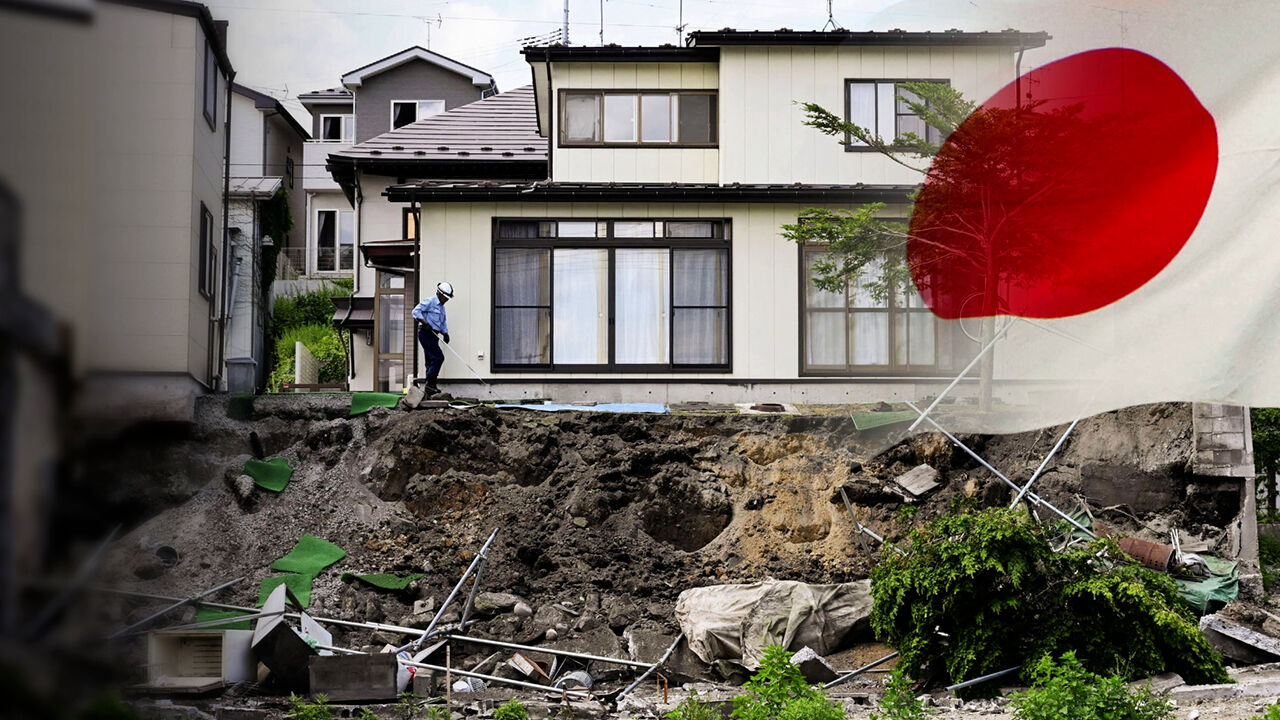
About 25 minutes after the earthquake in Venezuela, a magnitude 7.2 earthquake also struck off the coast of Japan.
While one might wonder if there is a connection between the two earthquakes, experts analyze that they are virtually unrelated as they occurred on entirely different tectonic plates.
(Video by Park Ji-in | Graphics by Seo Seung-hyun)
※ Please note: This article was translated by AI and may contain errors.

 Video News
 Video News
 Video News
 Video News
 Video News