
 KOR
KOR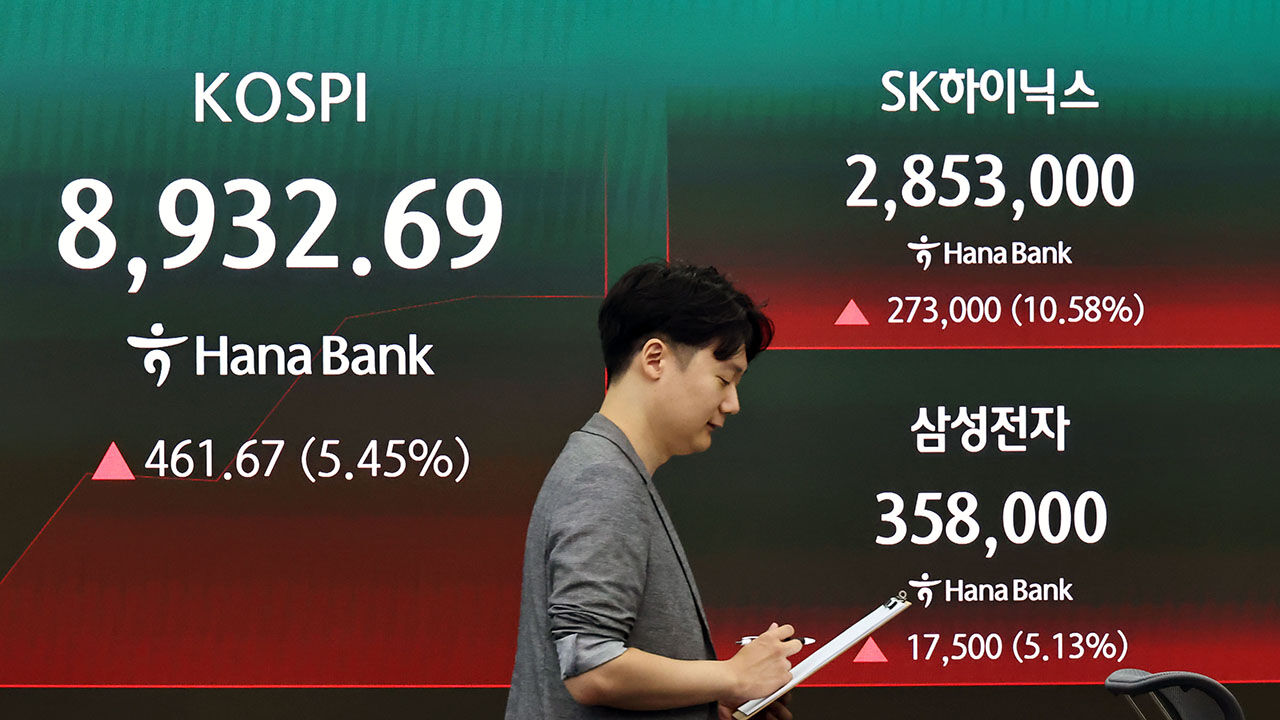
▲ The KOSPI and other market indicators are displayed at the dealing room of Hana Bank in Jung-gu, Seoul, on June 25.
Although the KOSPI rebounded on the day following its 10% plunge on June 23, the value of retail stocks subject to "forced liquidation"—the mandatory sale of shares due to unpaid debt—has surged to over 100 billion won.
According to the Korea Financial Investment Association, the balance of outstanding margin loans, classified as "ultra-short-term debt-financed investments," stood at 1.3768 trillion won as of June 24.
This figure represents funds borrowed by individual investors from securities firms for a two-day period, marking a decrease of approximately 100 billion won from the previous day.
However, the volume of forced liquidations due to failure to repay these borrowed funds spiked to 110.7 billion won on the same day.
This is more than double the 42.4 billion won in forced liquidations recorded in the previous session.
It is the first time in nine days that the amount of forced liquidations has exceeded 100 billion won, following the 100.8 billion won recorded on June 15.
The ratio of forced liquidations to total outstanding margin loans also increased significantly, rising from 3.3% on June 23 to 7.5% on June 24.
Under this trading system, investors must repay the funds borrowed from securities firms to purchase stocks within two trading days; if they fail to do so, the stocks are forcibly sold on the third trading day.
Because forced liquidations are executed at the lower limit price as soon as the market opens, regardless of the actual market price, they carry a high risk of exacerbating losses for individual investors.
(Photo: Yonhap News)
※ Please note: This article was translated by AI and may contain errors.

 Video News

 Video News
 Video News
