
 KOR
KOR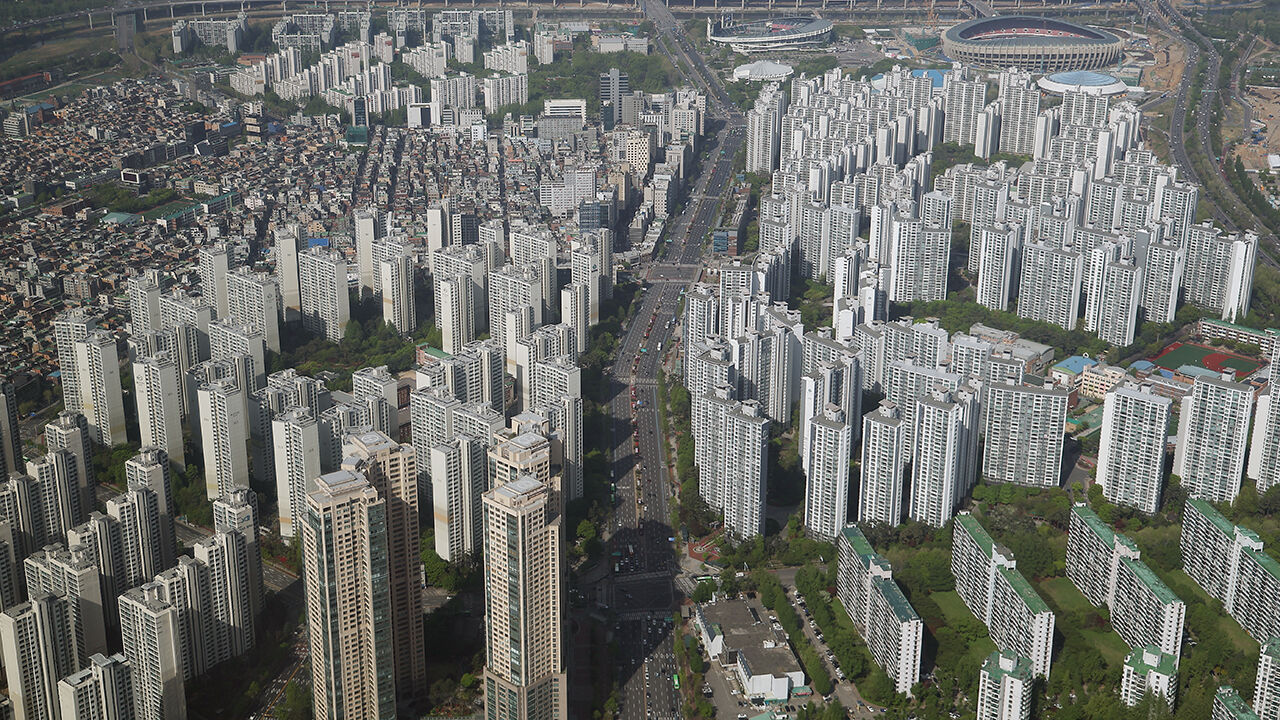
▲ Apartment complex
The Bank of Korea (BOK) has pointed out that the burden of jeonse (lump-sum housing lease) and monthly rent for non-homeowning households in the Seoul metropolitan area is increasing, necessitating policy support.
In its Financial Stability Report released today (June 24), the Bank of Korea analyzed that "while the Rent-to-Income Ratio (RIR) for tenant households in the Seoul metropolitan area significantly exceeds that of non-metropolitan areas, the average interest payments for non-homeowning households in the capital region are also showing a steep upward trend."
The BOK emphasized, "Although non-homeowning households generally have a lower burden of debt repayment, their housing cost burden is rising due to factors such as the increase in jeonse and monthly rent prices in the Seoul metropolitan area. Therefore, it is necessary to continue policy support, particularly for vulnerable housing groups."
The central bank added, "For single-home households purchasing for actual residence, who possess relatively sound financial structures and debt repayment capabilities, access to loans should be maintained within the scope of their repayment capacity."
The BOK diagnosed that household financial soundness is also diverging based on homeownership status.
The net asset value of multi-homeowning households stood at 1.007 billion won, which is seven times that of non-homeowning households at 145 million won.
This is because the value of their real estate assets has increased significantly more than their debt.
The ratio of debt to financial assets for homeowning households was 1.63, significantly higher than the 0.55 for non-homeowning households.
This indicates that homeowning households, which have borrowed to purchase homes, have relatively lower liquidity.
Furthermore, multi-homeowning households showed a higher Debt Service Ratio (DSR) compared to non-homeowning or single-homeowning households, suggesting that their debt repayment capacity in terms of income is relatively weaker.
In particular, the DSR for low-income multi-homeowning households reached 72.9% as of March last year, more than double the 31.4% for high-income multi-homeowning households, significantly exceeding the management threshold of 40.0%.
As of the end of the first quarter of this year, the delinquency rate for borrowers with three or more homes was 1.35%, higher than the 0.70% for single-home owners or 0.52% for those with two homes.
The BOK stated, "Considering that 67.3% of homes owned by borrowers with three or more properties are located in the Seoul metropolitan area, and that the government has recently tightened tax and loan regulations for multi-home owners, we can expect improvements in financial soundness through the sale of their metropolitan properties and the repayment of related loans."
It added, "Multi-homeowning households can be significantly affected by fluctuations in market interest rates and housing prices," and noted, "There is a need to strengthen proactive soundness management and induce orderly housing sales."
(Photo: Yonhap News)
※ Please note: This article was translated by AI and may contain errors.

 Video News

 Video News
 Video News
