KOR
KOR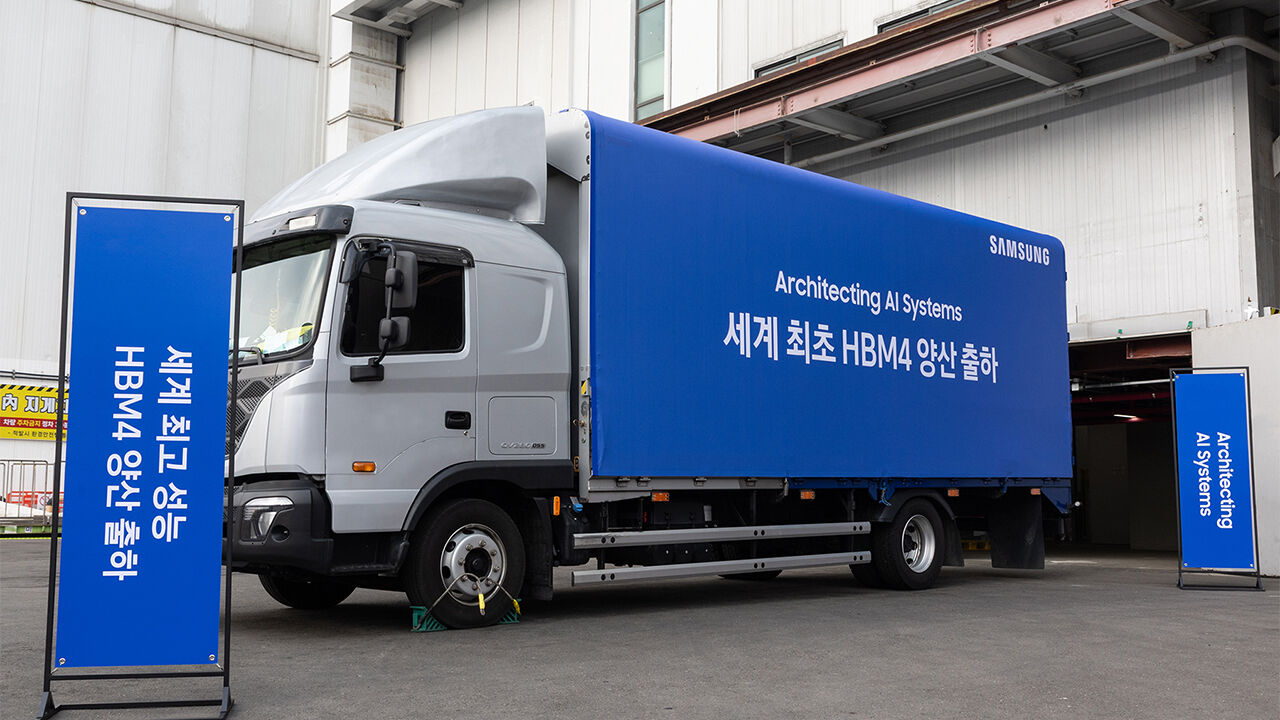
▲ HBM4 products being mass-produced and shipped at Samsung Electronics' Cheonan Campus in South Chungcheong Province on Feb. 12.
Samsung Electronics' sixth-generation High Bandwidth Memory (HBM), HBM4, has reportedly surpassed $1 billion (approximately 1.54 trillion won) in sales for the first time in the industry.
With sales of HBM4, which was mass-produced and shipped for the first time in the world, surging rapidly, outlooks suggest that reaching $10 billion (approximately 15.4 trillion won) by the end of the year is highly possible.
According to industry sources today (June 23), Samsung Electronics achieved this performance as demand for HBM4 has recently surged.
Samsung Electronics achieved this milestone about four months after mass-producing and shipping HBM4 for the first time in the world on February 12.
If the reference point is set to the end of June, sales are expected to exceed $1.2 billion (approximately 1.85 trillion won).
As the supply of Samsung Electronics' HBM4 has rapidly increased immediately after its launch, its market share in the HBM market is analyzed to be expanding significantly.
In particular, expectations are rising that by rapidly increasing supply volumes by the end of the year, the company will record sales of over $10 billion in 2026, the first year of its launch.
Industry sources noted that this is an unprecedentedly large scale for the first-year mass production sales of a new memory product.
This achievement is attributed to the surge in demand driven by the expansion of investment in artificial intelligence (AI) infrastructure.
The industry estimates that this year's HBM market size will reach $54.6 billion (approximately 84 trillion won), a 58% increase compared to the previous year.
The World Semiconductor Trade Statistics (WSTS) projected that the global semiconductor market size will reach $975 billion (approximately 1,500 trillion won) this year.
An important pillar of this expanding demand is Application-Specific Integrated Circuits (ASICs).
ASICs are customized chips designed for specific operations or purposes, and global big tech companies are rapidly driving up HBM demand by adopting them for their own AI chips.
Samsung Electronics continues to receive requests for HBM supply cooperation from major graphics processing unit (GPU) companies and ASIC-based hyperscaler customers.
Driven by this expanding customer base, this year's HBM sales are projected to increase more than threefold compared to the previous year.
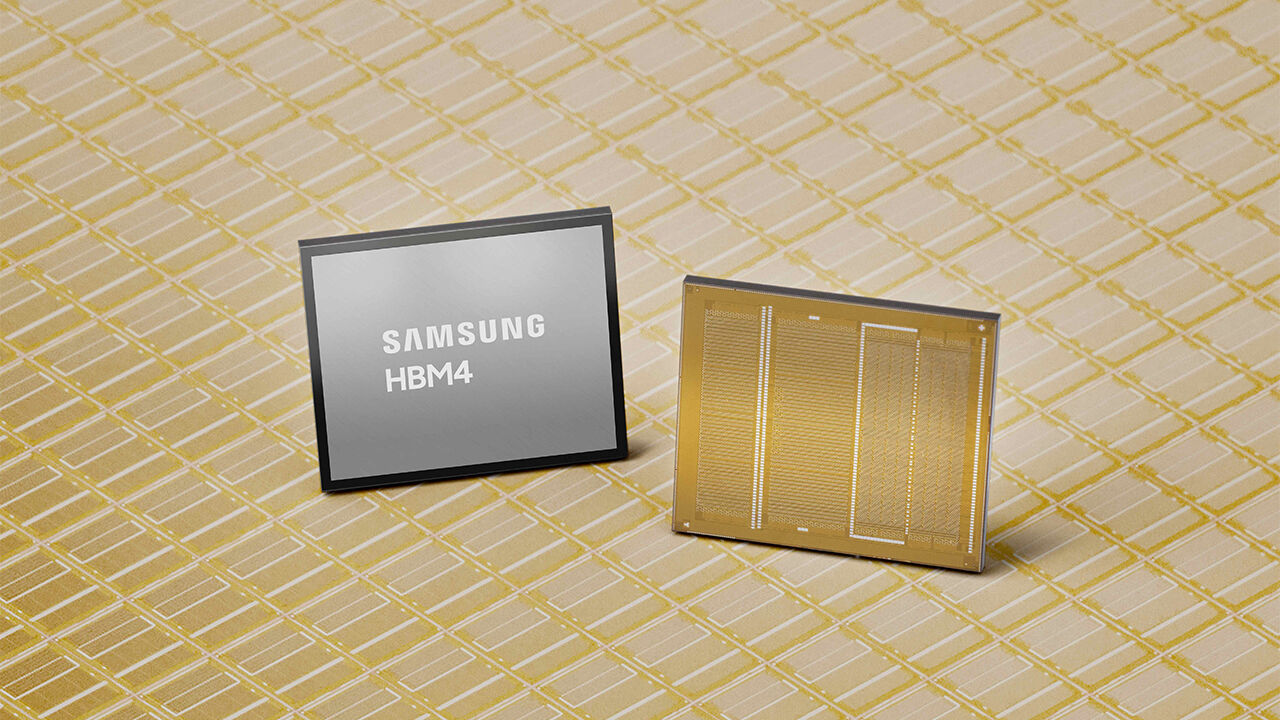
By applying a 4-nanometer advanced process to the base die of the HBM4 memory, Samsung Electronics secured a competitive edge in terms of performance and mass production stability, and began preoccupying the next-generation AI memory market by mass-producing and shipping HBM4 for the first time in the world last February.
Samsung Electronics' HBM4 has secured a data processing speed (11.7 Gbps) that is about 46% faster than the industry standard, making it possible to resolve data bottlenecks that worsen as AI models grow larger.
It also increased data transmission capability by about 2.7 times compared to the previous generation, securing performance that exceeds the level requested by customers.
In addition, power efficiency has been improved by about 40% compared to the previous generation, offering both high performance and low operating costs.
Samsung Electronics plans to continue taking the lead in the market with HBM4E, following HBM4, based on its technological superiority.
Samsung Electronics is the world's only integrated device manufacturer (IDM) equipped with logic, memory, foundry, and packaging, possessing one-stop capabilities from design to packaging.
The industry evaluates that as HBM becomes more advanced, Samsung Electronics' differentiated capability to optimize both its own foundry process and HBM design together will serve as a powerful competitive advantage.
(Photo courtesy of Samsung Electronics, Yonhap News)
※ Please note: This article was translated by AI and may contain errors.


 Video News
 Video News