
 KOR
KOR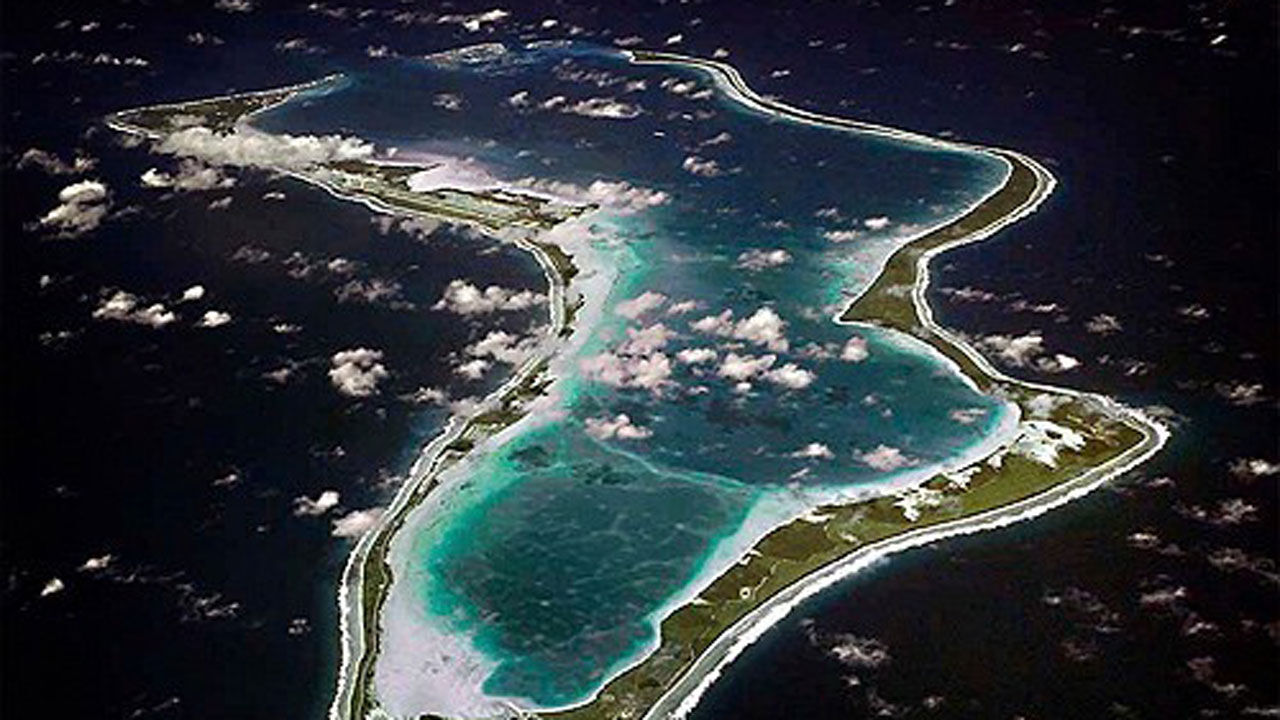
▲ Diego Garcia in the Chagos Archipelago (Photo: AP, Yonhap News)
Emerald-colored waters and white sandy beaches reminiscent of a resort.
It is a beautiful island in the Indian Ocean that also appeared in the movie Transformers 2.
However, looking closely at this island, it is a massive military facility where the U.S. military's key asset, the B-52 bomber, constantly takes off and nuclear-powered submarines come and go.
Recently, however, it has become quite noisy.
An African nation very close to China has agreed to take over the island, and U.S. Treasury Secretary Scott Bessent even suggested to President Trump that they should just buy the island altogether.
What on earth is happening on this mysterious island of 'Diego Garcia'? Let's take a look at the map together.
With the Middle East to the north, Africa to the west, and Indonesia and Australia to the east, there are coral islands right in the center.
This is the Chagos Archipelago, and the largest island here is 'Diego Garcia.'
A joint U.S.-UK military base is located on this island, and due to its overwhelming geographical advantage, it has served as a "forward base" in all wars the U.S. has fought in the Middle East so far.
With B-2 and B-52 bombers on the runway, port facilities where nuclear submarines can dock in the deep sea, and even U.S. Space Command facilities, the base itself has earned the nickname "the unsinkable aircraft carrier."
Let's look at some actual use cases.
In March last year, when the U.S. launched airstrikes against Yemen's Houthi rebels, it forward-deployed six B-2 Spirit bombers—equivalent to one-third of the U.S. military's total fleet—to this island.
In the current war with Iran, as the U.S. military used this base as a stronghold for attacks, Iran attempted to strike Diego Garcia directly with ballistic missiles, though they failed to reach the base.
In any case, returning to the topic, although this place is important enough to be considered one of the two major U.S. military strongholds along with Andersen Air Force Base in Guam, this island is actually not U.S. territory.
Let's look at the map together again.
Originally, this place was the territory of Mauritius, a small island nation in Africa.
However, Great Britain, which held Mauritius as a colony, established a military base in the Chagos Archipelago in the early 1940s during World War II.
Although Mauritius gained independence from Britain in 1968, the Chagos Archipelago remained a British territory. Later, Britain agreed to let the U.S. use the Chagos Archipelago for military purposes, marking the beginning of indirect U.S. possession.
While the occupation continued for nearly 60 years, an event occurred that turned the tables.
Mauritius stepped forward to demand that the international community return the Chagos Archipelago to them.
International public opinion grew uncontrollably.
In February 2019, the International Court of Justice (ICJ) issued an advisory opinion stating that Britain had unlawfully separated the Chagos Archipelago.
In May of the same year, a resolution demanding that Britain return the Chagos Archipelago to Mauritius was passed in the UN General Assembly by an overwhelming margin of 116 votes in favor to 6 against.
As international pressure mounted, British Prime Minister Keir Starmer finally signed an agreement in May last year to cede sovereignty of the Chagos Archipelago to Mauritius while maintaining control over the military base on Diego Garcia for at least 99 years. With this, the nearly century-long sovereignty dispute over the Chagos Archipelago seemed to be settled with its return to Mauritius.
However, a variable emerged here.
President Trump, who had supported the agreement until last year, suddenly took a public swipe at Britain's decision last January.
He wrote on his social media that Britain giving up such extremely important territory is an incredibly foolish act and another national security reason why the U.S. must secure Greenland.
As President Trump poured out such a fierce reaction, the British Parliament has also been hesitating, failing to pass the legislation to proceed with the agreement.
However, the reason the U.S. is taking such a strong stance is not simply because it is worried about "pulling out."
It is because if the U.S. leaves, the new owner of Diego Garcia is highly likely to be none other than China.
Chinese President Xi Jinping is pursuing the "Belt and Road Initiative" to expand military influence by investing in ports and infrastructure along the Indian Ocean coast, and Mauritius is an essential region for expanding influence in the Indian Ocean.
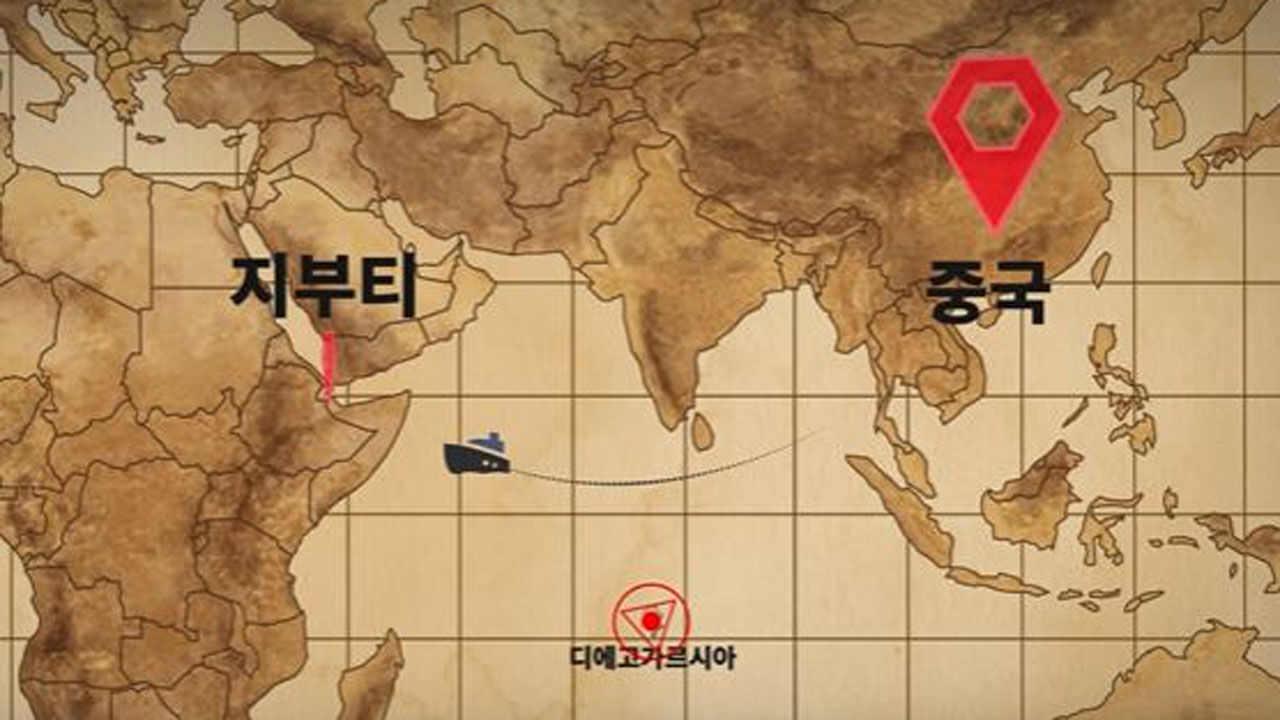
Since Diego Garcia sits right on the path to Djibouti, where China established its first military base in Africa, the Chagos Archipelago inevitably remains in China's sights.
For this reason, Mauritius has received active support from China, becoming the first African nation to sign a free trade agreement with China and actively attracting Chinese capital.
In fact, during the process of this Chagos agreement, Mauritius shared information closely with China and received full support from China in international legal battles, such as at the International Court of Justice.
President Xi Jinping even visited Mauritius in person back in 2018.
Furthermore, according to recent foreign media reports, thousands of Mauritian officials have visited China to prepare for taking over the Chagos Archipelago, and hundreds more are scheduled to receive training from Beijing.
With the situation being as it is, warnings are erupting from the U.S. Congress that this place must not be handed over to Mauritius.
[U.S. Senator John Neely Kennedy (May 12, U.S. Senate Defense Subcommittee): Doesn't Mauritius have a good relationship with China?]
[U.S. Secretary of War Pete Hegseth: I understand they have some level of relationship.]
[U.S. Senator John Neely Kennedy: Yes, as you know, they seem to be what young people these days call 'BFFs' (best friends forever). This means Mauritius will hand over the keys to Diego Garcia to China. Is that correct?]
Despite this pressure from the U.S., Britain remains strongly committed to pushing through the agreement, citing international support, among other reasons.
Hamish Falconer, the UK Minister for the Middle East and North Africa, emphasized last month that there is no scenario in which Washington could purchase Diego Garcia, stressing that the British government "will stand by the agreement that has been made."
Under these circumstances, plans have recently emerged in the U.S. to buy back the island even after Britain transfers Diego Garcia to Mauritius.
The UK's Telegraph reported early this month that the U.S. government has prepared an independent proposal targeting Mauritius to bypass Britain and secure control of Diego Garcia.
Ultimately, Diego Garcia has become an island that the U.S. has its eyes on, much like Greenland.
The calculations of four nations—Britain, Mauritius, the U.S., and China—have become entangled over a single coral island in the Indian Ocean that resembles a resort.
Ratification by the British Parliament has stalled, and the U.S. is even mulling the option of a direct purchase.
The search for the owner of this island, which has dragged on for 60 years, may only just be beginning.
※ Please note: This article was translated by AI and may contain errors.



 Video News
 Video News
 Video News