
 KOR
KOR
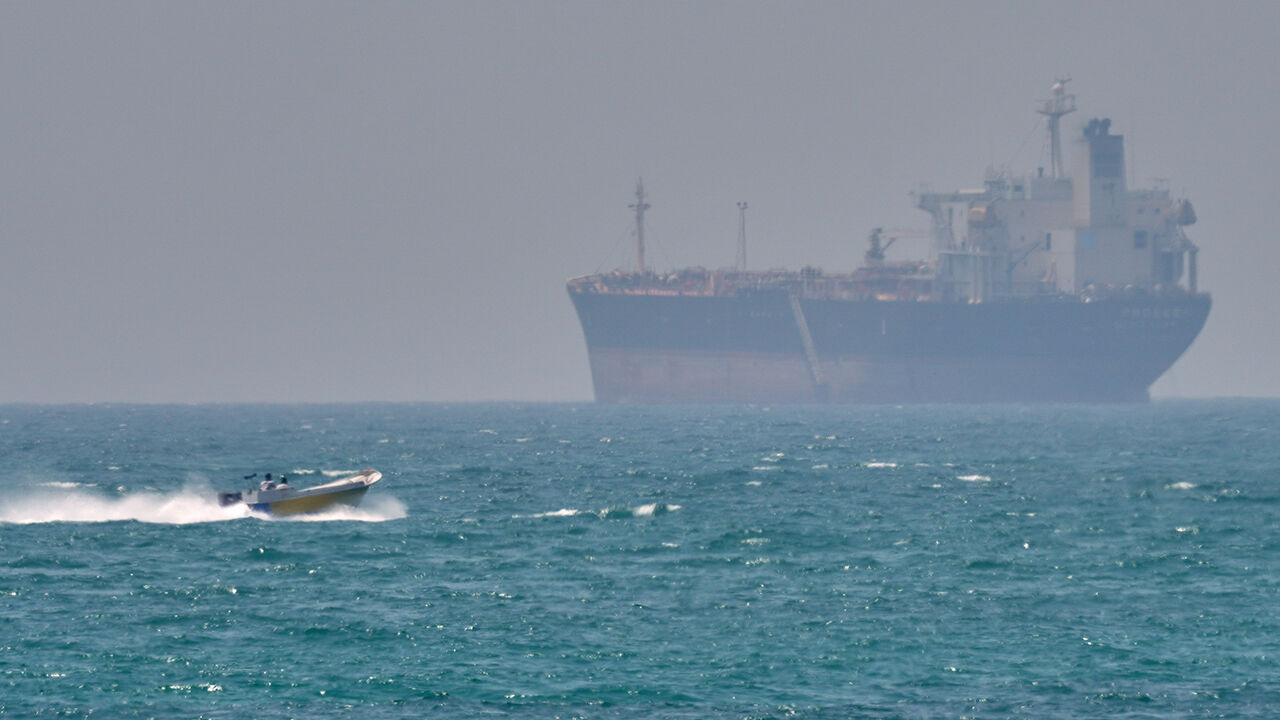
▲ Ships anchored in the Strait of Hormuz
With the United States and Iran reaching an agreement to end the war on June 14 (local time), the Strait of Hormuz, which has been effectively blockaded for over 100 days, is finally set to return to normal.
The reopening of the strait—a vital energy and logistics shipping route that accounts for about 20% of the world's oil and natural gas supply but had been paralyzed by the war and subsequent maritime blockade—is expected to ease global energy and logistics flows and help stabilize oil prices.
Free navigation through the Strait of Hormuz has been nearly impossible since February 28, when Iran's Islamic Revolutionary Guard Corps (IRGC) initiated blockade measures immediately following attacks by the United States and Israel.
As the IRGC seized control of vessels, attacking ships attempting to pass through the strait and laying sea mines, the U.S. responded with a counter-blockade and escort operations targeting Iran. This caused global oil prices to skyrocket and dealt a heavy blow to the global shipping and insurance markets.
The blockade of the Strait of Hormuz is scheduled to be lifted immediately upon the signing of a memorandum of understanding (MOU) to end the war by the U.S. and Iran on June 19.
U.S. President Donald Trump announced the development on Sunday via his social media platform, Truth Social.
At the same time, the U.S. has agreed to lift its "counter-blockade" against Iran in nearby waters, bringing relief to the global energy and logistics industries.
Under the MOU, hundreds of tankers and merchant ships, including 24 South Korean vessels currently stranded in the strait, are expected to depart in stages.
As the transport of crude oil and liquefied natural gas (LNG) through the strait resumes, Gulf nations that had cut production due to blocked export routes are expected to gradually normalize output, rapidly easing concerns over energy supply and demand.
East Asian nations such as South Korea, Japan, and China, which heavily rely on the Middle East for much of their crude oil and LNG, are projected to be major beneficiaries.
The shipping industry expects that upward pressure on freight rates and insurance premiums will gradually ease as vessels that had been rerouted or placed on standby since the war began return to their normal routes.
However, observers note that despite the signing of the MOU, it may take considerable time for the actual energy and logistics supply chains to fully recover to pre-war levels.
This is because shipping costs, including insurance premiums that surged during the war, remain high, and major shipping lines are likely to take a cautious approach to resuming normal operations until safety is verified, including the clearance of sea mines.
Rodolphe Saadé, CEO of French shipping giant CMA CGM, the world's third-largest shipping company, recently told a French parliamentary hearing, "Even if a peaceful solution is implemented, there is no guarantee that another crisis won't occur," adding, "We cannot be prisoners of Hormuz."
He added, "It is not wise to think that everything will return to how it was just because the Strait of Hormuz is reopened," stating that CMA CGM will continue to offer alternative routes to its customers.
Above all, a major variable is that the possibility of Iran re-blocking the Strait of Hormuz in the future cannot be entirely ruled out if the MOU is not properly implemented.
Furthermore, differing interpretations of "opening the strait" between the U.S. and Iran are considered the biggest source of future instability.
While the U.S. is focused on restoring freedom of navigation, Iran has consistently maintained that it exercises control and administrative authority over the strait.
Iran's Tasnim News Agency reported last month, when discussions on the MOU were underway, that resuming transit through the strait does not mean returning to the pre-war status quo, but rather "means returning the number of vessels passing through the strait to pre-war levels."
It also emphasized that "Iran will exercise its sovereignty over this strait through various means," highlighting that it has no intention of relinquishing control.
This is interpreted as a sign that despite President Trump's declaration on Sunday of a "toll-free" reopening of the Strait of Hormuz, differences in interpretation and potential triggers for conflict between the two nations remain unresolved.
Although the "tolls" for the Strait of Hormuz claimed by Iran during the blockade were not directly mentioned in the MOU, the possibility remains that Iran could effectively collect tolls under the guise of strait management costs.
Indeed, Iran has shown moves to institutionalize its control over the strait during the war.
In April, the National Security and Foreign Policy Committee of the Iranian Parliament approved a draft bill titled "Establishment of Iran's Sovereignty over the Strait of Hormuz," which includes provisions for vessel transit permits, route designations, and toll levies.
Therefore, it remains uncertain whether the IRGC, which has effectively operated the inspection and control system for vessels passing through the strait during the war, will completely abandon such controls.
However, experts point out that it will not be easy for Iran to exert the same level of tight control as it did during the war, given that arbitrary control or forced tolls on an international strait are unlikely to be accepted by the international community.
Under historically established customary international law and the United Nations Convention on the Law of the Sea (UNCLOS), even if an international strait falls within a nation's territorial waters, foreign vessels are broadly granted the right of "transit passage," allowing them to pass through expeditiously.
There are also concerns that allowing an exception for Iran could prompt other nations bordering international straits to make similar claims of control.
Ultimately, the negotiations between the U.S. and Iran over the next 60 days and the actions taken by both sides during this period will determine whether the Strait of Hormuz can fully return to normal.
Observers say that if both sides reach a final peace agreement and nuclear deal without major clashes during this period, the global energy and logistics markets could quickly stabilize. However, if negotiations fall through, the possibility remains that the Strait of Hormuz could be weaponized once again.
(Photo: AP, Yonhap News)
※ Please note: This article was translated by AI and may contain errors.

 Video News
 Video News
 Video News
![[단독] '용지 부족' 난리났던 당일…선관위 황당 행적](http://img.sbs.co.kr/newimg/news/20260615/202192977_300.jpg) Video News
Video News
 Video News