
 KOR
KOR
▲ President Trump
U.S. President Donald Trump's agreement on June 14 (local time) to end the war with Iran can be seen as decisively driven by deteriorating public opinion at home and abroad, along with political and economic burdens stemming from skyrocketing oil prices.
President Trump was reportedly considering resuming attacks on Iran as the peace negotiations to end the war remained deadlocked for some time.
He was reported to have received briefings on various attack options from his aides during a White House national security team meeting on May 18.
President Trump also revealed that he had intended to resume attacks on Iran the very next day, but ordered a halt after neighboring Middle Eastern countries urged restraint, promising that an "acceptable agreement would be reached."
Since then, the U.S. had engaged in sporadic skirmishes with Iran since late May. Tensions over a potential resumption of war escalated after the U.S. launched airstrikes for two consecutive days following Iran's downing of a U.S. Army Apache helicopter on June 8.
However, President Trump's true intentions appeared to have already leaned toward compromise.
This was evident when he warned of devastating strikes targeting power plants, bridges, and oil facilities but did not carry them out, and abruptly canceled a third day of planned airstrikes scheduled for June 11, announcing that an agreement had been reached with Iran.
Appearing on CBS on the same day, U.S. Secretary of War Pete Hegseth explained that the U.S. military's superiority was "part of the reason Iran came to the negotiating table," adding that the two days of airstrikes helped facilitate the signing of a memorandum of understanding (MOU) to end the war.
Even as the airstrikes were underway, President Trump urged Iran to agree, saying, "All they have to do is sign the document."
On the day the deal was imminent, he called it "a very special day, very close to a peace agreement with Iran," while strongly criticizing Israel for its airstrikes on Lebanon and urgently calling on "all parties to exercise restraint."
Most observers point out that it is difficult to explain why President Trump, who seemed poised to launch a full-scale attack, withdrew his "fist" and sought a compromise with Iran without mentioning oil prices.
Caught off guard by Iran's control of the Strait of Hormuz immediately after the outbreak of the war, President Trump was highly likely plagued by pressure from oil prices throughout the conflict.
With the Strait of Hormuz, through which 20% of the world's energy shipments pass, blocked for more than two months, international oil prices surged to levels 40 to 60% higher than before the war.
Gasoline prices at U.S. gas stations reached about 1.5 times their pre-war levels.
In addition to fuel prices, rising petrochemical prices, supply instability, and the resulting blow to the broader industry began to manifest like a domino effect.
As the adage goes, "No politician can beat inflation," the political pressure on President Trump rose in tandem with oil prices.
President Trump seized every opportunity to say, "Oil prices will plummet once the war is over," but such boasts paradoxically only served to highlight his sense of crisis.
With the Democratic Party intensifying its attacks over the "cost-of-living burden" since the beginning of this year, a prolonged surge in oil prices due to the war with Iran was creating a mounting pile of negative factors, putting President Trump on the political defensive.
The inflation stimulated by rising oil prices led to a sell-off of U.S. Treasury bonds and a rise in Treasury yields.
This threw cold water on President Trump's hopes for interest rate cuts, and could instead slow U.S. economic growth and raise borrowing costs for homebuyers and businesses.
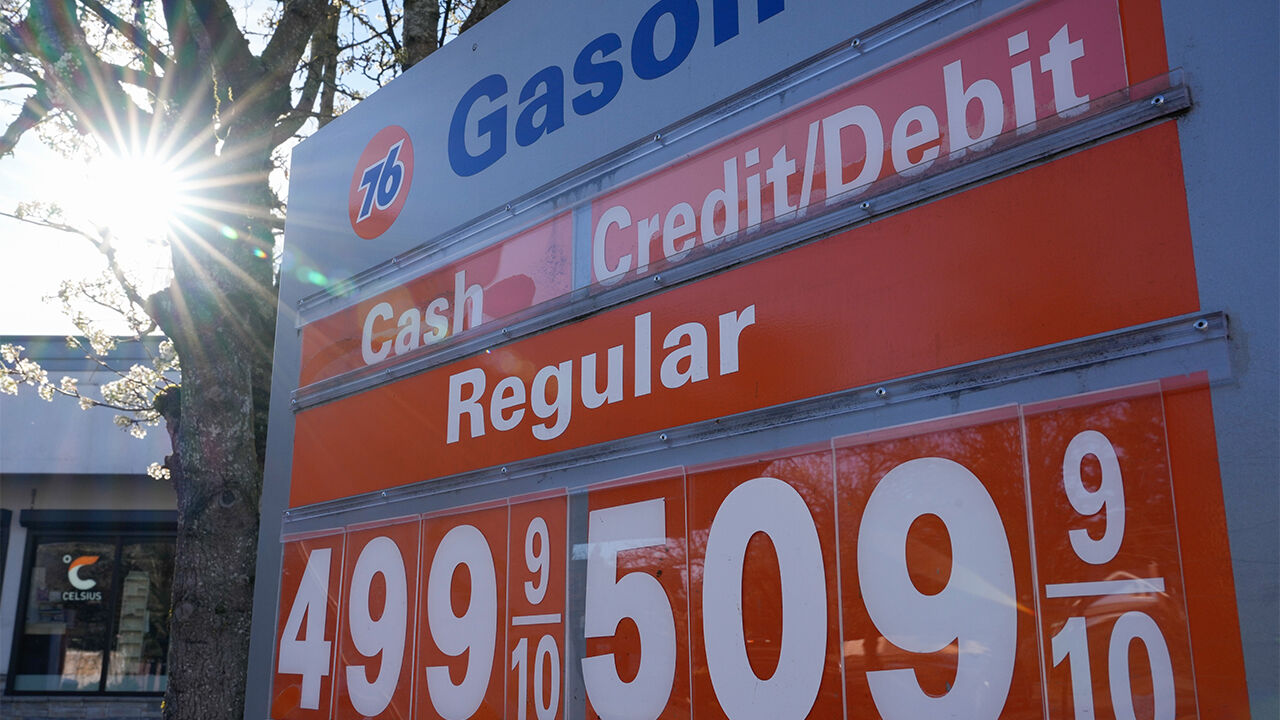
The fact that the war, which was initially expected to end within four to six weeks, dragged on for more than three months without finding an exit also weighed heavily on President Trump, forcing him to pursue a diplomatic solution.
From its very beginning, the war with Iran faced unfavorable views both within the U.S. and from the international community.
In particular, domestic public opinion, to which President Trump is highly sensitive ahead of the midterm elections in November, remained consistently critical of the war.
Concerns grew as the war dragged on that unless he could boost his approval rating, which had fallen below 40%, an election defeat would strip his administration of its governing momentum in its second half.
His remarks during the war with Iran, such as "I don't care about the election" and "Time is on our side," were also pointed out as being ironic.
Criticism that President Trump, who had pledged to refrain from military intervention in other countries, was acting contrary to his "Western Hemisphere First" policy even triggered signs of division within his core MAGA (Make America Great Again) support base.
With anti-war voices growing even within the Republican Party, which holds a slim majority in both the U.S. Senate and House of Representatives, and a resolution to limit war powers being pushed—albeit symbolically—it could be interpreted that President Trump's conduct of the war had already hit a political wall.
Apart from the macroeconomic and political conditions steering President Trump toward compromise rather than attack, many also point out that the issue of "supply," which determines the outcome of a war from a military perspective, had come to the fore.
The U.S. Department of War stated at a congressional hearing on May 12 that it had poured $29 billion (approximately 43 trillion won) into the war with Iran during the 10 weeks since the conflict began on February 28 of this year.
Calculations showed that even during the ceasefire period, an additional $4 billion (approximately 6 trillion won) was spent compared to two weeks prior.
The prevailing view is that even if President Trump had resumed attacks despite the massive cost of the war, dragging it into a prolonged conflict would have been highly burdensome given the already heavily depleted ammunition stockpiles of the U.S. military.
Indeed, it has been reported that Operation Epic Fury against Iran has sharply reduced the U.S. military's stockpiles of offensive and defensive missiles, including stealth, Tomahawk, and THAAD (Terminal High Altitude Area Defense) systems, thereby weakening its deterrence against China and Russia.
(Photo: AP, Yonhap News)
※ Please note: This article was translated by AI and may contain errors.

 Video News
 Video News
 Video News
![[단독] '용지 부족' 난리났던 당일…선관위 황당 행적](http://img.sbs.co.kr/newimg/news/20260615/202192977_300.jpg) Video News
Video News
 Video News