
 KOR
⚡ Key Takeaways
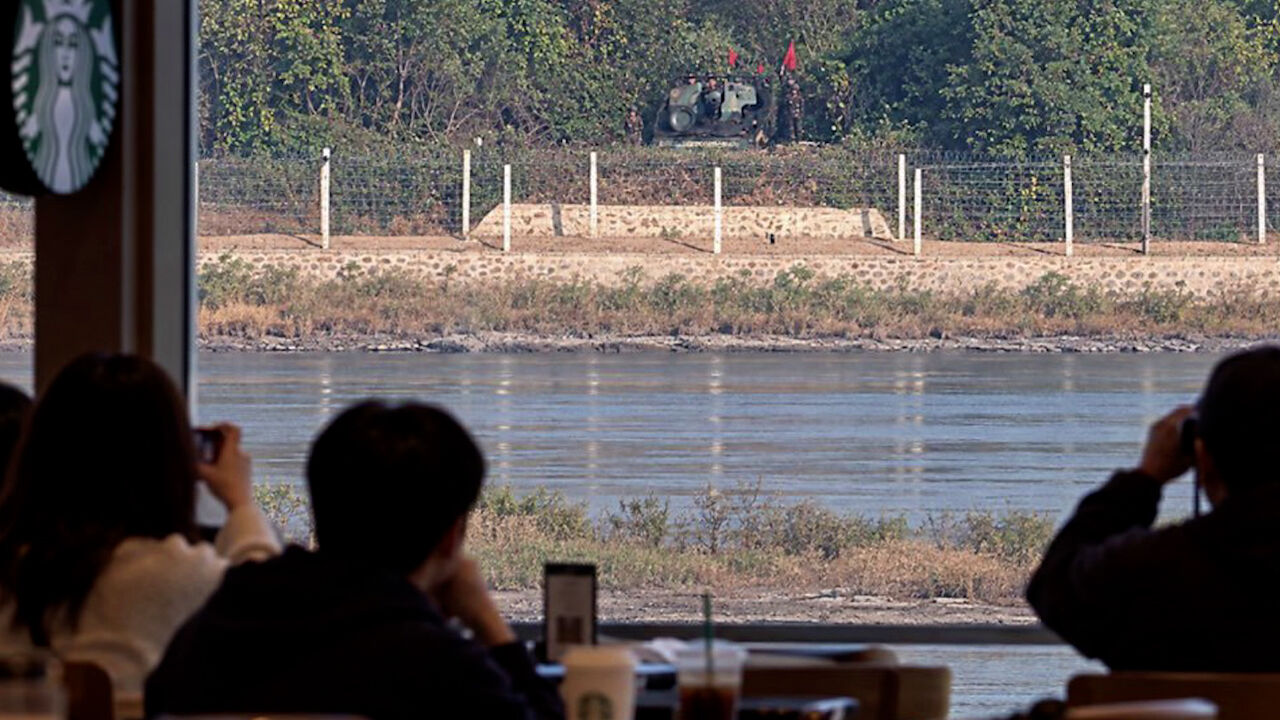
The Fake 'Howitzer View' Stir Created by AI: A photo that spread across social media on October 26, claiming to show North Korean self-propelled artillery right outside the window of the Starbucks Gimpo Aegibong branch, has been revealed as an AI-generated composite that combined real news photos with a cafe interior.
Foreign Media Misreports and Limits of Digital Watermarking: The incident escalated into an international commotion as foreign outlets, including Russian state media, cited the image without fact-checking, racking up over 2 million views. Although AI watermarks were detected using tools like Google's SynthID, it was not enough to stop the real-time spread.
Regulatory Blind Spots and the Urgency of Platform Responses: Labeling requirements under the Framework Act on AI apply only to service providers. Due to free speech considerations and difficulties in proving clear harm, immediately deleting or penalizing fake images spread by individuals remains challenging, highlighting the urgent need for swift response systems at the platform level.
A self-propelled howitzer appears aimed directly at the cafe, surrounded by North Korean soldiers holding red flags. Customers inside are busy taking photos of the view outside the window. A single photograph that recently heated up the internet spread across the globe via social media. This image turned out to be a fake generated by AI.
01. Howitzer Spotted from a Gimpo Starbucks
"Latest update on Starbucks Gimpo Aegibong branch: officially crowned a scenic spot with a North Korean howitzer view." This post surfaced on social media on October 26. The attached photo showed North Korean self-propelled artillery and troops visible outside the Starbucks window, with cafe patrons snapping pictures. The scene made it look as though North Korean soldiers had advanced right up to the cafe's doorstep. The location identified in the photo, the Starbucks Aegibong Peace Ecopark branch, is already well known for its view overlooking North Korean territory.
The post attracted intense attention and eventually spilled over onto international online communities. Reactions poured in from overseas users, with comments such as "That gun is aimed right between the photographers' eyes; no coffee is worth that risk."
02. It Turned Out to Be the Work of AI
The day after the original post went viral, however, another post appeared. It argued that, considering perspective, such a photo could never have been taken from that angle. For North Korean troops kilometers away to appear that large, the photographer would have had to stand much farther back from the customers, yet the shot looked as if it were taken from right behind them. An official at the Aegibong Peace Ecopark also confirmed the image was impossible. The store and the coastline where North Korean artillery is positioned are more than 1.5 kilometers apart, but in the photo, the howitzer looked just 100 meters away.
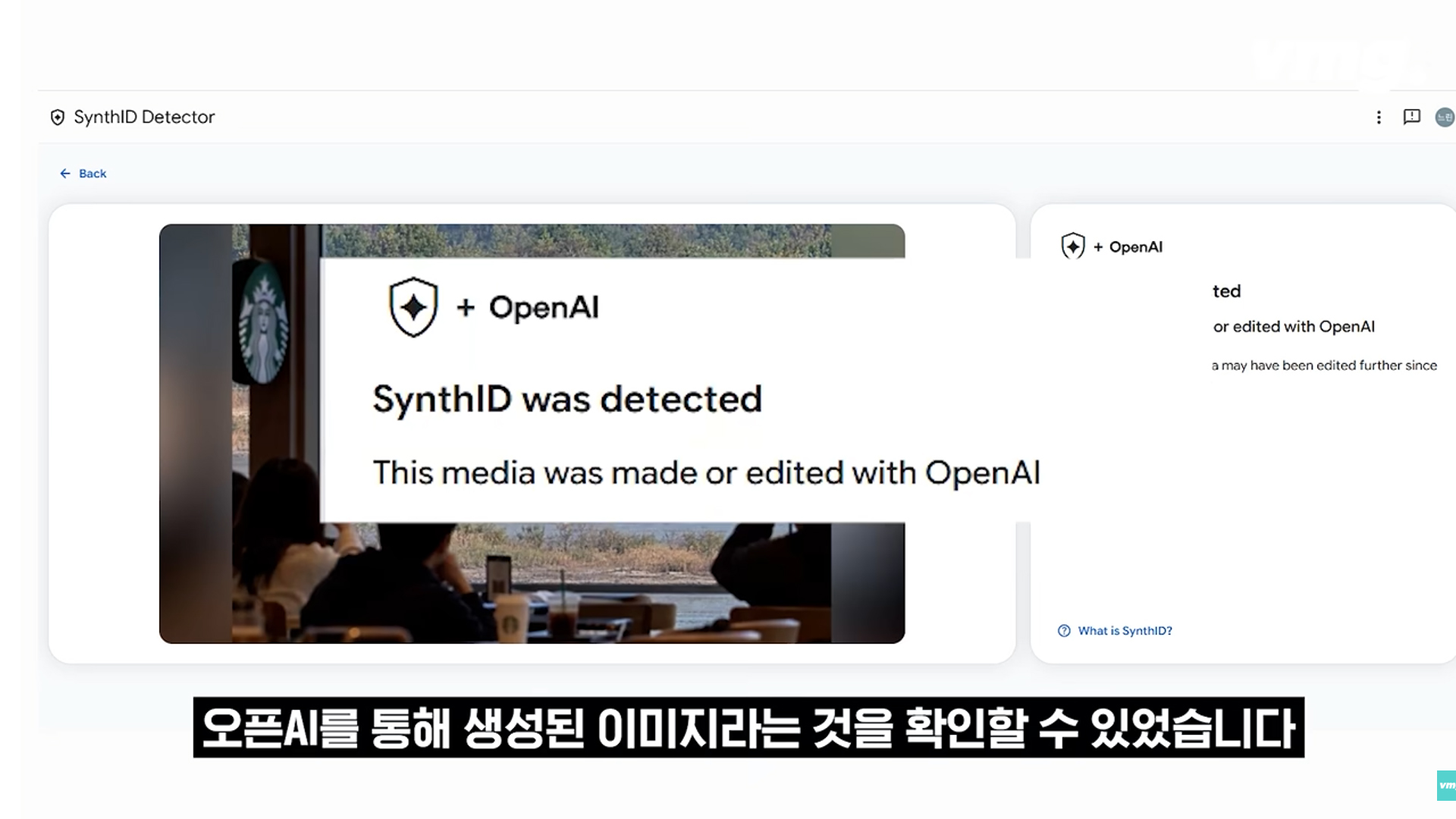
So how was this photo taken? It was ultimately revealed to be an AI creation. When the image was analyzed using AI identification technology, an imperceptible digital watermark was detected.
Reporter Kim Min-jun (SBS 8 News, Oct. 27, 2026)
Around three North Korean self-propelled howitzers deployed near the riverbank are clearly visible. Observers note that exposing these howitzers in this manner is unusual.
Around three North Korean self-propelled howitzers deployed near the riverbank are clearly visible. Observers note that exposing these howitzers in this manner is unusual.
The appearance of the North Korean soldiers and artillery in the photo closely matches news footage and photographs captured by multiple media crews that day. The creator appears to have combined authentic photographs of North Korean troops with the Starbucks interior, making it seem as if the soldiers were visible right outside the cafe window.
03. Foreign Media Were Fooled Too
The fabricated photo was not confined to South Korea. Russian state media outlet RT posted the image on its official social media account with the caption: "South Koreans sip Starbucks coffee while filming North Korean troops. A massive cannon is pointed directly at them." About three hours later, RT issued a follow-up correction stating that "the Starbucks scene in the photo appears to be an AI-edited version of an actual news photo." Nevertheless, the original post had already garnered over 2 million views and continued to circulate. Inter-Korean relations and military tensions on the peninsula are sensitive matters on the global stage, yet an AI-manipulated photo presenting a situation far more menacing than reality had spread widely overseas.
04. AI Content Can Be Verified, but...
Does this mean user-generated images cannot be verified as AI creations at all? Not quite. Last year, Google released an early version of its SynthID detector, a watermark identification technology. When AI generates an image, it embeds an invisible digital watermark directly into the image's pixels. When such an image is fed into the SynthID detector, the tool detects the watermark signal and displays the analysis results. When the Aegibong Starbucks composite was scanned using the SynthID detector, a watermark was detected, confirming the image was generated via OpenAI.
Beyond Google, several global tech companies also provide technologies to detect AI-generated content. However, images produced by AI tools not supported by a specific detector, or images whose watermark signals have degraded due to excessive alterations, may go undetected. In other words, the absence of AI traces in a verification tool does not guarantee an image is authentic. Another limitation is that users must manually upload photos to verify their authenticity. By the time an image is proven fake, as in this case, countless people may have already shared it.
05. Are There Ways to Prevent It?
Legal and technical deterrents are not entirely absent. The Framework Act on AI, which took effect this year, mandates that AI businesses disclose when content is produced using generative AI. In particular, images or videos that are difficult to distinguish from reality must clearly notify users that they were created by AI.
However, this provision does not apply to regular users downloading and reposting AI-manipulated images. The disclosure duty falls primarily on businesses providing AI products or services. In the case of the Aegibong Starbucks photo, because it is presumed to be an AI-generated image posted by an individual, it may not fall under the mandatory disclosure rules.
06. Even When Confirmed as AI, Immediate Removal Is Not Guaranteed
More than a week has passed since the photo was confirmed to be an AI composite, yet it remains on social media. The Korea Internet Self-Governance Organization (KISO) has established guidelines allowing measures such as deleting posts, blocking access, or attaching warning labels when false or manipulated information is confirmed. However, simply being identified as fake does not automatically qualify an image for immediate removal. Beyond whether the content is false or manipulated, platforms must evaluate whether it was shared intentionally to cause harm or gain unfair advantage, and whether it actually infringed on others' rights or the public interest.
Moreover, these guidelines apply only to posts published on platforms classified as large-scale information and communications service providers among KISO member companies. Non-member platforms like X are exempt. The applicable standards and remedies thus depend heavily on which platform hosts the content and the context and intent behind its dissemination.
Choi Byung-ho | Professor at Korea University's Artificial Intelligence Research Institute
Posts uploaded by individuals can be interpreted as freedom of expression. Unless a case infringes on sovereignty or human rights, imposing sanctions is difficult. Rather than relying solely on legal measures, it might be more feasible for platforms to identify patterns and visibly display on the image itself that it was created by AI.
Posts uploaded by individuals can be interpreted as freedom of expression. Unless a case infringes on sovereignty or human rights, imposing sanctions is difficult. Rather than relying solely on legal measures, it might be more feasible for platforms to identify patterns and visibly display on the image itself that it was created by AI.
While the North Korean self-propelled artillery was indeed real, the AI-generated photo brought it right up to the Starbucks window. By the time the image was exposed as fake, countless individuals had already believed and shared it. While the speed of generating fabrications has accelerated, the speed of correcting them has failed to keep pace. Along with detection technologies, platform measures to curb the spread of falsehoods and correct misinformation are becoming increasingly vital.
Deep Dive Q&A
Q1. How was it proven that the photo of the 'North Korean howitzer view' at the Gimpo Starbucks was an AI-manipulated fake rather than a genuine photograph?
A1. Suspicions arose when experts pointed out that, given camera perspectives, artillery stationed kilometers away could not appear as though it were 100 meters outside a cafe window. Subsequent analysis with image identification technology detected an invisible digital watermark, conclusively proving that it was an AI composite created through OpenAI. It was a manipulated image craftily blending actual news photographs of North Korean artillery captured on October 25 with photos of the cafe's interior.
Q2. Despite the availability of AI image detection technology, why is it so difficult to quickly block the dissemination and spread of such fake photos?
A2. A combination of technical and institutional limitations is at play. First, because users must manually upload images to verify their authenticity, photos are often proven fake only after they have already circulated widely. Second, the mandatory labeling requirement under the Framework Act on AI applies solely to AI service providers, making it difficult to enforce against ordinary users who repost content. Third, certain global platforms like X are not subject to KISO guidelines, and individual posts are often viewed as protected free speech, making immediate deletion or penalties difficult unless malicious intent or clear infringement on rights is substantiated.
※ Please note: This article was translated by AI and may contain errors.



 Video News

 Video News