
 KOR
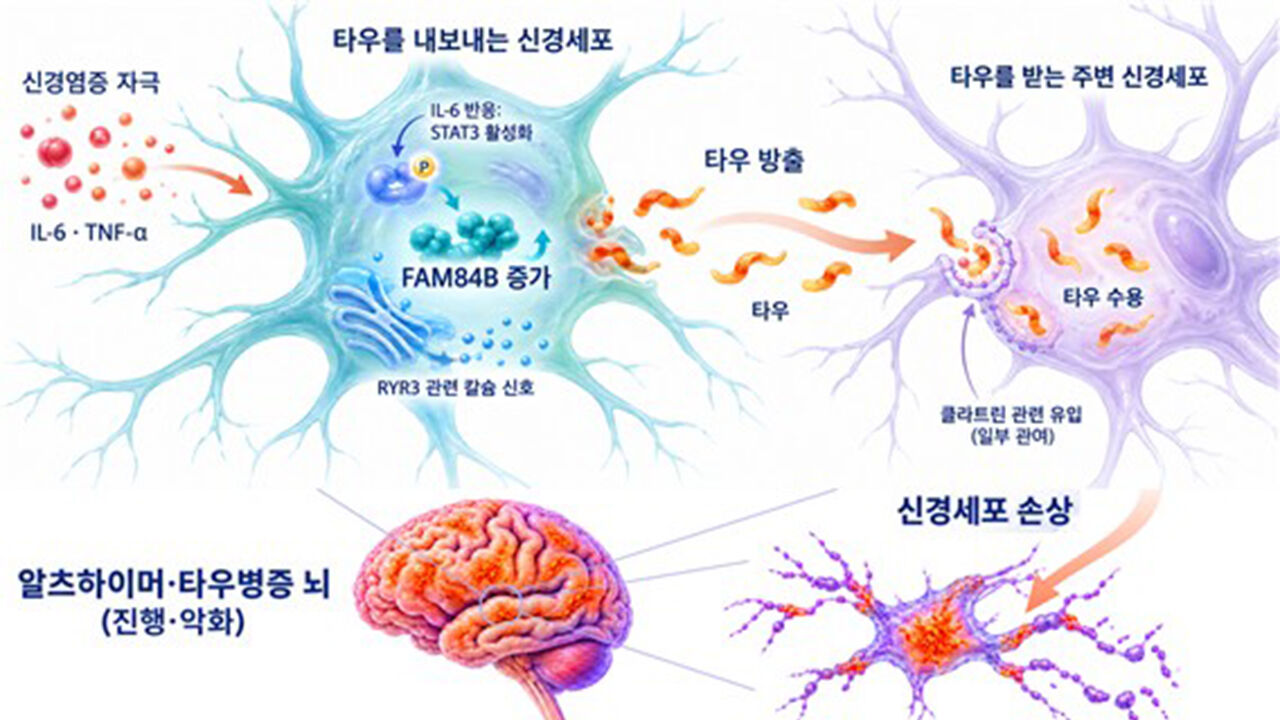
▲ FAM84B-mediated tau movement and Alzheimer's progression/worsening due to neuroinflammation
Research has shown that the process in which the tau protein, which causes dementia, is transmitted to brain cells is influenced by another protein.
The Korea National Institute of Health (KNIH) under the Korea Disease Control and Prevention Agency (KDCA) announced that it has identified the role of the "FAM84B" protein, which promotes the movement of dementia-related tau proteins, such as those in Alzheimer's disease, to neighboring brain cells.
Tau is a protein that maintains the structure of brain nerve cells, but when it undergoes abnormal changes and accumulates, it can cause nerve cell damage in conditions like Alzheimer's disease.
While the process of tau spreading to surrounding cells is related to disease progression, the factors promoting this movement have not been fully understood.
In response, researchers at the National Institute of Health analyzed post-mortem brain tissues of patients and nerve cells derived from patient stem cells.
As a result, they discovered that the amount of FAM84B was higher in the brain tissues of certain patients and in nerve cells derived from Alzheimer's patients compared to individuals without dementia.
The research team also conducted cell experiments to determine how FAM84B affects the movement of tau. They confirmed that increasing the amount of FAM84B led to an increase in the amount of tau released outside the cells and the number of surrounding cells receiving it.
Cho Chul-man, a senior researcher at the National Institute of Health who led the study, stated, "This research result is the first to reveal that FAM84B plays a crucial role in the process by which neuroinflammation affects tau transmission." He added, "Through follow-up research, it is necessary to verify the impact of this pathway on actual disease progression and its potential as a therapeutic target."
(Photo courtesy of Korea Disease Control and Prevention Agency, Yonhap News)
※ Please note: This article was translated by AI and may contain errors.


 Video News
 Video News
 Video News
 Video News
 Video News