
 KOR
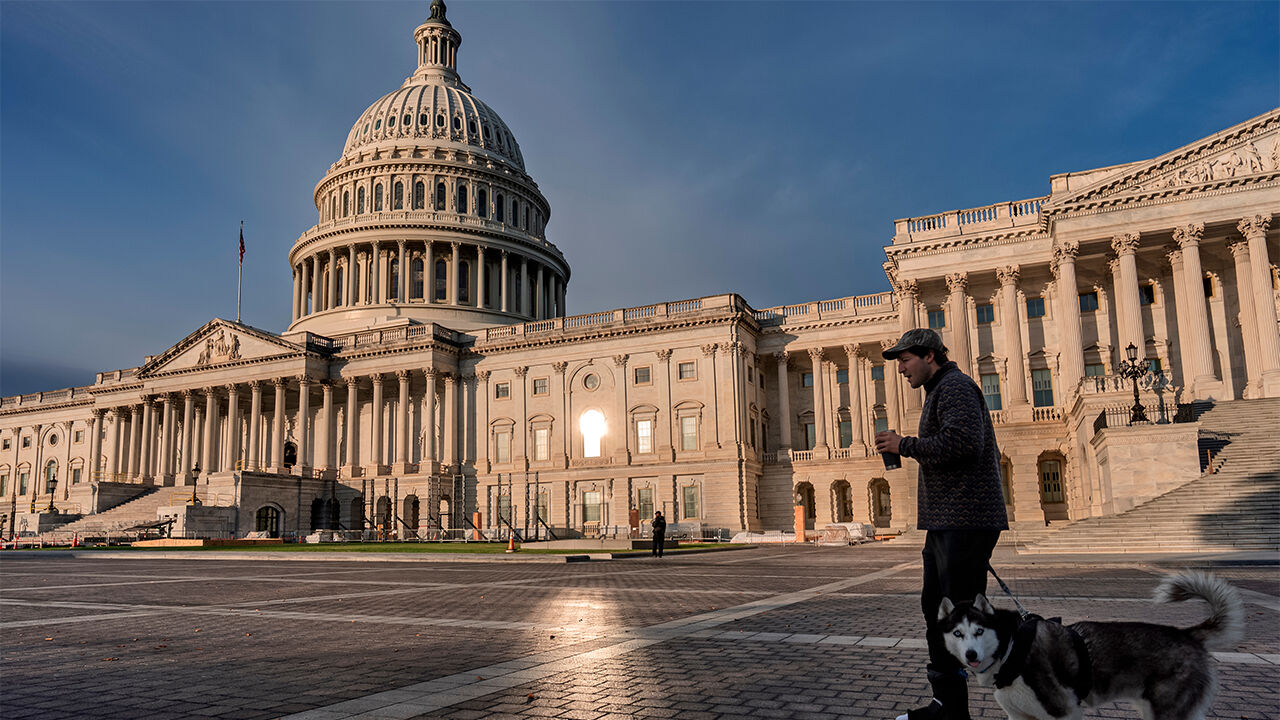
▲ The U.S. Capitol building in Washington, D.C.
The U.S. Democratic Party has seized control of both chambers of the federal legislature, sweeping the Senate on top of the House of Representatives in the midterm elections held on November 3 (local time).
Executive and legislative powers are now divided at the midpoint of President Donald Trump's second term. With the opening of the 120th Congress in early January next year, the U.S. political landscape is expected to plunge into intense confrontation between the Trump administration and the Democratic-controlled Congress.
Democrats have long vowed to block and deter unilateral state affairs by the Trump administration if they recaptured congressional power, while President Trump has previously signaled that he would counter this using his constitutional veto power.
Furthermore, with about two years remaining in his term, President Trump is highly likely to plunge into a rapid lame-duck phase as budgetary and legislative support from the Republican Party gets cut off.
In particular, he is expected to face the worst latter half of his term, marked by comprehensive congressional investigations, checks, and oversight not only into his unilateral domestic and foreign policies implemented thus far, but also into himself, his family, and his close aides.
Major broadcasting networks including NBC, ABC, CBS, and CNN reported predictions shortly after 10:00 PM on the same day—while vote counting for the midterms was in full swing during U.S. Eastern Time—that the Democratic Party would secure a majority in the House.
Subsequently, around 11:30 PM, predictions poured in that the Democrats would even capture the Senate.
These network projections, which combine vote-counting results from electoral districts nationwide with their proprietary forecasting systems, virtually align with the actual election results.
In conclusion, the American electoral history that midterm elections are the "graveyard of the ruling party" proved true once again.
It has been 20 years since 2006 that the opposition party has recaptured both the House and Senate simultaneously in a U.S. midterm election.

▲ Supporters of James Talarico, the Democratic candidate for Texas Senate, watch election broadcast coverage on November 3 (local time).
In particular, expectations from various pre-election opinion polls largely hit the mark.
However, going beyond a "Blue Wave"—where Democrats win by a narrow margin—a "Blue Tsunami," signifying a landslide victory for the Democrats, became reality.
In the case of the federal House, winning requires securing 218 out of the 435 total seats up for election this time, and NBC projected that the Democrats would comfortably surpass this to secure at least 244 seats.
Decision Desk HQ (DDHQ), an election forecasting organization, projected that the Democrats would take 254 seats.
Unlike the House, the Senate saw fierce competition between the two parties across seven battleground states, but unexpected strong performances by the Democrats during vote counting led to them securing an early victory.
A major factor was the upset in South Carolina—classified not as a battleground, but as a Republican "leaning favorable" region—where Democratic candidate Annie Andrews defeated Republican candidate Darlyne Graham.
Following this, projected victories for Democratic candidates were sequentially announced in battleground states, including James Talarico in Texas, Sherrod Brown in Ohio, Adam Hamilton in Kansas, Josh Turek in Iowa, and Troy Jackson in Maine.
Regardless of the remaining battleground results in places like Michigan and Alaska where outcomes have yet to be finalized, the Democrats have secured not just the 51 seats needed for a Senate majority, but at least 53 seats.
President Trump immediately acknowledged the election results, which marked a crushing defeat for the Republican Party.
In an interview with The New York Times (NYT), he said, "I am fully willing to accept the results. We will work with the Democrats, and we look forward to working with them. We will probably reach some kind of agreement." However, regarding the cause of the defeat, he did not take responsibility for his administration of state affairs.
He wrote on the social media platform Truth Social, "I was not on the ballot. If I had been, we would have won by a landslide."
(Photo: AP, Yonhap News)
※ Please note: This article was translated by AI and may contain errors.


 Video News
 Video News
 Video News
 Video News
 Video News