
 KOR
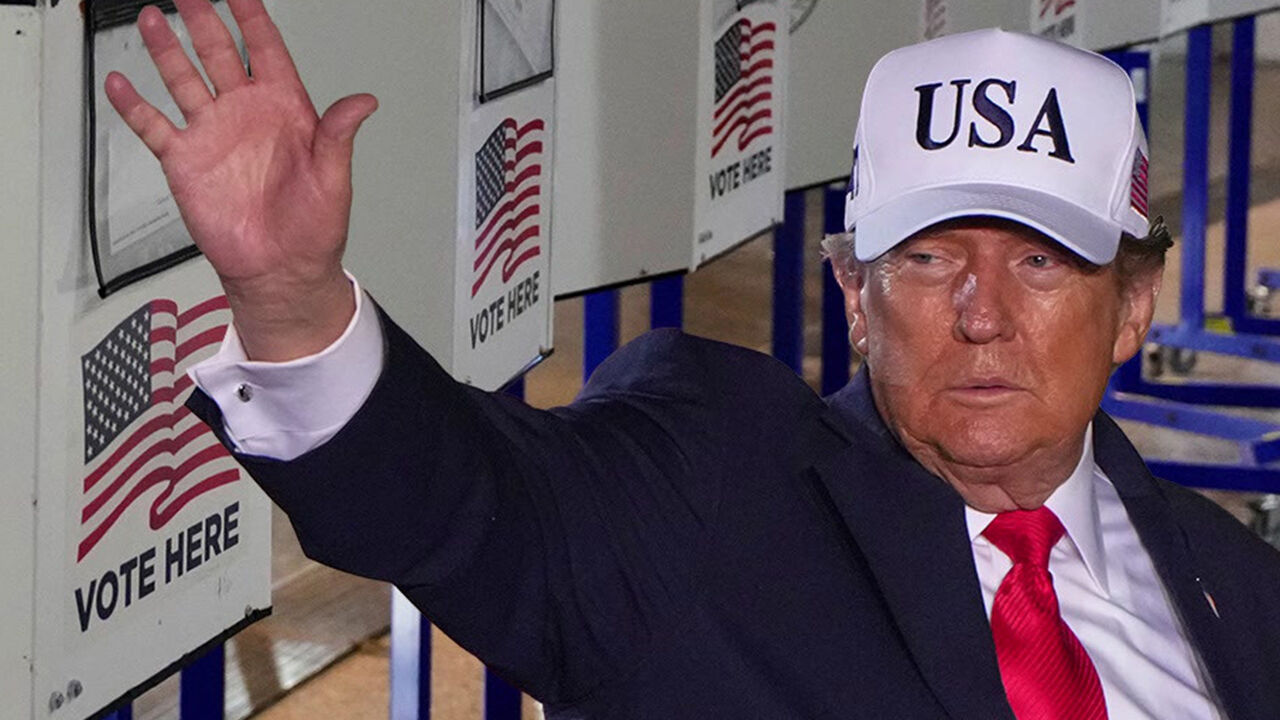
▲ U.S. President Donald Trump
As the opposition Democratic Party in the U.S. midterm elections on November 3 is poised to move beyond recapturing the House of Representatives and even vie for victory in the Senate, analyses suggest that the "Shy Trump" phenomenon, which upended polling predictions in past presidential elections, did not appear this time.
The observation is that rather than President Donald Trump's hidden supporters—who are rarely captured in opinion polls but rally during actual voting—the sentiment of voters who openly expressed dissatisfaction with President Trump ended up shaping the election results.
As of 10:30 p.m. on the 3rd (EST) with vote counting underway, networks including CNN and NBC projected that the Democratic Party would secure a majority in the House of Representatives.
According to the Associated Press, the Democratic Party is virtually assured of recapturing Senate seats in South Carolina and North Carolina previously held by the Republican Party, and is showing a stronger trend than the Republicans in key Senate battleground states such as Texas and Kansas.
U.S. election analytics site Decision Desk HQ (DDHQ) projected a 100% probability of the Democrats reclaiming the House majority and a more than 90% chance of a Democratic victory in the Senate.
This is a result that generally aligns with the Democratic-leaning trends shown in various opinion polls prior to the election.
In past U.S. elections, attention has focused on the "Shy Trump" phenomenon, where Trump supporters who are reluctant to respond to polls or reveal their political leanings lend momentum to President Trump during actual voting.
In opinion polls conducted during the 2016, 2020, and 2024 presidential elections, President Trump's support was underestimated while he actually recorded higher-than-expected vote shares, making "Shy Trump" a representative variable in election forecasting.
However, this midterm election differs from past elections in that animosity and disappointment toward the second Trump administration clearly emerged as a voting motivation for voters.
In fact, according to exit polls conducted on voters by polling agency SSRS at the request of major broadcasting networks, 43% of respondents stated they voted to express opposition to President Trump, while only 16% responded that they voted to express support.
Thirty-nine percent of respondents cited "the economy" as the most important issue facing the United States, while 32% chose "the state of democracy."
Additionally, 54% of respondents indicated that "government corruption" had a decisive impact on their voting decision, and 49% cited "the cost of living."
This points to the possibility that economic hardship and dissatisfaction with government operations, combined with animosity toward President Trump, acted as a driving force drawing voters to the polls.
Along with this, the possibility has been raised that because President Trump's name was not on the ballot, the mobilization effect of hidden supporters seen in past presidential elections may have been relatively limited.
Attention is also being paid to whether Republican voters, President Trump's core support base, have defected.
Charlie Cook, founder of the U.S. election analysis publication The Cook Political Report, previously defined this midterm election as a "unicorn election" unlike past contests, analyzing that the core variable is not centrist or independent voters, but traditional Republican supporters disillusioned with President Trump.
In particular, he pointed out that rural and small-town voters experiencing economic difficulties due to high oil prices, tariffs, trade wars, and the war in Iran are dissatisfied with President Trump's policy decisions.
Even if they do not cast their ballots for the Democratic candidate, these voters could express their dissatisfaction by abstaining from voting or skipping the vote for the Republican candidate, he noted.
Cook evaluated this phenomenon as closer to a "Red Undertow," where the voting enthusiasm of the Republican base weakens, rather than a "Blue Wave," which features an explosive spread of Democratic support.
However, it appears that whether the Democrats' lead will translate into final results and what the margin of error in actual opinion polls was can only be accurately assessed after vote counting concludes in key battleground states.
Furthermore, the political significance of this election may vary depending on whether the Republicans' sluggish performance is due to a shift of votes toward the Democrats or a decline in voter turnout among the existing Republican base.
※ Please note: This article was translated by AI and may contain errors.


 Video News
 Video News
 Video News
 Video News
 Video News