
 KOR
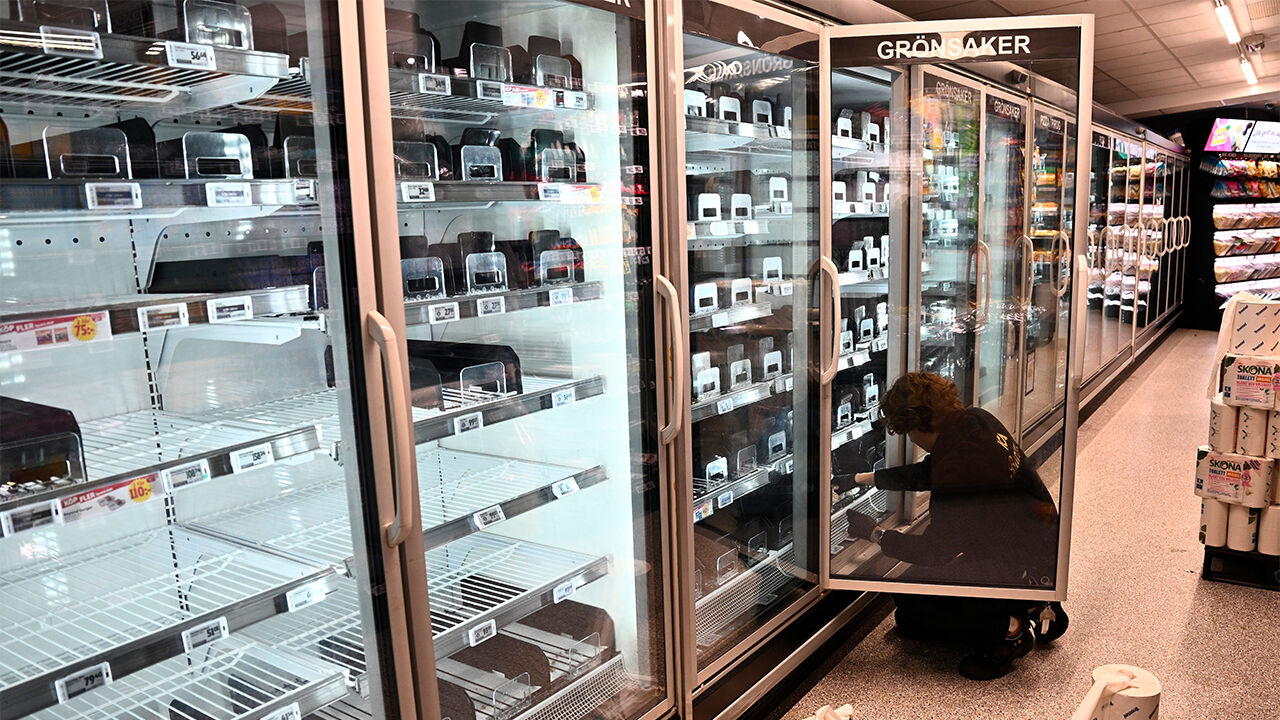
▲ Empty display shelves at the ICA Baronen store located in Odengatan, Stockholm, due to refrigerator temperature hacking
A hacking incident that manipulated refrigerator temperatures to 50°C at French supermarkets last month has spread to 11 European countries, fueling confusion and anxiety.
As the refrigeration systems of supermarkets in the UK, Germany, Italy, and other nations have come under cyberattacks, companies in various countries are rushing to upgrade their security systems to block further damage.
According to foreign media outlets such as Reuters and AFP on November 3 (local time), refrigerator hacking incidents at supermarket chains and other businesses have been reported in at least 11 countries so far.
Following reports the previous day that cyberattacks had caused temperatures in refrigerators and freezers to soar in Belgium, Luxembourg, Sweden, Estonia, and Ireland, similar cases have spread to Western and Southern Europe.
According to foreign media, about 20 supermarket stores were affected by hacking across Italy.
The owner of a company operating Coop supermarkets in Sicily said that four out of 300 stores were hacked, adding, "All products have to be discarded, so the damages are estimated to reach thousands of euros."
The Italian government stated that the impact remains "limited," noting that only stores with older security systems suffered losses.
In the UK, small meat processing companies became the targets.
An independent British meat supplier told the BBC that freezers at two of its member companies began to thaw, while another experienced a sharp surge in the temperature of its refrigeration facilities.
In Germany, four supermarket stores were affected, while Romania reported damage at six stores.
The refrigerator hacking wave first began in France in mid-last month.
A cyberattack that raised the temperatures of supermarket refrigerators to 50°C at multiple companies hit around 700 stores en masse, and within a half-month, similar cases spread to various European nations including Belgium, Luxembourg, and Sweden.
Belgium suffered the heaviest blow, where refrigerator facilities at dozens of supermarket chain stores broke down between the night of November 1 and the early hours of November 2, prompting local prosecutors to launch an investigation.
As the damage spread, supermarket companies across Europe began strengthening their security systems.
Since the targeted systems were identified as older models, the measures aim to upgrade vulnerable technology to prevent additional damage.
In many cases, refrigeration facilities were connected to the internet for remote control, raising the possibility that security patches were not updated in a timely manner.
Consequently, software vendor Danfoss has advised customers to check the status of their refrigerator controls and cut off internet connections before upgrading security patches.
Another factor pointed out is that most European supermarkets operate in the form of cooperatives, resulting in vastly different systems across stores.
The European Union (EU) has defined this incident as a deliberate attempt to disrupt the food supply chain and has started working on joint countermeasures.
EU spokesperson Thomas Regnier stated, "This incident is not a one-off event and we must prepare for it jointly," adding that discussions are underway with member states on joint countermeasures.
Some warn that hacking attacks targeting older technology could become more frequent in the future, suggesting this incident is merely the beginning.
Richard Horne of the UK National Cyber Security Centre (NCSC) said, "There are numerous vulnerabilities," and described the incident as "just the beginning."
As the capabilities of hackers are enhanced by the advancement of artificial intelligence (AI), exploiting vulnerabilities in older technology is likely to become increasingly frequent.
He pointed out, "This is not because AI has found a new attack method, but because security vulnerabilities that have been neglected for a long time are being discovered on an unimaginable scale."
According to foreign media, the perpetrators and motives behind this incident have not yet been identified.
However, Dan Cimpian, head of Romania's National Cyber Security Directorate (DNSC), told AFP that the attack "appears to be somewhat amateurish" and added, "We do not suspect that a state-sponsored actor was involved."
(Photo: AP, Yonhap News)
※ Please note: This article was translated by AI and may contain errors.




 Video News
 Video News